

Short Term Trading: A Practical Price Action Guide
Most advice about short term trading is backwards. People start with indicators, hot stock lists, and fantasies about fast money. Professionals start with one harder question: where is the price likely to move, where is the trade invalidated, and how much can I lose if I'm wrong?
That difference sounds small. It isn't. It's the gap between gambling on movement and trading a repeatable price action process.
Short term trading can work, but only when you strip away the noise. You need clean structure, clear entry logic, and risk rules you follow without negotiation. If you want excitement, the market will happily provide it. If you want consistency, you need to think like a risk manager first and a trader second.
The Unfiltered Reality of Short-Term Trading
Short term trading gets sold as freedom, speed, and quick profits. Its reality is less glamorous. It demands screen time, emotional control, and the ability to take small losses without turning them into disasters.
The numbers alone should sober up anyone treating this like a shortcut. A 2026 synthesis of day trading data reported that about 40% of day traders quit within their first month, only around 13% remain active after three years, and a mere 1% remain consistently profitable over five years according to this day trading statistics roundup. Those figures don't describe an easy game. They describe a field that punishes undisciplined participation.
What short term trading actually is
Short term trading means taking trades over compressed time horizons and making decisions primarily from price, structure, momentum, and liquidity behavior. You are not waiting for a multi-year thesis to play out. You are reading what buyers and sellers are doing now.
That changes everything:
- Your edge is technical and behavioral: You're looking for repeatable market behavior, not broad company narratives.
- Timing matters more: A good idea with poor execution can still be a bad trade.
- Costs matter more: Slippage, spreads, and late entries hit harder when the target is relatively close.
Practical rule: If you can't explain the setup from the chart alone, you probably don't have a trade. You have an opinion.
Why most traders fail early
Most beginners don't fail because they lack intelligence. They fail because they come in with the wrong expectations. They think more trades mean more opportunity. In reality, more trades often mean more mistakes.
They also confuse activity with progress. Watching candles all day doesn't build skill unless you review decisions and tighten rules. That's why the learning curve matters. Traders who want a realistic view of how long competence takes should read Colibri Trader's piece on how long it takes to learn day trading.
Short term trading is not a lottery ticket. It's a performance discipline. You don't get paid for effort, screen time, or conviction. You get paid for executing a process that protects capital when your read is wrong and presses only when the setup is clean.
Understanding Short-Term Trading Timeframes
A trader's timeframe is not a cosmetic choice. It shapes entries, exits, stress level, and how much noise you must tolerate. Many traders struggle because they pick a style that doesn't fit their temperament.

Scalping
Scalping sits at the fastest end of short term trading. The holding period is very brief. The trader tries to capture small movements and exits quickly when momentum stalls.
This style usually relies on very low chart timeframes and sharp execution. It suits traders who can make decisions quickly, accept frequent small losses, and stay focused without becoming impulsive.
A few realities matter here:
- Noise is constant: Tiny price fluctuations can shake out weak entries.
- Execution quality matters a lot: Hesitation ruins many scalp setups.
- Patience still matters: Fast trading doesn't mean constant trading.
Day trading
Day trading is the middle ground commonly associated with short term trading. Positions are opened and closed within the same session, which removes overnight exposure and keeps the focus on intraday structure.
This style often gives price action traders the best balance between opportunity and clarity. There's enough movement to build a trade around structure, but not so much time compression that every candle becomes random noise. If you're deciding what charts fit your style, Colibri Trader's guide to the best time frame for day trading is a useful reference.
Day trading rewards traders who can wait through mediocre conditions and act decisively when a clean level finally gets tested.
Short-horizon swing trading
Swing trading still belongs in the short term camp when the holding period stays relatively brief. The trade lasts longer than a day trade, but the idea is still driven by chart structure rather than long-term investing logic.
This style tends to suit traders with jobs, businesses, or family obligations because it doesn't require constant intraday monitoring. It also demands a different psychological skill. You have to let the trade breathe instead of micromanaging every minor move.
| Style | Holding Period | Primary Charts | Goal |
|---|---|---|---|
| Scalping | Very short | Very low intraday charts | Capture small intraday bursts |
| Day trading | Intraday | Intraday execution and context charts | Catch session moves and close the same day |
| Swing trading | Several days to a few weeks | Higher timeframe structure with execution charts | Capture short directional swings |
The right timeframe is the one you can execute consistently. If your schedule, attention span, or emotional makeup doesn't match the style, the chart pattern won't save you.
Core Price Action Strategies for Short-Term Trading
Most bad short term trading comes from forcing setups instead of reading structure. Price action traders don't need ten patterns. They need a few setups they understand thoroughly, then the discipline to trade only those setups when context supports them.
Breakout and pullback
A raw breakout is often where retail traders get trapped. Price spikes through a level, everyone piles in late, and then the market snaps back. The better trade is usually the breakout, followed by a pullback, followed by proof that the level is holding.
The thought process is simple:
- Identify a clear level that has already mattered.
- Wait for price to break it with intent.
- Let price revisit the level.
- Enter only if the retest holds and order flow confirms continuation through candle behavior.
Your trigger is not “price touched the level.” Your trigger is that the old resistance starts acting like support, or old support starts acting like resistance.
Opening range breaks
Intraday traders who ignore the open are ignoring where a lot of business gets done. Short-term trading is strongly driven by intraday volatility patterns, with the first 60 to 90 minutes after market open often accounting for 30 to 40% of the total daily range, as noted in Investopedia's discussion of short-term trading. That's why experienced traders often anchor their bias to the opening range.
A practical opening range process looks like this:
- Mark the range: Define the early session high and low.
- Read the push: Watch whether price expands cleanly or chops around both ends.
- Avoid first-candle excitement: Let the structure form before deciding.
- Take the retest, not the panic entry: If price breaks and then respects the broken level, the trade quality improves.
Gap behavior can be especially useful. If you trade morning momentum, Colibri Trader's guide to a gap trading strategy gives a practical framework for reading those opening imbalances.
Supply and demand zone tests
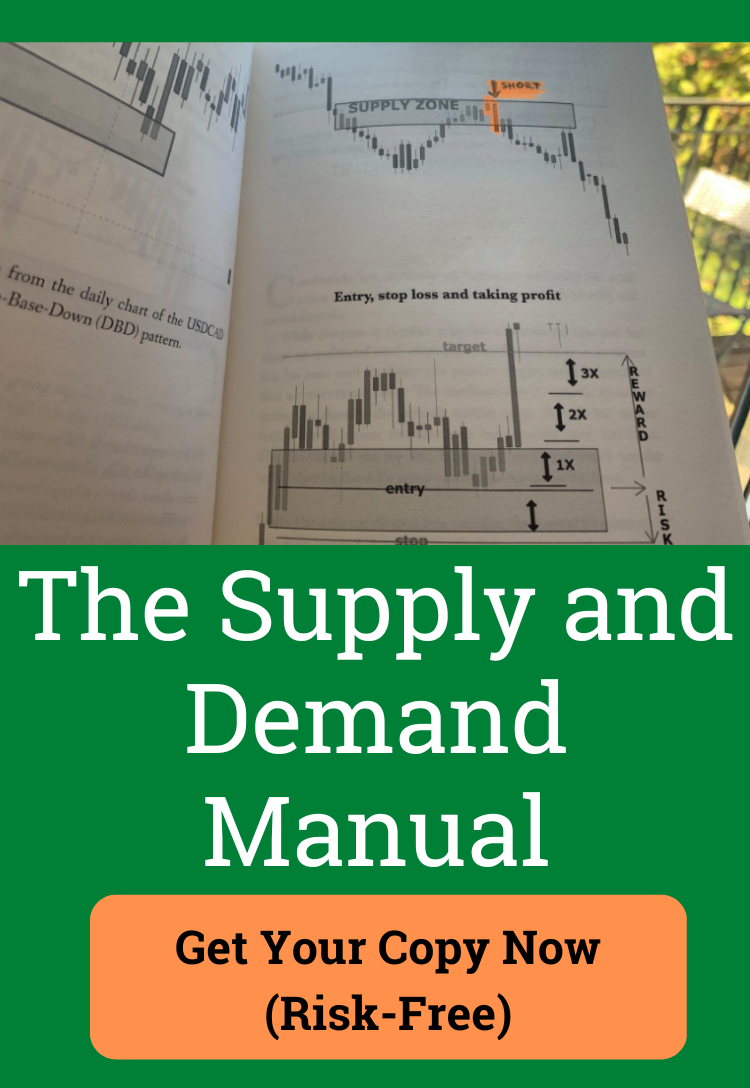
This is one of the cleanest ways to think about price action. Price leaves an area sharply, then later returns to it. That area matters because it previously showed imbalance.
The setup is not “buy every demand zone” or “sell every supply zone.” The setup is to wait for price to revisit a meaningful area and then judge the quality of the reaction.
Good signs include:
- Rejection candles: The market probes the zone and fails to hold beyond it.
- Loss of momentum into the zone: Price drifts in rather than accelerates into it.
- Fast response after touch: Buyers or sellers step in quickly instead of letting price sit there.
Poor signs include repeated heavy testing, sloppy overlap, and a level that has already been chewed through multiple times.
One process across three styles
The setup changes slightly by timeframe, but the thinking stays the same.
| Style | Holding Period | Primary Charts | Goal |
|---|---|---|---|
| Scalping | Very short | Execution-focused intraday charts | Take quick continuation or rejection moves |
| Day trading | Intraday | Structure plus execution charts | Build around opening range, breakouts, and retests |
| Swing trading | Several days to a few weeks | Higher timeframe levels and lower timeframe entries | Enter at key zones with room to expand |
For traders who want to see how other trading communities discuss fast-moving markets and trader behavior, Perpetual Protocol's community profile is worth a look because it shows how active participants share setups, market questions, and execution ideas in practice.
The professional edge isn't hidden in a secret pattern. It comes from reading context, waiting for confirmation, and passing on mediocre trades.
The Unbreakable Rules of Risk Management
Bad risk control ruins good reads. Traders who obsess over entries and treat position size as an afterthought usually wash out long before their edge has a chance to show up.

The order matters. Risk first. Setup second. Execution last.
The 1% rule
Many short-term traders use the 1% rule as a hard ceiling. Risk a small fraction of account equity on one idea, then accept the outcome without interference.
That number is less important than the principle behind it. A single trade cannot have the power to cripple the account. Losing streaks are part of live trading, even with a setup that works over time. Small, controlled losses keep decision-making clear and keep you in the game long enough to benefit from repetition.
A trader who cannot keep losses small never gets enough clean reps to find out whether the method has real edge.
Structural stops beat arbitrary stops
The stop belongs where the trade thesis fails on the chart. If the setup is a long off support, the stop goes beyond the level that shows buyers lost control. If the setup is a short after a failed breakout, the stop goes above the point where rejection is no longer valid.
This is how price action traders should think. The chart defines the invalidation point. Personal comfort does not.
Arbitrary stops create two expensive mistakes. Some are too tight and get tagged by normal movement before the trade has room to work. Others are too wide and turn a manageable loss into a stupid one. Structural stops solve both problems because they force position size to adapt to the setup, instead of forcing the setup to fit a random stop distance.
A simple test helps. If price hits your stop, you should be able to point to the chart and say exactly why the original read is wrong.
A visual explanation can help if you're still building this habit:
Position sizing with ATR
Once the stop is in the right place, size the trade around that distance. Average True Range, or ATR, is useful here because it gives a quick read on current volatility. In short-term trading, wider volatility usually means wider stops, and wider stops require smaller size. Britannica's overview of technical indicators gives a solid background on how traders use tools like ATR in practice.
The practical application is straightforward:
- If volatility expands: Give the trade more room, then cut size.
- If volatility contracts: The stop can often be tighter, so size can increase modestly.
- If volatility is ignored: Traders get oversized during unstable conditions and account damage tends to accelerate fast.
What disciplined risk looks like in practice
Professional risk routines are boring on purpose. Boring is good.
- Predefine the loss: Know the dollar amount you are willing to lose before you enter.
- Place the stop immediately: Mental stops fail under pressure.
- Size after the stop is set: Entry size comes from risk distance, not conviction.
- Stop trading after a rule break: Once discipline slips, the market is no longer the main problem.
In live markets, risk management is not a side topic. It is the trade. The setup only earns your attention after the loss is defined, the stop location makes structural sense, and the size fits the account.
Anatomy of a Price Action Trade
A clean trade usually looks obvious only after the fact. In real time, the job is to reduce the decision into a sequence. Context first. Trigger second. Risk before reward. Execution without improvisation.

The setup
Start with location. Price has pushed strongly in one direction, then paused in a tight consolidation. That pause matters because it tells you whether the move is being distributed or is being digested before another leg.
In a bullish case, I want to see a prior impulse, then a controlled pullback or flag. I do not want a collapse back into the origin of the move. A healthy pause looks contained. Sellers can slow price, but they can't take over.
The confirmation
Many traders jump too early, anticipating the breakout instead of waiting for proof.
A professional read sounds more like this:
- The market has a clear directional push.
- The pullback stays orderly.
- Price approaches the edge of the pattern.
- Buyers show their hand with a decisive candle or a clean break and hold.
The entry is not the pattern. The entry is the moment the pattern confirms.
That distinction keeps you out of a lot of weak trades. A flag can fail. A range can break the wrong way. Confirmation is what turns a chart idea into an executable trade.
The entry and stop
Suppose price breaks above the flag and then holds. The entry can go on the break itself or on the first orderly retest, depending on the speed of the market and your style.
The stop belongs below the structural point that invalidates the setup. On a bullish flag, that usually means beyond the low that would tell you the pullback is no longer healthy. If the market comes back through that structure, the trade idea is damaged. Exit and move on.
The target and trade management
The next question is where price is likely to run into trouble. That is usually the next resistance area, prior swing high, or another visible supply zone.
Managing the trade means deciding in advance how you'll behave if price does any of the following:
- Moves immediately in your favor.
- Breaks out and stalls.
- Retests the breakout level again.
- Fails and returns into the pattern.
That plan matters more than confidence. Traders who improvise once money is on the line usually turn a manageable trade into an emotional one.
A good price action trade is simple when stripped down:
- Location: Enter near meaningful structure.
- Confirmation: Wait for price to prove the thesis.
- Invalidation: Put the stop where the idea fails.
- Objective: Exit into the next logical barrier.
That's how a professional thinks through short term trading. Not by prediction. By conditional execution.
Avoiding Pitfalls and Building Consistency
Most traders don't lose because they never saw a good setup. They lose because they abandon their rules after two losses, overtrade when nothing is there, or start pressing random entries to make back money fast.
The common errors that wreck otherwise decent traders
Revenge trading is the obvious one. You take a loss, feel the need to recover it immediately, and force the next trade. Boredom trading is quieter but just as expensive. The market goes flat, your plan says wait, and you click anyway because doing nothing feels unproductive.
Then there's plan drift. A trader starts with one method and ends the week trading five different ones. That destroys feedback. You can't improve a process you keep changing midstream.
Why discipline matters more than talent
Even professionals struggle with short-duration trading. A landmark study found that, on average, institutional trades held for three months or less lose money across all stock categories, according to Cornell's summary of the study on short-term institutional trades. If institutions with resources, data, and execution infrastructure find short-duration trading difficult, retail traders should stop pretending raw confidence is enough.
Your edge doesn't come from trading more often. It comes from trading better and refusing to donate capital in bad conditions.
What consistency actually looks like
Consistency is built through routine, not inspiration.
- Write a trading plan: Define setups, entry triggers, stop placement, and what invalidates the trade.
- Keep a journal: Save charts, note emotions, and review whether you followed rules.
- Grade execution separately from outcome: A good trade can lose. A bad trade can win.
- Study one playbook thoroughly: Repetition builds pattern recognition faster than constant strategy hopping.
If you want to improve, stop asking how to win every day. Ask whether you can behave the same way every day. That is the actual test in short term trading. Clean process first. Money comes later.
If you want a structured way to build that process, Colibri Trader offers price-action-focused trading education built around chart reading, supply and demand, and practical risk management. It's a useful next step if you're tired of random setups and want a rules-based approach you can execute.