Let Your Winners Run: Why Knowing How to Trade Isn’t Enough
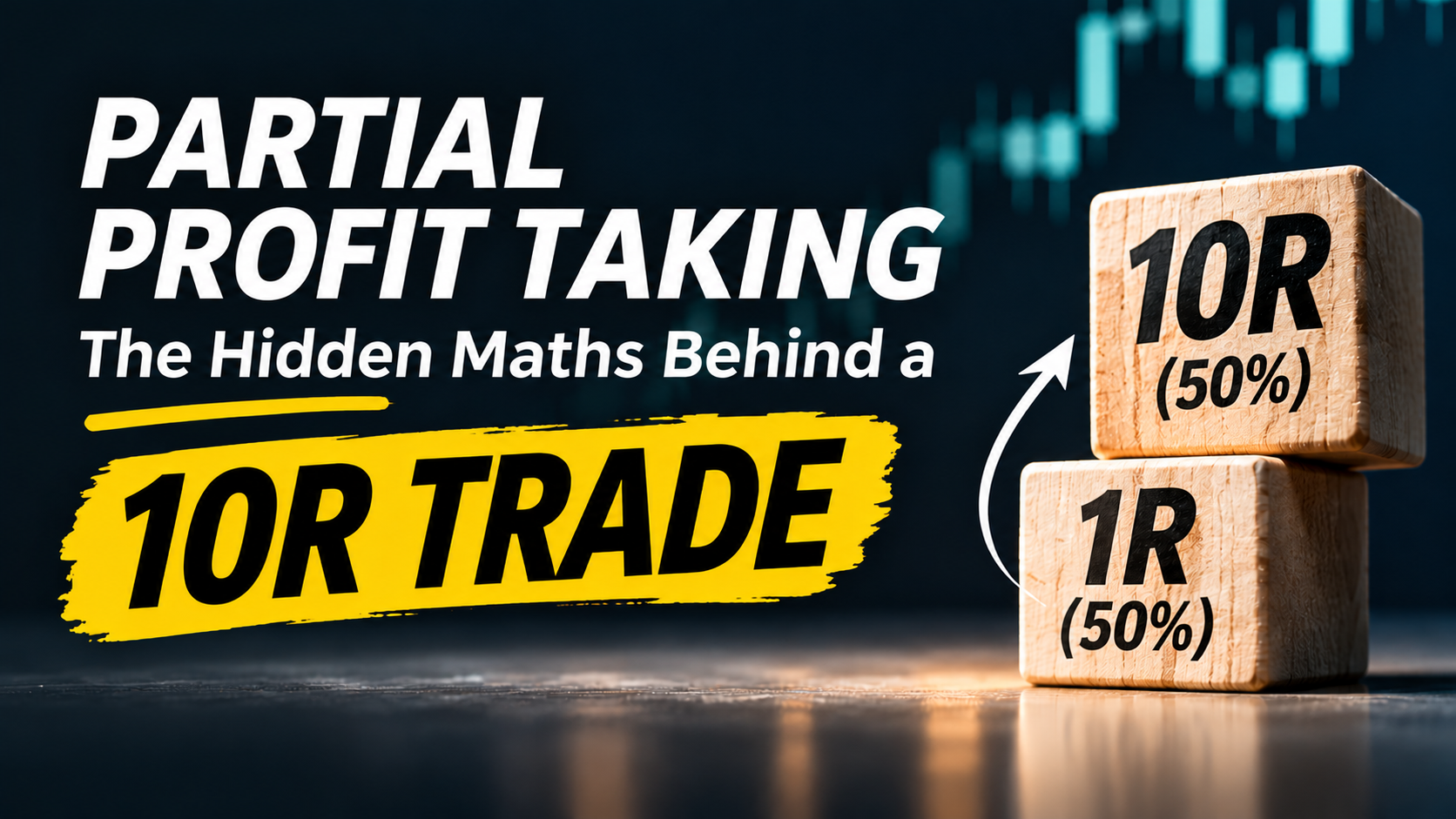
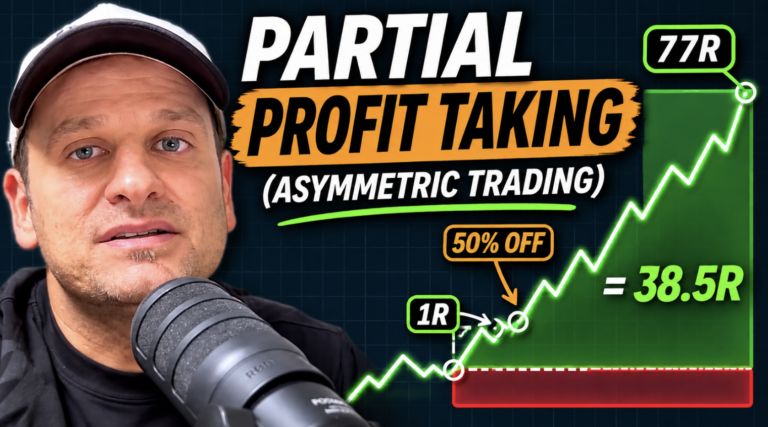
I recently took a NASDAQ trade where the move reached 38 times my initial risk, and I captured about 31R of it.
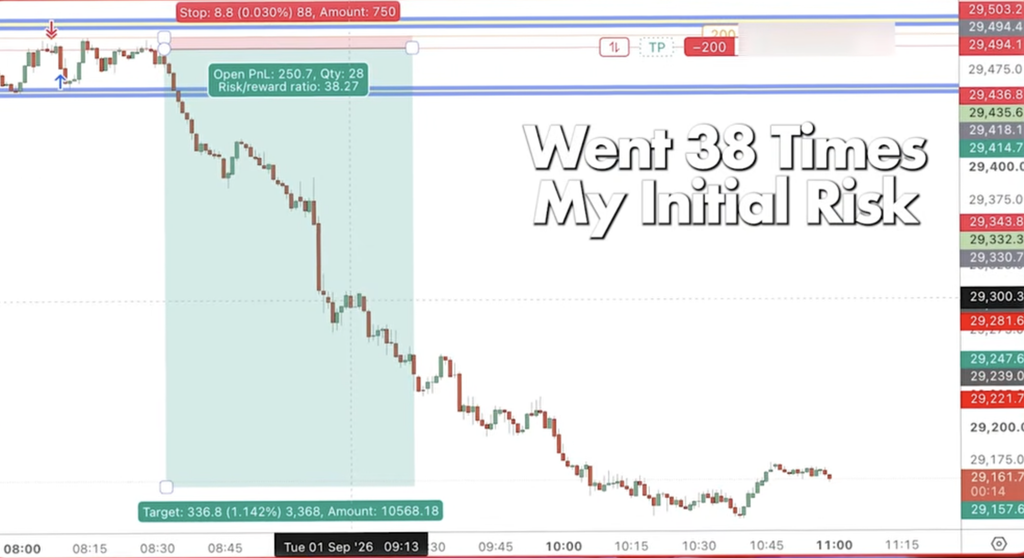
But the 38R is the least interesting part of this trade.
What matters is what happened before that. For a while the trade looked completely ordinary, and closing it would have seemed perfectly reasonable. That moment shows the difference between knowing how to trade and knowing how to execute a trade, and it’s why most traders never let their winners run.
The trades that look obvious afterwards rarely feel obvious during them
You’ve seen the trade on Instagram. Price moves straight in your direction, there’s a small pullback you’re comfortable with, and you take a nice profit.
That’s not the trade you experience in reality.
A real trade moves, stalls, pulls back and goes sideways while your open profit goes up and down. And that’s when your brain starts interfering:
Maybe I got this wrong. Maybe I should take the profit. Maybe it’s going to reverse.
This is where knowledge stops being enough. Once you’re in a trade, two things are happening: what the market is actually doing, and what you feel the market is doing. They are not the same thing. (Watch this part of the video)
Information or emotion?
This is the most important distinction in trade management:
- If my original reason for taking the trade has disappeared, that’s information.
- If nothing has actually changed and I’m just uncomfortable because price isn’t moving as fast as I hoped, that’s emotion.
If every uncomfortable moment makes you interfere with your trades, you will struggle to capture asymmetry. You’ll keep cutting winners short, and they’re the trades your results depend on.
The NASDAQ trade: risk first, reward second
Here’s how it played out.
I had my area and my short entry. But most importantly, before entering I knew exactly what I was risking.
Here is how it looked before it was a 38R trade:
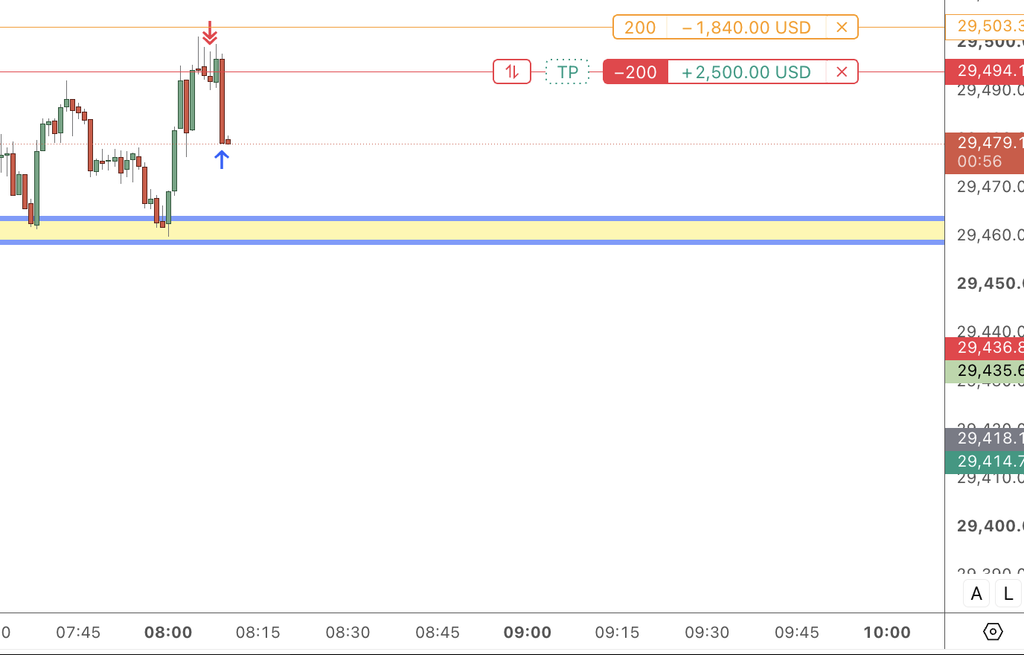
That’s the part most people overlook when they see a 38R trade. They look at the end of the move. I look at the stop first, because I can’t control whether NASDAQ gives me 5R, 10R, 20R or 38R. What I can control is how much I’m prepared to lose if I’m wrong.
If you’re new to measuring trades in R, start with my guide to the risk-reward ratio.
The most dangerous moment is when you’re already in profit
As the trade moved, it reached the point where it became very tempting to interfere. (2:26 in the video)
The profit was on the screen. The trade had already worked. And your brain hands you a very persuasive argument: why risk giving it back?
This is where traders turn potentially asymmetric trades into ordinary ones. Their entry isn’t the problem, and neither is their strategy. They simply don’t allow the payoff distribution to develop. In effect, they’re sabotaging their own trades.
“Has anything actually changed?”
So instead of asking “how much could I lose if this comes back?”, I go back to the chart and ask:
- Has anything actually changed?
- Has the market given me a reason to abandon the original idea?
- Or am I just uncomfortable watching an open profit fluctuate?
They’re completely different reasons for exiting. Only the first two belong to the trading plan. (3:16 in the video)
The trade continued, and from the original risk it produced about 31R.
Asymmetric trading isn’t about predicting big moves
Forget the 31R. If you’re chasing 31R trades, you’re learning the wrong lesson.
When I made the decision to hold, I didn’t know it would become a 31R trade. Nobody does. That’s the whole point.
Asymmetric trading isn’t about predicting enormous moves. It’s about creating high-probability situations where:
- the downside is limited and defined in advance, and
- the upside stays open when the market gives you the opportunity.
Sometimes you lose 1R. Sometimes the trade gives you very little. Most of the time, about 80% of our trades, it ends at breakeven. (4:50 in the video)
But occasionally the market gives you something completely out of proportion to what you risked. You can only catch those 10R, 20R or 30R outliers if you haven’t already talked yourself out of the trade. That’s what separates an asymmetric opportunity from an ordinary setup.
Why win rate is the wrong thing to obsess over
I believe traders spend far too much time trying to increase their win rate. They don’t spend enough learning to widen the gap between what they lose when they’re wrong and what they make when they’re right.
A simple example:
| Strategy A | Strategy B | |
|---|---|---|
| Win rate | 70% | 40% |
| Average winner | +1R | +3R |
| Average loser | −1R | −1R |
| Result over 100 trades | +40R | +60R |
Strategy B wins less often and still makes more. Now picture a strategy where most trades end at breakeven and a few run to 20R or more. If you cut those outliers short, you remove the trades that make the strategy profitable.
That’s why win rate on its own tells you very little. If you want to check your own numbers, here’s how to calculate your win rate.
Knowing vs executing: two different skills
Many traders respond to bad results by looking for more knowledge: another indicator, another course, another entry technique.
But often the problem isn’t knowledge. It’s executing what they already know.
You can fully understand that your strategy depends on letting a few big winners run. Then a real trade reaches 3R, the urge to lock it in becomes overwhelming, and you close it. Then you watch the market go on to 20R.
You can’t measure execution by what you recognised afterwards. You measure it by the decisions you made while the outcome was still uncertain.
The question to ask during your next trade
Next time you’re managing an open position, change the question:
| Instead of… | Ask… |
|---|---|
| Does this still feel good? | Has anything materially changed? |
| What if I give back this profit? | Has the market given me a valid reason to exit, according to my plan? |
| How much can I lock in right now? | Am I following the management rules that give my strategy its edge? |
Discomfort isn’t a reason to exit. Neither is a fluctuating open profit, or the fear of giving something back. The process makes the decision.
Frequently asked questions
What does “let your winners run” mean in trading? It means holding a profitable trade until your trading plan gives you a reason to exit. You don’t close it just because the profit feels good or the pullback feels uncomfortable. That’s what allows a small number of large winners to make up for many small losses and breakeven trades.
Why do traders cut their winners short? Mostly because of fear of giving back open profit. Once a trade is in profit, the brain treats that unrealised gain as something it already owns, and protecting it feels safer than following the plan.
What is the difference between trading knowledge and trading execution? Knowledge is understanding your strategy: where to enter, where to place the stop, and when the idea is invalid. Execution is actually following those rules in real time while you’re uncertain and uncomfortable.
What is a 38R trade? “R” is your initial risk. A 38R trade is one where the move reached 38 times the amount you risked. With a 1% risk, that would be a 38% move on that position.
Final thoughts: the 38R was the result, not the lesson
You don’t need to know how far the market will move. You need to know how to execute when you don’t know.
The difference between a trader who understands trading and one who executes consistently isn’t intelligence or experience. It’s the ability to follow a clear process when uncertainty and discomfort make that hard. Sometimes that’s what lets an ordinary-looking trade turn into something extraordinary.
Next: watch my video on the 90/10 rule in asymmetric trading, where I explain why the spread between your winners and losers matters more than how often you win.
Trading involves risk. The NASDAQ example is a single historical trade and does not represent a typical or guaranteed outcome. Past performance is not a reliable indicator of future results.