The Hidden Cost of Confirmation in Asymmetric Trading
There is a moment almost every trader has experienced.
You’ve done your analysis. You’ve marked the level. You know exactly where you’re interested in buying or selling.
Price finally arrives.
And then you hesitate.
You tell yourself you’re being disciplined.
“I’ll wait for one more candle.”
“I want to see confirmation first.”
“Let me make sure the level is actually holding.”
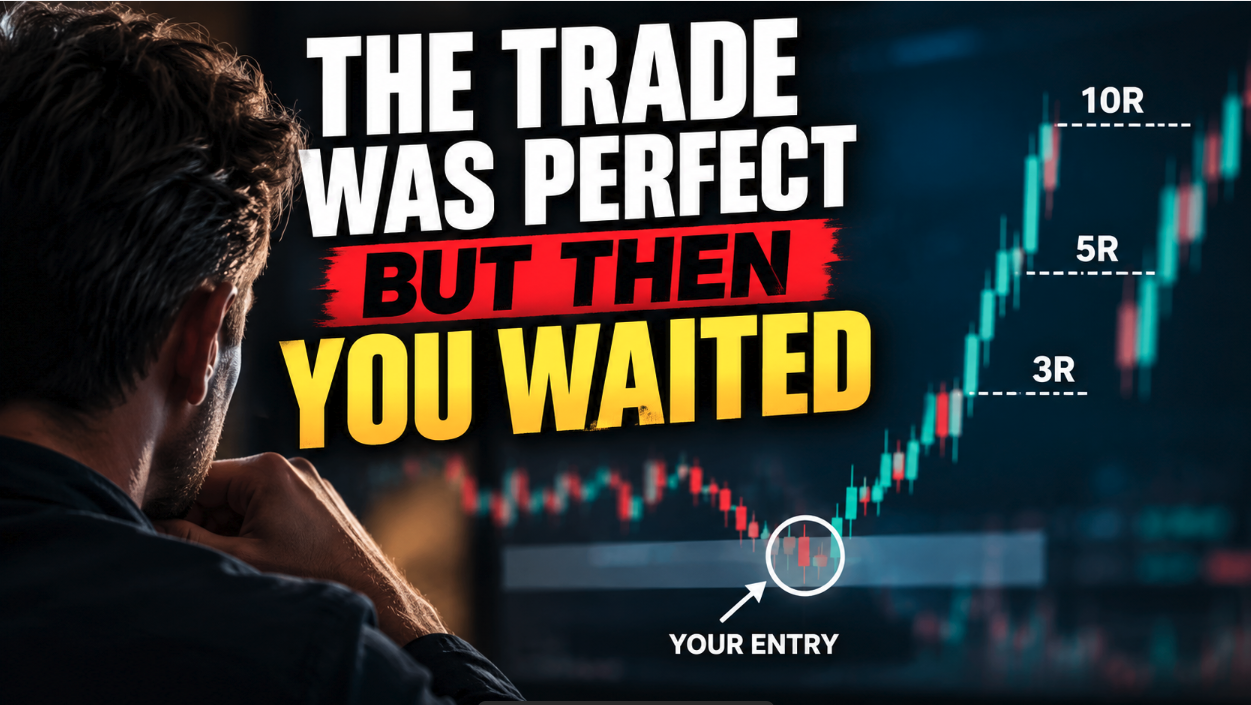
Then the market moves.
First 1R.
Then 3R.
Then 5R.
Sometimes 10R or more.
And the entry you were waiting for never comes back.
You were right about the level. You were right about the direction. You were right about the opportunity.
But you never took the trade.
This is one of the most interesting paradoxes in trading:
As your certainty increases, your opportunity can decrease.
And understanding this is incredibly important if you want to trade asymmetrically.
Confirmation Has a Price
Traders are constantly told to wait for confirmation.
On the surface, that makes perfect sense.
Why enter immediately when you could wait for the market to prove that your idea is correct?
The problem is that confirmation isn’t free.
You pay for it.
Sometimes you pay with a slightly worse entry.
Sometimes you pay with a wider stop.
Sometimes you pay with a significantly reduced risk-to-reward ratio.
And sometimes you pay by missing the entire trade.
Imagine you’ve identified a demand zone where you’re interested in buying.
Price is currently trading well above it.
Before price reaches your level, everything looks simple.
You know where you want to enter.
You know where the trade is invalidated.
And you can see the potential upside if price reacts strongly.
Then price falls into the zone.
Suddenly, executing the trade doesn’t feel nearly as comfortable.
The candles might be bearish.
Momentum might look negative.
Everyone appears to be selling.
That discomfort makes sense.
But there is something important happening at precisely that moment.
The reason your entry offers potentially exceptional asymmetry may be the same reason the trade feels uncomfortable.
Certainty and Asymmetry Often Move in Opposite Directions
Let’s imagine a hypothetical trade.
At your original level, perhaps you’re risking 20 points with the potential for the market to move 200 points.
That’s potentially a 1:10 risk-to-reward opportunity.
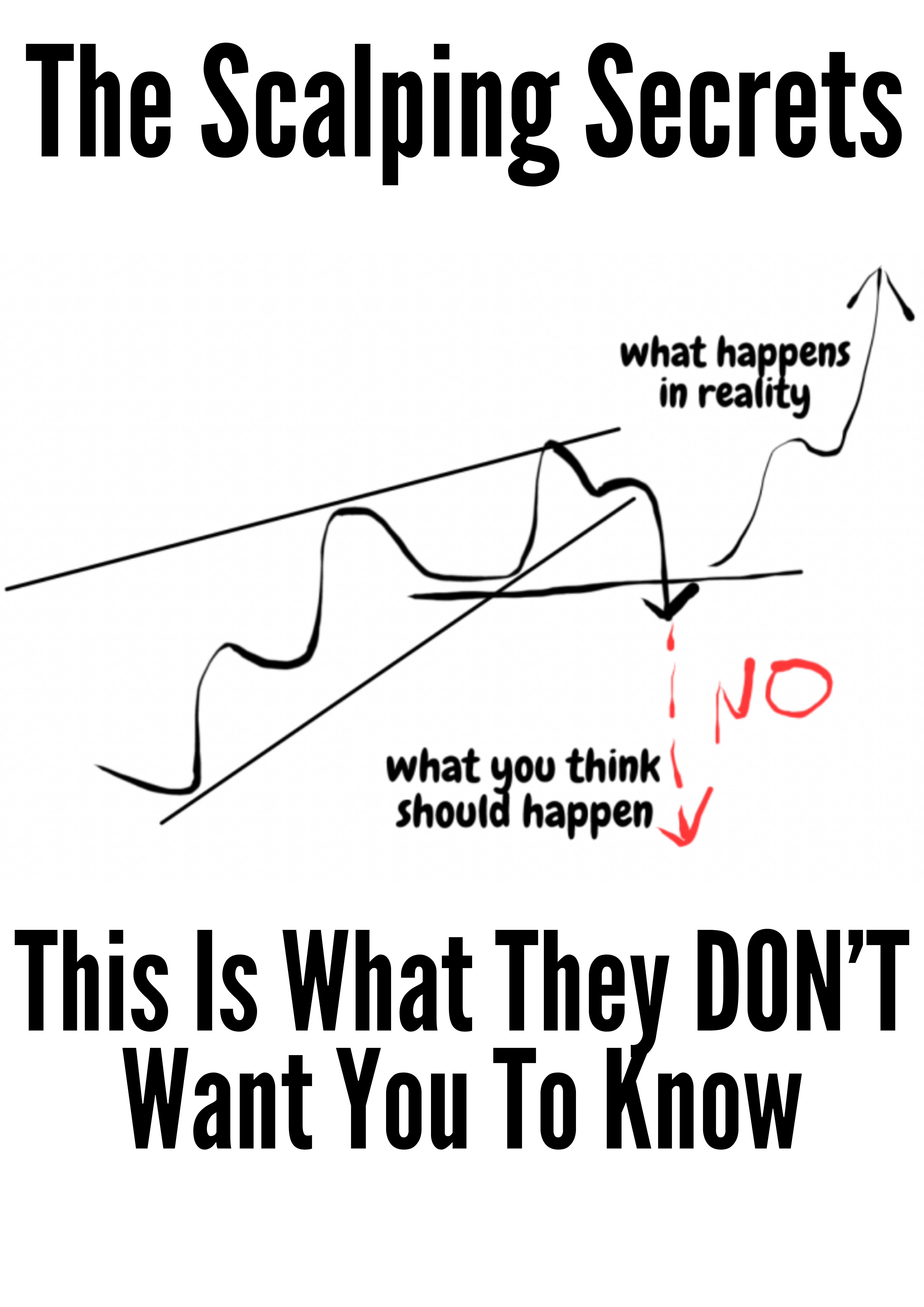
But instead of executing there, you wait.
Price reacts 30 points.
Now you have some confirmation.
You feel more comfortable.
But your potential entry is already 30 points worse.
Perhaps you wait for another bullish candle.
Now you’re entering 50 points away from the original level.
The trade might look safer.
Psychologically, it certainly feels safer.
Mathematically, however, it may be a completely different opportunity.
What started as a potential 1:10 trade might now be 1:4.
Wait even longer and perhaps it’s 1:2.
Eventually, everyone can see the reversal.
But by then, much of the asymmetry may already be gone.
The more obvious the trade becomes, the more expensive that obviousness can become.
The Market Doesn’t Owe You a Second Entry
One of the most dangerous assumptions traders make is believing they’ll always get another chance.
They see price react from their level and think:
“I’ll enter on the pullback.”
Sometimes that happens.
But sometimes price simply leaves.
Strong imbalances can produce aggressive moves precisely because there isn’t enough opposing pressure to bring price back immediately.
The trader is then left watching a move they had already anticipated.
3R.
5R.
10R.
Gone.
The natural reaction is frustration.
But the lesson isn’t necessarily:
“I need to find a better entry.”
The deeper lesson may be:
“I need to understand what I’m asking the market to give me before I’m willing to execute.”
Every additional condition has a cost.
Every extra candle has a cost.
Every additional layer of confirmation has a cost.
The question is whether that cost actually improves your trading – or simply makes you feel more comfortable.
This Doesn’t Mean Blindly Entering Every Level
There is an important distinction here.
Asymmetric trading does not mean abandoning your trading plan and blindly entering every supply or demand zone you see.
Quite the opposite.
The analysis needs to happen before price arrives.
You need to understand why the area matters.
You need to know where your idea is invalidated.
You need to understand the surrounding market structure.
And perhaps most importantly, you need to understand the opportunity around the entry.
A good setup isn’t automatically a good trade.
I believe traders should ask another question:
“If I’m right, how much room does this trade actually have to run?”
That’s where asymmetry becomes powerful.
Instead of only grading the quality of the entry, you begin grading the opportunity surrounding it.
A beautiful setup with a major opposing area directly ahead might offer very little asymmetry.
A less comfortable-looking entry with significant open space ahead of it might offer dramatically more.
That changes how you think about trading.
You’re Not Being Paid for Certainty
This may be one of the most important concepts I’ve learned from trading.
The market doesn’t pay you for being certain.
It doesn’t even pay you for being right frequently.
Ultimately, what matters is the relationship between what you risk when you’re wrong and what you can potentially make when you’re right.
That’s the foundation of asymmetric trading.
If I can keep my losses controlled while allowing exceptional opportunities to expand, I don’t necessarily need to be right all the time.
But to capture those exceptional trades, I also have to accept something uncomfortable:
The best opportunities may not feel obvious when they appear.
If you wait until all uncertainty disappears, the opportunity may disappear with it.
The goal therefore isn’t to eliminate uncertainty.
That’s impossible.
The goal is to become comfortable executing a clearly defined process despite uncertainty.
You define the level.
You define the invalidation.
You define the risk.
You evaluate the potential asymmetry.
Then you execute according to the framework you’ve already established.
The Question to Ask Before Your Next Trade
The next time you find yourself waiting for “just one more confirmation,” stop and ask yourself:
“What exactly am I buying with this confirmation?”
Am I receiving information that materially improves the quality of the trade?
Or am I simply paying for emotional comfort?
Because those are very different things.
Confirmation can absolutely have value.
But confirmation also has a price.
And in asymmetric trading, that price can sometimes be the very thing you’re trying to capture:
the exceptional risk-to-reward opportunity that existed before everyone else could see it.
I explain this concept visually, with a trading example, in the video below:
Watch: The Trade Was Perfect… But Then You Waited
The market will never give us certainty.
But it does occasionally give us something far more valuable:
A small, clearly defined risk with disproportionately large potential upside.
The challenge is learning to recognise it – and being prepared to act before certainty becomes expensive.
Happy Trading,
Atanas