



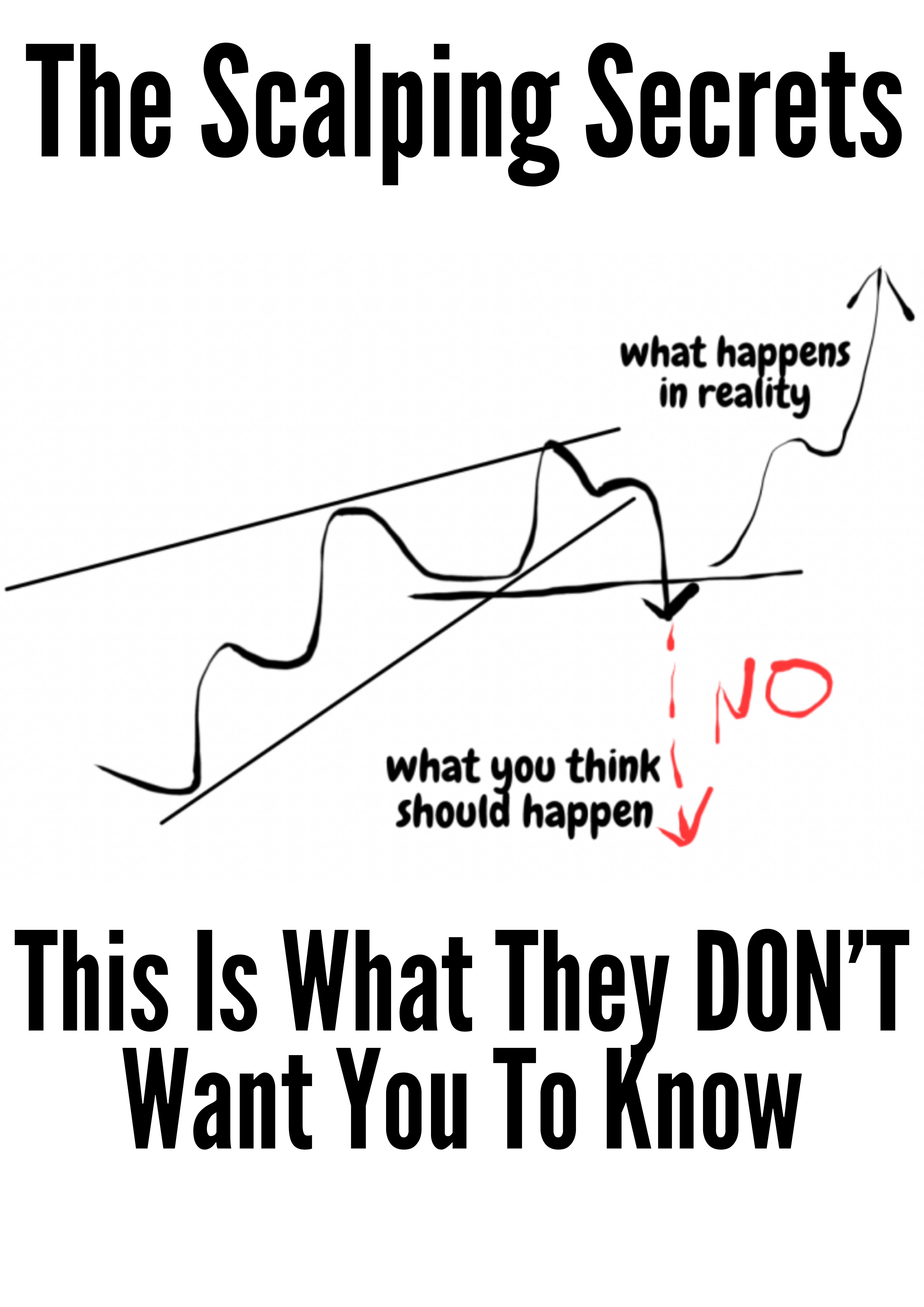
Turtle Trader Strategy: A Step-by-Step Modern Guide

A trader sees a fresh breakout, buys the high, and gets stopped out two days later. Then the next breakout runs for weeks without him. That frustration is exactly why the Turtle system still matters.
Could Great Traders Be Made Not Born
A Chicago trader and a trained mathematician argued over a question that still matters. Can trading skill be taught, or do the best traders arrive with something other people do not have?
Richard Dennis chose to settle it with capital on the line. He recruited novices, gave them a rule set, and had them trade real markets. The point was not to prove that anyone could become a market wizard. The point was narrower, and more useful. A trader does not need brilliant intuition to execute a profitable process.
That distinction matters.
Many traders hear the Turtle story and reduce it to a motivational slogan. Its lesson is harder than that. Dennis was testing whether ordinary people could follow a structured trend system with enough discipline to survive the losing streaks and hold the big winners. That is a very different claim from saying rules alone guarantee success.
A teachable edge
The experiment rested on a practical idea. Good trading decisions can be broken into repeatable parts, then trained.
The original framework handled three jobs that discretionary traders often blur together:
- Find a valid setup: enter only when price breaks a defined range.
- Control downside: place exits based on a rule, not on hope or discomfort.
- Size the trade properly: adjust exposure to volatility so one market does not dominate the account.
That structure is why the Turtle system still deserves study. It forced traders to act on price, not opinion. It also exposed the main bottleneck in systematic trading. Following clear rules sounds easy until the system takes several small losses in a row and the next signal looks no better than the last three.
I have always viewed that as the strongest part of the Turtle experiment. It showed that execution can be trained, but only inside a process strict enough to remove most of the usual self-sabotage.
What holds up, and what does not
The lasting value here is not the mythology. It is the operating logic.
A trader can improve fast by adopting the core Turtle principles: wait for price to confirm, define risk before entry, and size positions so a single trade cannot do serious damage. Those rules still fit a price-action approach because they force consistency around the only thing that pays, actual movement in the market.
Blindly copying the original rules is a different issue. Some markets are noisier now, breakouts fail faster, and simple channel signals can get chopped up for weeks. The better takeaway is to study the logic underneath the system, then test how that logic performs in the instruments and conditions you trade.
That is the answer to the Dennis and Eckhardt debate. Traders can be taught, but what they are really being taught is a way to handle uncertainty with rules, risk control, and discipline.
The Legend of the Turtle Traders
A novice walks into a room full of charts, gets handed a rule set, and is told to follow it without debate. That was the appeal of the Turtle story. Richard Dennis was trying to prove that trading skill could be trained if the process was clear enough and the trader was disciplined enough to execute it.
The name helped turn the experiment into market folklore. Dennis had seen turtle farms in Singapore and used the idea as a blunt metaphor. Traders could be raised in a structured environment, then released into the market with a tested method and strict controls.
What made the story stick was not the branding. It was the challenge to the trading culture of the time.
Markets were full of strong opinions, floor-trader instincts, and personality-driven narratives. The Turtle program took the other side. It taught novices to trust price movement over prediction and to treat trading like a repeatable operating process. If you understand how a Donchian Channel breakout strategy works in practice, you already understand the backbone of that logic.
Why the experiment mattered
The experiment hit a nerve because it attacked a belief that still traps traders now: that success comes from special intuition.
The Turtles were trained to do a few uncomfortable things well:
- Buy strength and sell weakness: wait for price to break out, then act.
- Take small losses without argument: trend systems spend a lot of time being wrong before a real move develops.
- Follow predefined rules under pressure: entries, exits, and risk limits were set before the trade.
That last point deserves more respect than it usually gets.
A breakout system looks simple when you read the rules on a calm weekend. It looks very different after four failed signals in a row, when the next setup triggers and every instinct says to skip it. The legend of the Turtle Traders is really a legend about execution under discomfort.
What the story still teaches
The original program became famous because inexperienced traders were able to produce strong results inside a narrow, rules-based framework, as noted earlier. That does not mean every novice can copy the rules and expect the same outcome. It means a trader with average instincts can perform far better than expected if the process removes opinion at the point of decision.
For a modern price-action trader, that distinction matters.
The old lesson was, "rules beat intuition." The better modern lesson is, "rules help only if they match the behavior of the market you trade." Some of the original Turtle ideas still hold up well. Trade confirmed expansion. Cut losses fast. Press winners carefully. Other parts need more scrutiny now because many markets are noisier, more crowded, and quicker to reverse after obvious breakouts.
That trade-off is what makes the Turtle story worth studying. It is not just a piece of trading history. It is a working example of how a mechanical trend strategy can build discipline, and where that same rigidity can break down if market conditions change.
| What inexperienced traders often want | What the Turtle approach required |
|---|---|
| Frequent action | Long periods of waiting |
| High win rate | Tolerance for repeated small losses |
| Room for interpretation | Strict rule execution |
| Quick validation | Patience for rare outsized trends |
Traders usually do not fail because the rules are unclear. They fail because the rules become hardest to follow at the exact moment they matter most.
That is why the story still has value. It shows what disciplined trend following can do, and it also sets up the more useful question for today's trader: which parts of the original system still deserve to be followed exactly, and which parts should be adapted to current price behavior?
The Core Rules of the Turtle Trading System
The original turtle trader strategy is straightforward on paper. It uses Donchian Channel breakouts to identify expanding price moves and then holds the trade until price proves the move is over.

According to LiteFinance's explanation of the Turtle trading strategy, the system uses a dual breakout structure: System 1 enters on a 20-day high or low, and System 2 enters on a 55-day high or low. Exits work off the opposite side of shorter channels.
System 1 and System 2
The logic is simple. One entry model reacts faster. The other waits for a more established move.
System 1
System 1 is the aggressive version.
- Long entry: buy when price breaks above the prior 20-day high.
- Short entry: sell short when price breaks below the prior 20-day low.
- Long exit: close when price breaks below the 10-day low.
- Short exit: close when price breaks above the 10-day high.
This catches earlier trend shifts, but it also invites more false breaks.
System 2
System 2 is slower and usually cleaner.
- Long entry: buy when price breaks above the prior 55-day high.
- Short entry: sell short when price breaks below the prior 55-day low.
- Long exit: close when price breaks below the 20-day low.
- Short exit: close when price breaks above the 20-day high.
This version gives up some early entry but tends to avoid some low-quality noise.
How a trader actually reads the chart
Donchian Channels are not predictive. They only mark the highest high and lowest low over a defined lookback. If you want a clean primer on how that tool behaves in practice, this guide on Donchian Channel trading strategies is worth reviewing.
In practical terms, the setup works like this:
- Mark the channel high and low
- Wait for a true break, not a near miss
- Enter in the direction of the break
- Place the stop according to volatility
- Hold until the opposite exit rule triggers
Where traders misapply the rules
The classic mistake is treating every breakout as equal. It isn't.
A breakout that occurs straight into obvious overhead supply often fails. A breakout that comes after a tight contraction, with clean closes near the highs, tends to be structurally healthier. The original rules were mechanical, but modern discretionary traders can improve decision quality by reading the surrounding price action instead of acting on every printed high or low.
A Donchian breakout is an alert, not a promise.
Another mistake is entering intrabar because price briefly poked through the level. Breakout systems work better when the trader defines exactly what counts as a break and sticks to it. If your execution rule is vague, the system stops being mechanical.
Volatility and Risk The Turtle Position Sizing Model
A lot of traders are drawn to Turtle trading because of the breakout rules. The part that kept the system alive was the sizing.
The model starts with a hard truth. A one-lot position in a quiet market is not the same bet as a one-lot position in a fast market. The Turtles solved that by tying position size to volatility, so risk stayed consistent even when the chart did not.

According to Altrady's overview of Turtle trading rules, the system used a 1% risk cap per trade and measured market movement with a 20-day ATR, called N.
What N actually does
N is the market's recent average daily range. In practice, it gives the trader a common risk unit across instruments that behave very differently.
That matters more than many traders realize. A breakout in crude oil, a breakout in bonds, and a breakout in a stock index can all look clean on the chart while carrying very different dollar risk. N brings those trades onto the same scale.
The working logic is straightforward:
- Start with account equity
- Set the maximum loss per trade
- Use the 20-day ATR as N
- Adjust position size so the stop fits the risk limit
That is the essential discipline. The entry can be mechanical, discretionary, or somewhere in between. If the size is wrong, the trade is wrong.
The 2N stop and pyramiding rules
As noted earlier from the Altrady summary, the classic Turtle model placed the initial stop at 2N from entry. It also added to winning positions every 0.5N, with a cap on total units.
Those rules work together for a reason:
| Component | Purpose |
|---|---|
| 2N stop | Keeps a normal pullback from knocking out the trade too early while still defining the loss |
| 0.5N add-ons | Increases exposure only after price proves the trade is working |
| Unit cap | Limits concentration when a trend gets extended |
The Turtle system still teaches something useful to modern traders. It separates conviction from exposure. A trader can like a setup and still size it small because volatility is high. That one habit prevents a lot of avoidable damage.
For traders building that side of their process, this guide to money management strategies for futures traders adds practical context.
A visual walkthrough helps here:
Where the original model still holds up, and where it needs judgment
The best part of the Turtle position sizing model is that it forces decisions in risk units instead of dollars, contracts, or emotion.
That still works.
The weakness shows up in modern markets that gap more, mean-revert harder, or trade with short bursts of volatility expansion followed by immediate failure. ATR can adjust, but it adjusts after the market has already changed. That means a trader using the original rules blindly can still get oversized right before conditions become unstable, or undersized after the move is already clean and established.
Price action helps here. If the breakout is technically valid but the structure is messy, with repeated rejection wicks or obvious nearby resistance, the mechanical size may be too generous. If the breakout is clean and volatility is heightened only because of one abnormal bar, the raw ATR number may be too conservative. The original model gave traders consistency. A modern trader can keep that logic and apply a layer of chart judgment without turning the process into guesswork.
One rule should stay intact. If volatility expands sharply, size comes down. If it does not, the trader is no longer following a risk model. The trader is just attaching a famous name to oversized exposure.
How the Turtle Strategy Performed Historically
A trading system does not earn a long shelf life because it sounds intelligent. It lasts because it made money under real pressure, with real drawdowns, and with traders who had to follow the rules when the signals felt uncomfortable.

The original Turtle experiment delivered returns large enough to turn a niche trend-following method into trading lore. The headline numbers matter less than what produced them. They came from a simple breakout framework applied with discipline across markets that were capable of sustained directional moves.
That historical record deserves respect, but it also needs context.
The Turtles traded in an environment where broad commodity trends could run for months and where systematic trend followers had less crowding around the same obvious levels. A breakout system with wide stops, aggressive pyramiding, and patience could catch a small number of exceptional moves and let those winners pay for a long string of failed entries.
That is the part newer traders often miss. The edge was never a high win rate. The edge came from asymmetry. Small losses were accepted as operating cost, and rare trends were pressed hard enough to matter.
Three points from the historical performance still hold up:
- Trend following can produce outsized results when markets enter persistent directional phases.
- Mechanical rules can help traders avoid self-sabotage by removing the urge to override entries, exits, and adds.
- The primary driver was trade management, especially position sizing and pyramiding into strength after a move proved itself.
The record does not prove that every 20 day or 55 day breakout will keep working the same way now. It proves that a trader can build a profitable business around a simple idea if the rules fit the market, risk stays controlled, and execution remains consistent through ugly stretches.
I think that is the right way to read the Turtle legacy. It was a hard, disciplined way to extract money from trends, not a permanent shortcut.
The practical lesson for a price-action trader is clear. Study the original results for the logic, not for nostalgia. The logic is still useful. Buy strength that can expand, cut losers without debate, and press the position only after price confirms the move. The weak point is just as clear. If the market is choppy, headline-driven, or packed with failed breakouts, the original rules can bleed for long periods before a real trend appears.
That trade-off was there in the 1980s too. Modern traders just see it faster.
Adapting the Turtle Strategy for Modern Markets
Traders need to stop being sentimental. The original turtle trader strategy was built for a different market structure.
Recent evidence suggests the old rules don't transfer cleanly to every modern market or timeframe. According to this video discussing 2024 to 2025 Turtle strategy backtests across more than 40 markets, Sharpe ratios dropped below 0.8 in equities and crypto, and win rates fell from a historical 35% to as low as 22% in intraday settings because of increased noise and false breakouts.

Why the classic breakout often struggles now
A pure breakout system has one obvious weakness. It buys where everyone else can also see the trigger.
In modern markets, especially on lower timeframes, those levels often get probed, faded, and retested quickly. That creates a rough environment for rigid breakout entries. You get more whipsaws, less follow-through, and more trades that look valid for a few bars before reversing.
Here are the common failure patterns:
- Obvious level raids: price pushes through the channel high, triggers breakout buying, then snaps back.
- Range-bound churn: the market rotates instead of trends, so stop-outs stack up.
- Intraday noise: lower timeframes produce too many weak breaks with no real expansion.
What to keep and what to modify
A modern price-action trader doesn't need to throw the whole system away. Keep the logic. Update the trigger quality.
What still deserves respect:
| Keep | Why |
|---|---|
| Volatility-based sizing | It adapts exposure to current conditions |
| Defined exits | It reduces emotional interference |
| Pyramiding winners | It presses edge only when the market confirms |
What often needs adjustment:
| Modify | Reason |
|---|---|
| Blind breakout entries | Too many false breaks in noisy markets |
| Lower timeframe application | Noise often overwhelms trend structure |
| Ignoring context | Clean level breaks matter more than raw channel prints |
A practical adaptation is to require stronger price-action confirmation before entry. That might mean waiting for a decisive close beyond the level, checking whether the breakout forms from compression rather than from exhaustion, or rejecting breaks that run straight into a clear opposing structure.
A modern Turtle-style trader should trade fewer breakouts, not more.
The principle hasn't expired. The market has changed, and your filter has to change with it.
Implementing the Turtle Strategy Step by Step
If you want to test the turtle trader strategy responsibly, don't start by placing live trades. Start by building a process you can repeat.
A practical checklist
Choose your market universe
Pick instruments with enough movement and liquidity to make breakouts meaningful. A trend-following system needs room to run.Set up the chart properly
Use Donchian Channels for the breakout levels and ATR for volatility. If you need a cleaner working knowledge of ATR first, review this guide on the ATR indicator and how traders use it.Define one entry model
Don't mix twenty variations. Either test the fast breakout logic, the slower breakout logic, or a clearly defined modern filter.Fix your risk rule before testing
The classic framework used a volatility-based cap per trade. Decide your own risk ceiling and keep it constant through the sample.Write the stop and exit rules in plain language
If you can't explain your stop placement and exit trigger in one sentence each, the rule is too vague.Track every trade
Record breakout quality, market condition, whether the move came from contraction or chop, and whether you followed the plan exactly.
What separates useful testing from random tinkering
The biggest mistake is changing rules every time a setup fails. A breakout system needs a sample size because its edge comes from uneven payoff, not constant winning.
Test one version long enough to see its character. You'll quickly learn whether the original mechanics suit your market, or whether the better move is using Turtle principles inside a more selective price-action framework.
Done right, the turtle trader strategy becomes more than an old trend-following template. It becomes a discipline model for entries, risk, and trade management.
If you want a straightforward way to sharpen your price-action skills, risk management, and trading discipline, Colibri Trader is a strong place to start. The platform focuses on practical execution over theory-heavy noise, which makes it a natural fit for traders who want to apply structured ideas like the Turtle approach without getting buried in complexity.