
Trend Line Definition: A Guide for Traders

You're probably looking at a chart right now with too much on it. A few moving averages, maybe RSI, maybe MACD, and price still feels messy. Candles push up, snap back, fake out, then reverse again. It starts to look random.
That's usually the point where traders either overcomplicate the chart or give up on reading it cleanly.
A properly drawn trend line does something simple but important. It strips the chart down to structure. Not prediction. Not certainty. Structure. It helps you see where buyers have been willing to step in, where sellers have kept pressure on price, and whether that behavior is still intact. If you understand that, the trend line definition stops being a textbook phrase and becomes a working tool.
From Chart Chaos to Clarity with One Simple Line
Live charts usually suffer from one problem. There is too much to look at and no clear structure for judging what matters.
I've watched traders cover a chart with indicators, mark every small swing, and still hesitate when price reaches a decision point. The issue is rarely a lack of information. The issue is that they have no simple way to judge whether buyers or sellers are still in control.
A trend line fixes that by giving price a boundary to react around.
What the line does
A good trend line is not just something you draw through a few candles. It gives you a working reference for behavior. You can see whether pullbacks are still being defended, whether rallies are still being sold, and whether the market is keeping the same rhythm or starting to lose it.
That matters in live trading.
Price never moves in a perfectly clean path. It pushes, pauses, retests, and sometimes overshoots before snapping back. With no framework, every pullback looks dangerous and every breakout looks urgent. With a trend line, you can judge the reaction instead of guessing from candle to candle.
Bad chart reading usually starts when a trader reacts to each candle instead of judging the pressure building across a series of swings.
The line also helps separate a touch from a message. One tap means little on its own. Repeated respect, sloppy retests, sharp breaks, or a change in angle tell you far more. That is how I use trend lines in practice. I care less about the line itself and more about what price does when it gets there.
Why traders get this wrong
A lot of confusion starts when traders treat a market trend line like a statistical tool. On a trading chart, the job is simpler and more practical. The question is not whether a line fits data neatly. The question is whether price continues to respond to the same diagonal area in a way you can trade.
That shift changes everything. You stop drawing lines to make the chart look organized. You draw them to test whether market behavior is holding up under pressure.
What Is a Trend Line in Price Action Trading
You mark a clean diagonal under a rising market. Price pulls back into it, hesitates, then pushes higher again. That line is not predicting anything. It is showing where traders have been willing to defend the move.
A trend line definition that helps in live trading is simple: a trend line is a diagonal reference that connects key swing points and helps you judge whether the current trend is still being respected.

Uptrend and downtrend logic
In an uptrend, the line sits beneath price and links higher lows. That shows buyers stepping in before the market can retrace too far. In a downtrend, the line sits above price and links lower highs. That shows sellers staying active on rallies.
The line matters because of the reaction around it.
If price keeps respecting the same diagonal area, the trend still has structure. If touches get weak, breaks start closing cleanly through it, or the angle has to be redrawn over and over, the trend is losing shape. That is the part newer traders often miss. The line is only the starting point. The valuable information comes from how price behaves when it returns to that area.
Trader definition versus mathematical definition
Outside trading, a trend line often means a best-fit line drawn through data to describe direction. On a price chart, the job is different. Traders are not trying to prove a formal model. They are tracking whether the market continues to respect a path that can be acted on.
That distinction clears up a lot of bad chart work.
A mathematical line explains data after the fact. A trading line helps frame the next retest, the next breakout attempt, or the next loss of momentum. If it does not improve that read, it is just ink on the chart.
| Context | What makes the line useful |
|---|---|
| Data analysis | It summarizes direction across a set of values |
| Price action trading | It helps judge whether buyers or sellers still defend the same slope |
What works in real charts
Good trend lines are usually obvious. You should not need a long explanation for why the line belongs there. If the market has reacted cleanly around the same diagonal more than once, traders can see it. If you have to force the anchors to make the line fit, it is probably not worth trading.
I look for lines that give me a decision point. A clean touch can confirm trend continuation. A messy overshoot followed by recovery can show trapped traders and a stronger retest. A hard break with follow-through can signal that the old rhythm is gone.
If you want a practical example of that process, this guide on how to draw a trendline correctly on a trading chart is a useful companion.
A trend line is not valuable because it looks neat. It is valuable because it helps you read pressure, confirmation, and change in real time.
The Unbreakable Rules for Drawing Reliable Trend Lines
Most traders don't lose with trend lines because the tool is weak. They lose because they draw them loosely, then trust them too much.
A reliable trend line starts with discipline. You need rules before you need setups.

The first two points only start the job
You can draw a line with two points. That doesn't make it tradable.
In technical analysis, a trend line is typically treated as valid only after three meaningful pivot interactions. The first two points define the diagonal, but the third touch is the confirmation that the market is respecting it, as outlined in Wikipedia's technical analysis entry on trend lines).
This is one of the biggest gaps between what traders read and what works in practice. Beginners often act as soon as they can draw the line. Experienced traders usually want to see the market test it.
The checklist I'd use on any chart
If you want a line you can trust, check these points:
- Start with significant swings: Use clear swing lows for an uptrend and clear swing highs for a downtrend. Tiny chart noise doesn't count.
- Treat the first line as tentative: Two points define the angle. They do not confirm market respect.
- Wait for interaction that matters: The third touch should happen at a meaningful pivot, not in the middle of messy overlap.
- Stay consistent with your anchor points: If you use wicks, keep using wicks. If you use candle bodies, keep using bodies. Don't switch halfway through just to make the line fit.
- Don't force a perfect touch: A good line marks a boundary area. It shouldn't slice awkwardly through random bars just because you want validation.
Consistency beats creativity
A trader who keeps redrawing lines after every small violation usually isn't reading structure. They're negotiating with the chart.
If you need a cleaner process, this guide on how to draw trendlines is a practical companion because it focuses on swing points and line placement rather than gimmicks.
A trend line should reveal structure quickly. If drawing it feels like an argument, the market probably hasn't offered a clean one.
One more point matters. In finance, trend lines became central because traders needed a repeatable way to interpret direction from price charts, and a line is typically drawn through at least three pivot points before it's considered confirmed, with support lines forming under rising lows and resistance lines over falling highs, as described in this overview of trend lines in technical analysis. That old rule still holds up because it forces patience.
How to Read the Story a Trend Line Tells
Drawing the line is mechanical. Reading it is where trading skill starts.
A trend line tells you about pressure, momentum, and whether the current move is stable or getting tired. You don't get that from the line alone. You get it from how price behaves around it.

Angle matters less than people think
Traders love angle rules because they feel precise. The problem is they often aren't.
Some traders treat 45 degrees as a benchmark for a healthy trend, but that can mislead you because chart scaling, volatility, and timeframe can all change what the same slope looks like. Definedge's discussion of trend line angles makes that point clearly. A rigid angle rule is less reliable than watching price behavior and confirmation touches.
So what do I look for instead?
- Sharp, repeated bounces: Price hits the line and responds cleanly. That usually shows active participation.
- Messy drift into the line: Price grinds toward it without a strong reaction. That often signals weakening control.
- A line that steepens too quickly: Momentum may be accelerating, but unstable trends tend to fail harder when they break.
- A flatter, orderly line: Less dramatic, often more durable.
The reaction tells the truth
A trend line only matters when price gets close to it. That's where the market reveals whether the line is still in play.
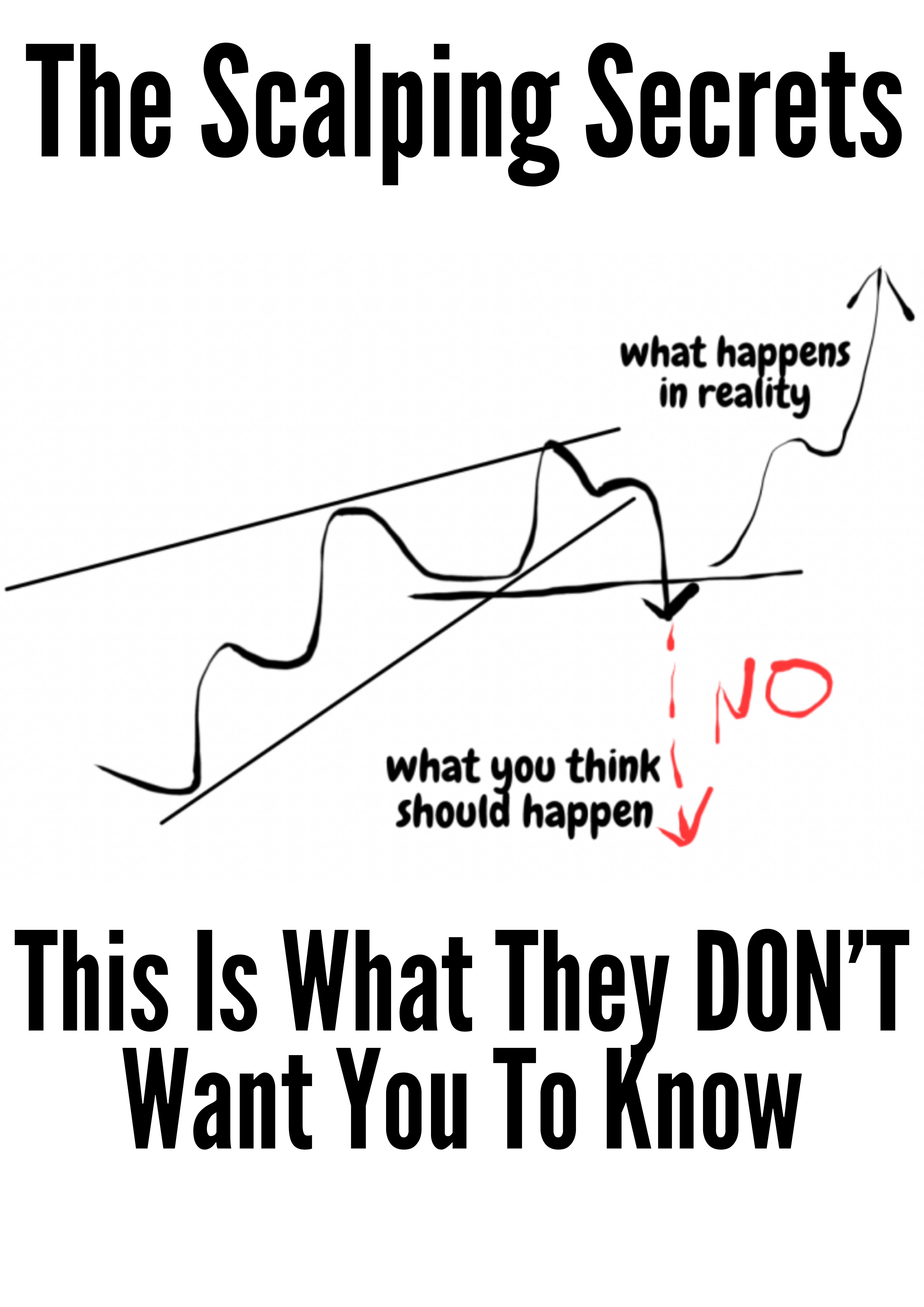
If price taps the line and rejects strongly, buyers or sellers are still defending that diagonal area. If price hangs around the line, closes through it, and then fails to reclaim it, the old structure may be ending.
For a more applied look at this, this guide on trading with trend lines is useful because it frames the line as active support and resistance rather than a passive drawing exercise.
A quick visual example helps:
Three behaviors I pay attention to
| Behavior around the line | What it often suggests |
|---|---|
| Fast rejection | Trend is still being defended |
| Multiple weak tests | Defense is getting thinner |
| Clean break and hold beyond the line | Supply and demand may have shifted |
When a trend line breaks, don't focus on the line itself. Focus on whether price accepts the new side of it.
That's the difference between a minor breach and a genuine change in structure.
Common Trend Line Mistakes That Cost Traders Money
The expensive mistakes aren't complicated. They're usually the result of impatience.
Traders want a trend line to be there, so they manufacture one. They connect minor wiggles, ignore ugly price action, and convince themselves the chart is cleaner than it is. The market doesn't reward that kind of optimism.

The leaks most traders never fix
A common point of confusion is whether two touches are enough. Two points define a line, but many experienced traders wait for a third confirmation touch because trading a two-point line is more aggressive and carries a lower probability of success, as explained in this glossary entry on trend lines.
That confusion shows up in a few costly habits:
- Forcing a line onto noise: If the swing points aren't meaningful, the line won't be either.
- Trading the first draft of the line: A fresh two-point line can be useful for observation, but it's still speculative.
- Redrawing after every violation: If price keeps cutting through your line, the market isn't respecting it.
- Ignoring surrounding structure: A diagonal line by itself is weaker than one lining up with horizontal support or resistance.
- Treating every break as a reversal: Some breaks are only pauses or shakeouts. Context matters.
What to do instead
Use trend lines as part of structure, not as a magic trigger. When a line lines up with a clean swing level, a prior reaction zone, or a well-formed pullback, it becomes more useful. When it stands alone on a messy chart, it becomes an excuse.
Bad trend lines don't just create bad entries. They create false confidence, and that's usually what costs the most.
Your First Action Step Putting Trend Lines to Work
Don't start by looking for trades. Start by training your eye.
Open a clean chart on the daily or 4-hour timeframe. Pick any liquid market. Scroll back until you find one obvious sustained move, either up or down. Then mark the first two major swing points that would let you draw an initial line.
Now stop there for a second.
Ask yourself whether that line is only possible or whether it's confirmed. Then scroll forward and look for the next meaningful touch. Watch how price behaves after that. Does it bounce hard, grind sideways, or break through and stay there? That one exercise teaches more than memorizing definitions.
A simple practice routine
Try this for the next several chart sessions:
- Choose one market only: Don't jump between charts.
- Find one clean trend: If it isn't obvious, skip it.
- Draw one tentative line: Use the first two meaningful pivots.
- Wait for confirmation: Let the third interaction tell you if the line matters.
- Note the behavior after confirmation: Bounce, hesitation, or break.
If you want a structured way to turn that chart reading into execution, this trendline trading strategy guide gives you a practical next step.
A trader gets better at trend lines the same way they get better at reading any price action. Repetition. Clean charts. Honest review. No forcing.
If you want more practical price-action education, Colibri Trader offers training focused on reading market structure, drawing trend lines, and building trading discipline without relying on indicator-heavy analysis.