


10 Price-Action Swing Trading Strategies for 2026

Forget indicators. Most swing traders already know swing trading sits between day trading and position trading, with holding periods that usually run from days to weeks, and many practitioners specifically hold for 1 to 14 days while trying to capture short- to medium-term swings near support and resistance rather than every tiny move (CapTrader). That's exactly why indicator clutter becomes a problem. If you're holding for several sessions, late signals cost you entries, distort stops, and tempt you to chase.
The cleaner path is price action. Read the structure. Mark the levels. Watch how candles behave when price returns to important areas. You'll make better decisions when the chart is stripped down to what matters.
If you want a strong foundation before applying the setups below, study this guide to price action for consistent trading. Then use this list to build a swing approach you can repeat.
1. Price Action Trading at Support and Resistance
A fundamental concept for most solid swing trading strategies is that price has memory. If buyers defended an area before, they may defend it again. If sellers repeatedly capped price at a level, that resistance still matters until price proves otherwise.
A simple example is a stock that keeps bouncing near a round-number area such as $100 and stalling near a prior swing high. You don't need an oscillator to see that. You need to mark the level and wait for price to react there again.
What to watch on the chart
The best support and resistance levels are obvious on a higher timeframe. They're not single random touches. They're zones where price stalled, reversed, or accelerated away more than once.
Use these filters:
- Multiple reactions: A level that has already caused several bounces or rejections usually matters more than a one-off pivot.
- Clear rejection: Long wicks, failed pushes through the level, or a strong reversal candle tell you the area is being defended.
- Timeframe context: A daily level usually carries more weight than a level that only shows up on a very short chart.
For traders who want to deepen this skill, Colibri Trader's material on price action trading strategies is directly aligned with this chart-first approach.
Practical rule: Don't buy because price touched support. Buy because price touched support and then proved buyers are still there.
The common mistake is anticipating the bounce too early. Price often dips slightly below support, runs stops, and then reverses. If you enter before rejection appears, you're guessing. If you wait for the rejection candle, you're reading evidence.
This strategy works best when the market is behaving normally and levels are respected. It works poorly when news blows through structure or when the chart is so choppy that every level breaks by a little.
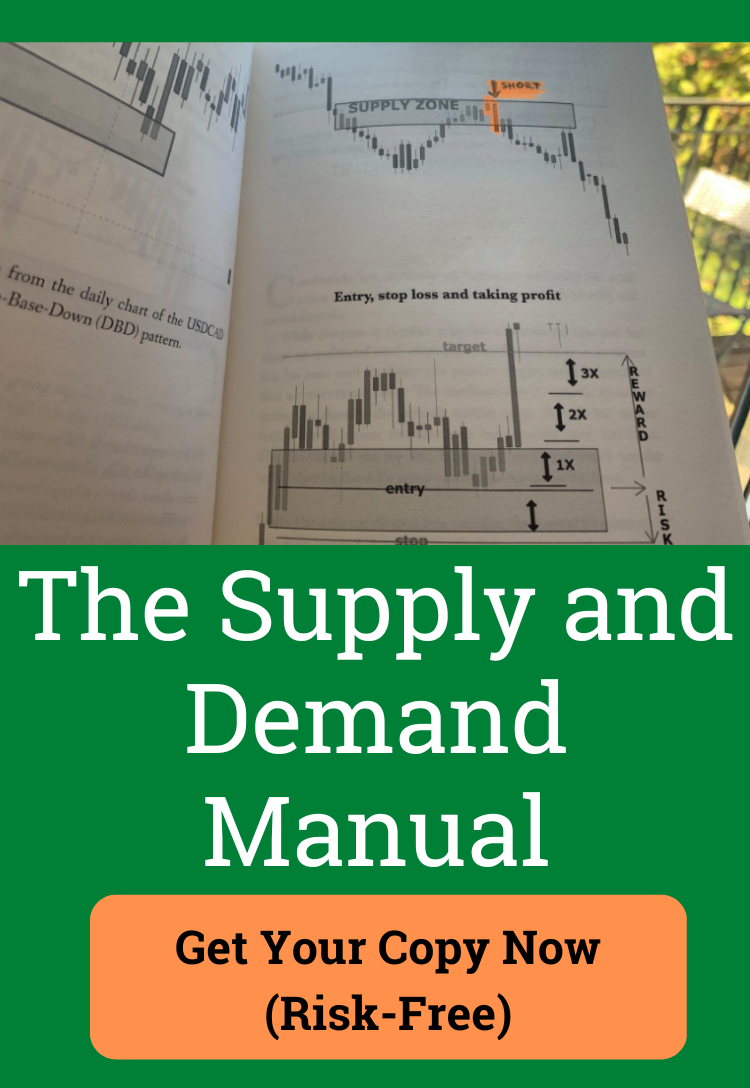
2. Supply and Demand Zone Trading
Support and resistance gives you lines. Supply and demand gives you areas. That difference matters because price rarely turns at an exact tick. It usually turns in a zone where aggressive buying or selling previously took control.
When I mark a demand zone, I'm looking for the base before a sharp move up. When I mark a supply zone, I'm looking for the pause before a hard drop. Those are the footprints of imbalance.
Here's a visual example of the idea in practice:

How to trade the retest
The strongest zones usually come from fast departures. If price sat in an area for too long, the orders there were likely already absorbed. But if price launched away sharply, the area often matters on the retest.
A practical scenario looks like this: a stock drops into a base, reverses hard, and rallies for several sessions. Weeks later, it drifts back into that original base. If candles tighten and then reject the lower edge, that's your cue to consider a long.
A few hard rules help:
- Fresh zones matter most: The first clean retest often carries the best reaction.
- Narrow the zone: Don't mark half the chart. Define the base tightly enough that your trade idea can be invalidated.
- Let price confirm: If price slices straight through the zone, accept that demand didn't show up.
This method is especially useful for traders who hate perfect-line entries. Real markets trade in areas, not drawings. Zones reflect that reality better than thin horizontal marks.
It also pairs well with top-down analysis. A daily demand zone that aligns with a weekly reaction area is far more interesting than an isolated patch on a low timeframe.
3. Breakout Trading with Volume Confirmation
Breakouts deserve a place on any serious list of swing trading strategies because they fit how swing trading is defined by many brokers and educators. Saxo Bank notes that breakout trading and trend trading are among the most common swing-trading methods, with breakout strategies focused on moves through support or resistance (Saxo Bank's overview of swing trading).
The core idea is simple. Price compresses under resistance or above support, pressure builds, and eventually one side gives way. Your job isn't to predict the exact candle. Your job is to tell the difference between a real breakout and a lazy poke through a level.
Right near the move, the chart often looks like this:
How to avoid fake breakouts
I don't trust breakouts that barely clear resistance and instantly stall. A clean breakout should close beyond the level with conviction. Volume can help confirm participation, but price still comes first. If the candle closes weakly back inside the range, that's not the kind of breakout I want to swing.
What usually works:
- Tight consolidation before the break: Compression tells you energy is building.
- Decisive close through the level: Wicks alone don't count.
- A clear invalidation point: The old resistance or support gives you structure for the stop.
Risk control matters more here than in almost any other setup because failed breakouts can reverse hard. That's where disciplined planning beats excitement. Colibri Trader's trading risk management strategies are worth studying if breakout losses have been eating your account.
A breakout isn't strong because it moved fast. It's strong because price changed character and then held the change.
The trap is chasing extended breakout candles. If price explodes too far from the base, the smart trade is often gone. In that case, wait for the first pullback instead of buying the emotional peak.
4. Pullback Trading with the Test and Rejection Pattern
A lot of traders lose money because they chase strength. Pullback trading fixes that. Instead of buying the first impulse or shorting the first breakdown, you wait for price to move, pause, retrace, and show that the original direction is still intact.
This is one of the most practical price-action setups for swing traders because it solves two problems at once. It improves entry location, and it gives you a cleaner invalidation point.
What a good pullback looks like
In an uptrend, price prints a strong push higher, then retraces into a prior support area, a breakout level, or the body of a strong impulse candle. The key is what happens next. If sellers can't push it further and buyers reject the test, you've got a potential continuation entry.
A realistic scenario might be a stock that breaks to a new swing high, then drifts back into the prior breakout shelf. If the retracement slows, candles shrink, and a bullish rejection candle forms, that's often a better entry than the original breakout candle.
Focus on three things:
- Trend structure: In an uptrend, the pullback shouldn't break the last meaningful higher low.
- Quality of the retrace: Slow and controlled is healthier than a violent collapse.
- Reaction at the test: Rejection matters. No rejection, no trade.
This setup fails when traders label every dip a pullback. Some dips are the start of reversals. If the chart loses structure, the pullback thesis is dead. Accept that early.
The best pullback trades feel almost boring at entry. That's a good sign. You're entering near structure, not after a panic move or euphoric expansion.
5. Swing High and Swing Low Reversal Strategy
If you can't read swing highs and swing lows, you're trading blind. Everything in price action flows from structure. Trends are nothing more than repeating sequences of highs and lows. Reversals begin when that sequence changes.
That's why this strategy is foundational. A market in an uptrend keeps printing higher highs and higher lows. A downtrend keeps printing lower highs and lower lows. The reversal trade appears when that pattern breaks and the opposite structure starts to form.
The structural shift that matters
Suppose a stock has been trending higher for weeks. Then it fails to make a fresh high, forms a lower high, and breaks below the previous swing low. That's not just noise. That's a structural warning that buyers may be losing control.
On the other side, imagine a market that has been falling steadily. It stops making lower lows, builds a higher low, and then pushes through the most recent swing high. That's often where the first real reversal trade appears.
You don't need a screen full of tools to read this. You need consistent definitions and patience. Colibri Trader's explanation of what swing trading is supports this medium-term, structure-based style of trade selection.
What helps most:
- Define your swing points consistently: Don't redraw the market after the fact.
- Wait for the break: A lower high by itself is not a reversal.
- Use nearby structure for exits: Previous highs and lows provide logical targets.
Most reversal traders get trapped because they try to call the top or bottom. The cleaner trade comes after structure actually breaks.
This setup works especially well after an extended move into a known level. It works badly in messy ranges where highs and lows overlap and the chart has no rhythm.
6. Range Trading with Mean Reversion Logic
Not every market trends. That's where many swing traders get chopped up. They apply trend entries to a range and keep paying for fake moves on both sides. Bookmap highlights this neglected problem directly, pointing out the need to make swing strategies strong in trendless, whipsaw-heavy markets rather than assuming every market is trending (Bookmap on swing trading in sideways regimes).
Range trading is the answer when price keeps rotating between clear boundaries. You buy near support, sell near resistance, and avoid the middle where risk is worst and edge is weakest.
How to trade a range without getting trapped
A clean range has visible edges and repeated failures to break. One simple example is a stock spending weeks bouncing between two horizontal levels. Buyers keep showing up at the floor. Sellers keep defending the ceiling. Until one side wins decisively, that box is your map.
What matters most in a range:
- Trade the edges: The middle offers poor reward relative to risk.
- Wait for rejection: A touch alone isn't enough.
- Take profits sooner: In a range, greed destroys good trades.
This is also where reduced trade frequency helps. Sideways markets tempt traders into overtrading because price keeps moving just enough to feel active. But the better move is often to wait for the boundary, not to force trades in the chop.
A lot of traders hate ranges because they're not exciting. That's exactly why they work for disciplined traders. The rules are simpler, expectations are tighter, and structure is easier to define.
The moment price breaks the range and holds outside it, the mean-reversion logic is over. Don't argue with that. Exit and reassess.
7. Moving Average Bounce Strategy
A moving average bounce works only when the trend is already clear on the chart. The line is not the setup. Price action around the line is the setup.

The right way to use it
I use moving averages as a location tool. They help mark an area where a pullback might end inside a trend. They do not give permission to enter. If price slices through the level with no response, the line means nothing.
What matters is the reaction. In an uptrend, price pulls back toward a rising moving average, pauses, prints a rejection candle or a tight base, and then starts pushing back in trend direction. That is the part worth trading. The moving average only helps you narrow your focus.
A practical process looks like this:
- Start with market structure: Higher highs and higher lows matter more than any line on the chart.
- Use the moving average as a zone: Treat it as an area where buyers or sellers may defend, not as an exact price.
- Wait for confirmation from the candles: Rejection wicks, strong closes, or a small consolidation near the line give the trade context.
- Check the slope: A rising line in a clean trend has value. A flat line in chop does not.
This method suits traders who want a cleaner chart without abandoning every familiar tool at once. It keeps the focus on raw price while giving you one simple reference point.
The trade-off is simple. In a strong trend, the bounce can offer a clean continuation entry with controlled risk. In choppy conditions, the same setup produces repeated fakeouts because price keeps crossing back and forth around the average. When that starts happening, stop forcing the bounce and go back to reading support, resistance, and swing points directly.
8. Gap and Gap-Fill Trading
Gaps create unfinished business on the chart. They also create emotion. Traders who got trapped in the gap often react strongly when price revisits that area later.
That's why gap trading works well for swing traders. A gap can become support, resistance, or a magnet for a partial fill. You don't need to predict every fill. You need to know how price behaves when it approaches the gap zone.
Two ways to trade the gap
The first approach is continuation. Price gaps up, holds the gap, and starts building above it. That tells you buyers accepted the higher prices. The second approach is the fill. Price gaps, loses momentum, and begins retracing into the empty space. In that case, the gap area becomes your roadmap.
A practical scenario is a stock that gaps higher after news, runs briefly, then spends several sessions drifting lower. If it starts reacting around the lower edge or midpoint of the gap, that area can offer a swing opportunity either for a bounce or for profit-taking on a short.
What helps most:
- Mark the full gap area: Open, close, and midpoint all matter.
- Separate runaway gaps from weak gaps: Strong acceptance above the gap changes the trade idea.
- Use nearby price structure: The gap alone is context, not a complete setup.
This strategy works best on instruments where gaps are clean and visible. It works less cleanly when price trades nearly around the clock and true gaps are less distinct.
The biggest mistake is assuming every gap must fill. Some don't. If price accepts the new range and keeps building, the smarter trade is with continuation, not against it.
9. Breakout from Chart Patterns
Some traders overcomplicate chart patterns. They don't need to be mystical. A triangle, rectangle, or wedge is just compression with visible boundaries. Price is coiling, and your job is to wait for the release.
This strategy is strongest when the pattern forms after a clear prior move. Then the pattern becomes a pause, not random noise. The breakout gives you an entry, and the pattern boundary gives you invalidation.
If you want a broader view of how these formations fit swing trading, this piece on mastering swing trading patterns is a useful companion.
What separates a clean pattern from chart art
A valid pattern should be easy to explain without squinting. For example, a rectangle is a market repeatedly bouncing between the same support and resistance. An ascending triangle shows buyers pressing up against a flat ceiling. A wedge narrows as price contracts.
When the break comes, don't rush because the shape looks pretty. Ask harder questions:
- Was there clear compression before the break?
- Did price close outside the boundary?
- Does the breakout align with the prior directional pressure?
A practical example is an ascending triangle on a daily chart after an uptrend. Price keeps holding higher lows under the same ceiling. When it finally closes through that ceiling and then holds above it, that's often a stronger swing entry than buying inside the pattern.
Pattern trades fail when traders force symmetry where none exists. If the boundaries keep shifting and the market doesn't respect them, skip it. Good patterns are obvious before they break, not only after.
10. Institutional Order Flow and Price Action Trading
You don't need Level II or a complex footprint tool to think in terms of institutional behavior. Price itself often tells the story. Long rejections, sudden reversals from specific zones, and repeated defense of the same area all hint that larger participants care about that level.
This is an advanced strategy because it asks you to infer intent from behavior. But when you learn it, your chart reading gets sharper fast.
A common example is a market that flushes below support, leaves a long wick, and closes back above the level. Later, when price returns there, buyers defend it again. That repeated reaction suggests meaningful orders were active in that zone.
Here's a deeper visual resource on reading chart behavior in this context:
Where this becomes useful
Institutional-style price action reading works best around major levels. Prior swing highs, weekly support, fresh supply and demand zones, and breakout retests are all areas where larger players often become more visible.
What to look for:
- Sharp rejection wicks: These often show aggressive defense or rejection of price.
- Fast displacement away from a level: Strong departure matters more than a slow drift.
- Repeated reactions: If price keeps turning at the same area, pay attention.
A related pattern type appears in bullish continuation formations, and this guide to bullish chart patterns helps illustrate one common example.
This strategy doesn't mean pretending you know exactly what every institution is doing. It means reading where size likely mattered. The best traders don't need certainty. They need evidence, structure, and patience.
10-Strategy Swing Trading Comparison
| Strategy | Complexity 🔄 | Resource Requirements ⚡ | Expected Outcomes ⭐📊 | Ideal Use Cases 📊 | Key Advantages 💡 |
|---|---|---|---|---|---|
| Price Action Trading at Support and Resistance | Medium, pattern recognition practice required 🔄 | Low, charts and optional volume ⚡ | ⭐⭐⭐, consistent setups; vulnerable to false breakouts | 4H–Daily swing trades; trending or ranging markets | Clear visual setups; indicator-free; scalable |
| Supply and Demand Zone Trading | High, nuanced zone identification 🔄 | Medium, multi-timeframe analysis, study time ⚡ | ⭐⭐⭐⭐, very high probability when zones are correctly marked | Daily–Weekly zone identification; institutional-level moves | Objective zone-based entries; fewer false signals |
| Breakout Trading with Volume Confirmation | Medium, rules-based but timing-sensitive 🔄 | Medium, volume data, larger account for wider stops ⚡ | ⭐⭐⭐⭐, captures directional moves; needs strict risk control | Trending markets on 4H–Daily; momentum breakouts | Clear entries with volume filter; high directional capture |
| Pullback Trading (Test and Rejection Pattern) | Medium, trend and pullback judgment needed 🔄 | Low, charts and patience; limited tools ⚡ | ⭐⭐⭐, improved R:R; may miss initial move | Established trends on 4H–Daily | Better entry prices; lower drawdown risk vs. chasing moves |
| Swing High / Swing Low Reversal Strategy | Medium, consistent swing definitions required 🔄 | Low, price charts; basic pattern rules ⚡ | ⭐⭐⭐, early reversal detection; false signals in chop | Reversals on Hourly–Daily timeframes | Mechanical entries; clear stop placement |
| Range Trading (Mean Reversion Strategy) | Low–Medium, needs range confirmation 🔄 | Low, charts, volatility assessment ⚡ | ⭐⭐⭐, frequent opportunities; limited per-trade profit | Sideways markets on 4H–Daily | Multiple trades per range; tight stops near boundaries |
| Moving Average Bounce Strategy | Low, straightforward application 🔄 | Low, moving averages overlaid on charts ⚡ | ⭐⭐⭐, reliable in trends; lagging indicator risk | Established trends on 4H–Daily | Dynamic S/R reference; complements price action |
| Gap and Gap-Fill Trading | Medium, gap type and timing judgment 🔄 | Low, daily charts and gap screening ⚡ | ⭐⭐⭐, mechanical targets; fill timing variable | Daily/weekly charts around earnings/news gaps | Clear profit targets; historically high fill rates |
| Breakout from Chart Patterns (Triangles, Rectangles, Wedges) | Medium, pattern identification can be subjective 🔄 | Medium, time for pattern formation and confirmation ⚡ | ⭐⭐⭐⭐, high probability when pattern and volume confirm | Consolidations on 4H–Weekly | Measurable targets; defined stops and entries |
| Institutional Order Flow & Price Action Trading | Very High, advanced market microstructure skills 🔄 | High, order-flow tools, deep study, multi-timeframe analysis ⚡ | ⭐⭐⭐⭐, anticipatory signals; fewer whipsaws if done well | Advanced traders using 1H–Daily for entries | Insights into 'smart money' activity; high-probability setups |
Your Next Step to Consistent Swing Trading Profits
Consistent swing trading profits usually come from fewer setups, not more. Traders who clutter the chart with indicators often miss the one thing that drives a decision. Price. Structure. Reaction at key levels.
Choose one price-action setup from this list and trade it until you understand its behavior in real conditions. Support and resistance fits traders who are patient and precise. Pullbacks and breakouts fit traders who do well in trending markets. Range trades fit traders who can stay disciplined when price is stuck between clear boundaries.
Then test that setup long enough to judge your execution, not your emotions. A small handful of trades proves nothing. You need a real sample, taken in the same market conditions, with the same entry rules, stop placement, and risk per trade. As noted earlier, the goal is to collect enough trades to see whether the setup has an edge when you trade it, not when someone else explains it.
Keep the review process simple and strict:
- Log the setup: support bounce, pullback, breakout, range edge, or reversal
- Log the market condition: trending, range-bound, or messy
- Log the result: win, loss, or scratch trade
- Log the execution quality: followed plan, chased entry, moved stop, or ignored invalidation
That journal gives you useful answers fast.
You may find that your support trades are solid, but your breakout trades fail because you enter late. You may see that range setups work well until you get greedy and hold past the opposite side of the box. I have seen many traders improve just by cutting the setups that do not fit their temperament and keeping the one they can execute cleanly.
That is a significant edge in indicator-free swing trading. You stop outsourcing decisions to lagging tools and start reading the chart itself. Market structure, rejection, momentum, and location tell you enough if you know what to look for.
If you want structured help building that chart-reading process, Colibri Trader is one relevant option. Its educational focus is centered on price action, supply and demand, discipline, and money management, which matches the style of swing trading covered here.
Stop searching for a perfect strategy. Build a repeatable process around one setup, one risk model, and one review routine. The chart already shows where buyers and sellers are active. Your job is to read it clearly and act with discipline.
If you're ready to build a cleaner, indicator-light trading approach, explore Colibri Trader for price-action training, supply and demand education, and structured programs designed to help traders turn chart reading into a repeatable swing trading process.