


Master Stock Market Tips for Beginners 2026

Beginners lose money for a simple reason. They treat trading like stock picking when it is really a decision-making process under uncertainty.
The first job is not finding the next winner. The first job is building a method you can repeat when price starts moving fast and your emotions start arguing with your rules. New traders usually skip that step. They jump between news, tips, indicators, and earnings headlines, then wonder why every trade feels improvised.
A cleaner approach works better. Read price first. Respect scheduled catalysts like earnings because they can change the behavior of a chart in one session. Charles Schwab makes the same practical point in its guide to stock investment tips for beginners. Check recent earnings history, compare results with expectations, and know the next reporting date before you take a position.
I have seen beginners make the same mistake for years. They keep adding tools instead of improving judgment. A cluttered chart feels impressive, but it usually hides the only things that matter. Price location, market structure, and risk.
That is the angle behind this guide. It is not another generic list of beginner tips. It is a beginner trading system built around indicator-free price action, the same core framework professional traders use to read buyers, sellers, levels, and momentum without outsourcing every decision to lagging signals. If you need a plain-English starting point, study price action trading for beginners and keep your chart clean.
The eight rules below work together. They show you what to read on the chart, how much to risk, where new traders get trapped, and how to build habits that hold up under pressure. That is what gives a beginner a real chance. Not prediction. Process.
1. Start with a Solid Foundation in Price Action
Price action is the foundation. Beginners who skip it usually spend months chasing indicators, news reactions, and opinions they cannot execute with consistency.
Price action training addresses the core problem. It teaches you to read behavior on the chart instead of guessing direction. A stock does not need to look cheap, exciting, or popular. It needs to show that buyers or sellers are taking control at a level that matters.

A clean chart builds better judgment. Focus on swing highs, swing lows, support, resistance, and the way candles react when price reaches an important area. If you want a straightforward breakdown of the method, study price action trading before you add anything else.
What to read on a naked chart
Start on the daily chart. It slows the market down and makes structure easier to see. New traders often drop into lower time frames too early, then mistake noise for opportunity.
Look for a small set of repeatable behaviors:
- Support and resistance: Areas where price stalls, reverses, or starts moving with force.
- Rejection candles: Long wicks at key levels often show that one side tried to push price and failed.
- Break and retest behavior: The retest usually tells you more than the breakout itself. If price holds, the move has a better chance of continuing.
- Context before pattern: A candle pattern only matters if location supports it. A bullish rejection at prior support means something. The same candle in the middle of a messy range often means very little.
Practical rule: Learn to read a few behaviors well enough to trade them the same way every time.
Keep indicators light. Even traders who use moving averages usually use them for context, not as a substitute for reading price. If a stock is holding above commonly watched averages and respecting higher lows, that can support a bullish read. The chart still comes first.
This is also where risk starts, even before you get to position sizing. A weak read on the chart leads to weak trade selection, and weak trade selection creates avoidable losses. Study how money management in trading works alongside chart reading, and review Rize Trade's risk management guide if you want a practical framework for controlling downside from the start.
2. Master Money Management and Position Sizing
Risk control keeps beginners in the game long enough to build skill. Without it, even a clean price action read can turn into an expensive lesson.
Entry quality matters, but size decides the damage. New traders spend too much time hunting the perfect trigger and too little time deciding how much they can lose if the setup fails. Professionals work the other way around. They define the risk first, then decide whether the trade is worth taking.
That matters even more in an indicator-free approach. Price action gives you a place where the trade should work and a place where it is clearly invalid. That distance between entry and invalidation is what should determine your position size. If the stop needs to be wide because the structure demands it, size must come down.
How to think about size
Position size should come from the chart, not from confidence. Mark the level that proves your idea wrong first. Then calculate size so a stop-out costs little enough that you can take the next trade with a clear head.
A practical beginner workflow looks like this:
- Define invalidation first: If price breaks the level supporting the setup, the trade has failed.
- Risk a small, fixed amount: Keep the loss per trade consistent so one mistake does not distort your week.
- Size down until you can follow the plan: If normal price movement makes you tense, the position is too large.
- Keep capital available: Smaller losses give you room to act on the next clean setup.
- Separate conviction from exposure: A setup can look strong and still deserve modest size.
For a broader framework, review Rize Trade's risk management guide and Colibri Trader's teaching on money management in trading.
Beginners often lose not because they cannot find good setups, but because they make average setups too expensive.
A simple example makes the point. You buy a breakout above resistance. The chart is clean, but the logical stop belongs below the prior swing low. If that stop distance forces a position size that makes every small pullback feel unbearable, the trade is oversized. Cut the share count or pass.
This is one of the hardest lessons for new traders to accept. Small size feels slow. It also keeps you solvent, objective, and able to learn. In a beginner trading system built on price action, survival is not a side rule. It is the rule that lets every other rule work.
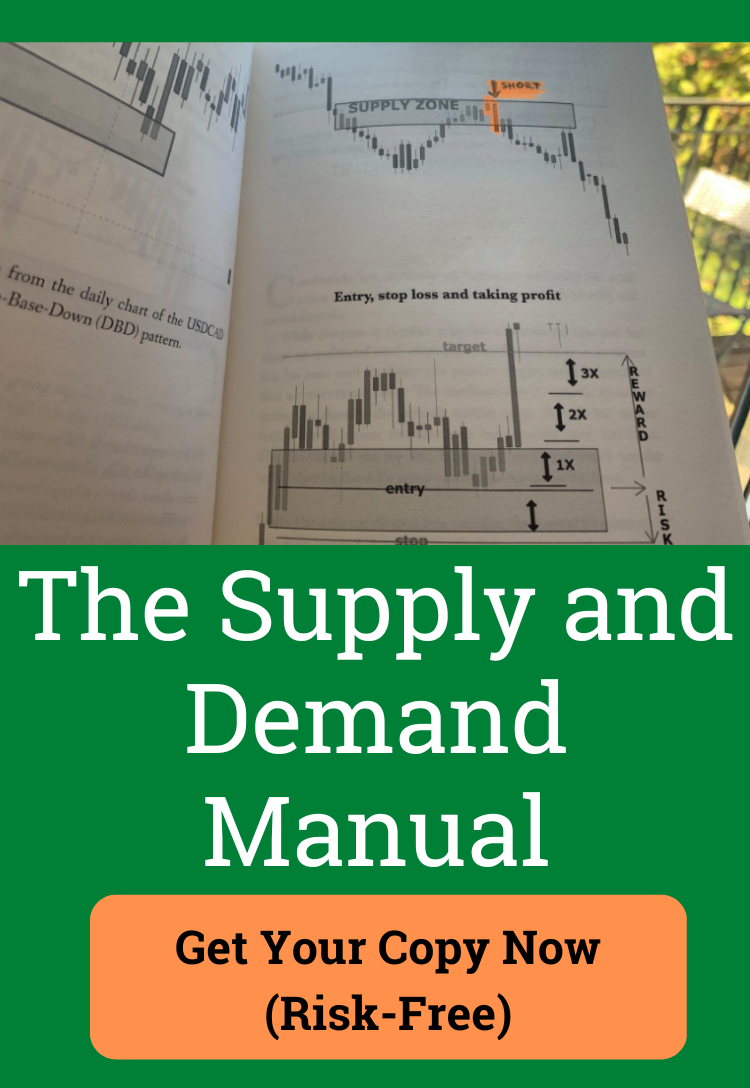
3. Learn Supply and Demand Zone Trading
Support and resistance are useful. Supply and demand zones are usually more practical because they treat price areas as zones, not exact lines.
That matters in live trading. Large orders don't always reverse price at a perfect penny. They often create an area where aggressive buying or selling showed up before, and price reacts when it returns there.
A demand zone is where buyers previously stepped in hard enough to push price away. A supply zone is where sellers did the same. As a beginner, you don't need to overcomplicate this. Mark the base, mark the impulse away from it, and watch what happens when price returns.
What a usable zone looks like
The best zones are usually obvious in hindsight. Price paused briefly, then moved away with force. That sharp move is the clue that larger participants may have been active there.
Use zones like this:
- Mark clean reactions: Price leaves the area decisively, not lazily.
- Wait for return: Don't trade the zone from memory. Let price come back into it.
- Watch behavior at the edge: Slow grind into a zone behaves differently from a fast rejection.
- Pair with price action: A zone matters more when candles confirm rejection or continuation.
A simple stock example: a stock rallies sharply from a daily base, then weeks later drifts back into that same area on lighter momentum. If buyers defend it again and the candles tighten before a bounce, that's often a cleaner long than chasing the original breakout.
Here's a visual lesson if you learn better by watching chart examples:
Zone trading works because it keeps you focused on where business got done before. Beginners need that structure. It stops random entries in random parts of the chart.
4. Develop a Personal Trading Plan and Stick to It
A trading plan doesn't need to be impressive. It needs to be usable.
Most new traders write plans that sound smart and fail in real time. They're full of broad language like “trade strong momentum” or “avoid weak setups.” That's not a plan. That's commentary. A real plan tells you exactly what to do and what to ignore.
Write down the market conditions you trade best, the setup you take, where your stop goes, where you take profit, and when you stay out. If the chart doesn't match the script, you pass.
What a beginner plan should include
Keep it plain. If you can't review it in a minute before the open, it's too complicated.
Use prompts like these:
- Market selection: Which stocks qualify for your watchlist?
- Chart timeframe: Are you reading daily structure and entering on a lower timeframe, or trading only from the daily chart?
- Entry trigger: What exact candle behavior, retest, or break confirms entry?
- Risk rule: How do you decide size relative to stop placement?
- Exit rule: Do you scale out, trail, or take profits at a preplanned area?
- No-trade conditions: Earnings tomorrow, sloppy range, no clear structure, or emotional fatigue.
The plan should be boring on paper. If it feels exciting, it's probably too discretionary.
One practical example: you only trade stocks that are trending cleanly on the daily chart, you wait for a pullback into a prior demand area, and you enter only after clear rejection. If price slices through the zone without response, you do nothing. That single rule saves beginners from a lot of emotional trades.
5. Start Small and Practice with Realistic Position Sizing
Big size hides bad trading.
New traders often blame strategy when the underlying problem is exposure. A clean price action setup can still fail if the position is large enough to make every normal pullback feel like a threat. Once that happens, execution falls apart. Stops get widened, entries get chased, and exits become emotional instead of planned.
Start with size that feels almost boring. If one red candle changes your breathing, the trade is too big.
That matters because this stage is not about making serious money yet. It is about building repeatable behavior. Price action trading only works when you can read the chart, wait for confirmation, place risk where the setup is invalid, and then leave the trade alone. Oversized positions break that process fast.
Why realistic size improves execution
Small, real positions teach better than oversized ones because they let you stay objective. You can watch how price reacts at a supply or demand zone, see whether your entry was early or patient, and judge the setup on its merits instead of on the dollar swings in your account.
Use a progression like this:
- Start with real but small exposure: Enough to care about execution, not enough to force bad decisions.
- Size the trade from the stop, not from conviction: If the stop needs to be wider because structure is wider, share size should shrink.
- Add size only after consistency: A few winners prove nothing. Clean execution over many trades does.
- Cut size again if discipline slips: If you start interfering with trades, your current size is ahead of your skill.
A common misunderstanding among beginners is that small position size alone is insufficient. The position also needs to be realistic relative to correlation and setup quality.
A simple example makes it clear. You buy three popular tech stocks because each chart looks strong. On paper, it seems diversified. In practice, you are often making one trade three times. If the sector pulls back, all three positions can weaken together. I have seen beginners keep risk per trade small and still take a larger account hit than expected because every position was tied to the same theme.
A better approach is tighter and more professional. Risk a small amount on one clear setup, or spread exposure only when the trades come from different structures and different parts of the market. That keeps position sizing honest and helps you learn what your price action system does well.
6. Keep Detailed Trading Records and Review Performance Objectively
Most traders remember stories, not data. That's a problem.
Without records, you'll think your breakout trades work because the winners were exciting, and you'll ignore that your best trades came from pullbacks into structure. Memory is biased. Screenshots and notes aren't.

Your journal doesn't need to be fancy. A spreadsheet, chart screenshots, and a short note on why you entered is enough to start. The key is consistency.
What to record after every trade
Write the same fields every time so patterns become obvious.
- Setup type: Breakout, pullback, zone retest, trend continuation, or reversal.
- Chart context: Uptrend, downtrend, range, or earnings week.
- Entry and exit logic: Why you entered, where the trade was wrong, why you exited.
- Execution quality: Followed the plan, hesitated, chased, moved stop, took profits early.
- Emotional state: Calm, impatient, fearful, revenge-driven, distracted.
One beginner scenario shows why this matters. A trader feels like they do well on fast-moving open trades. Their journal shows the opposite. Their best trades happen later, after the first impulsive move settles and a level retests cleanly. That insight doesn't come from intuition. It comes from records.
Review the process before the outcome. A losing trade taken correctly is more valuable than a winning trade taken badly.
This is one of the most important stock market tips for beginners because journaling turns vague self-belief into evidence. Once you know what works in your hands, you can repeat it.
7. Understand Market Structure and Trade with the Trend
If you keep buying into lower highs, you're not being brave. You're trading against structure.
Market structure is just the sequence of swings. In an uptrend, price tends to make higher highs and higher lows. In a downtrend, it tends to make lower highs and lower lows. Beginners often overcomplicate this because they want certainty. You don't need certainty. You need alignment.
A simple structure read
Open the daily chart and ask one question first: is price trending, ranging, or breaking structure?
That leads to clean decisions:
- Higher highs and higher lows: Look for longs on pullbacks or consolidations.
- Lower highs and lower lows: Look for shorts or stay out if you don't short.
- Messy range: Reduce expectations or pass.
- Structure break: Wait for follow-through before assuming a new trend exists.
Britannica explains that the stock market is a central venue where shares of publicly traded companies are bought and sold, with most major shares trading on exchanges such as the NYSE and Nasdaq, while prices rise and fall based on earnings and other factors in its overview of stock market basics. That matters because structure often shifts when those underlying expectations shift. You don't need to predict the cause of every move. You need to see the effect on the chart.
A practical stock example: a stock has been pushing to fresh highs, then starts failing at prior highs and breaking below recent higher lows. That's not a dip to buy automatically. That may be the early stage of structural deterioration. Let the chart prove strength again before stepping in.
8. Build Trading Psychology and Emotional Discipline
Your method is only as strong as your behavior when a trade starts moving against you. Beginners rarely fail because they cannot spot a decent setup. They fail because they break rules the moment pressure shows up.
A price action system without discipline turns into random clicking. The chart gives you an entry, an invalidation point, and a place to manage risk. Fear and impatience distort all three. Traders cut winners early to relieve tension, move stops to avoid admitting they are wrong, and fire off revenge trades to get back what the market just took.
Psychology is part of execution. Under pressure, it decides whether your system stays intact. If you need a focused primer, study the psychology of trading with the same seriousness you give chart study.
Discipline is built before the trade opens
The cleanest fix for emotional mistakes is usually a rule, not a motivational speech. If a decision keeps going wrong in live market conditions, reduce discretion around it.
Use habits like these:
- Prepare before the session: Mark key levels, define setups, and build a watchlist while you are calm.
- Accept the loss before entry: If the planned stop feels unbearable, the position is too large or the trade is not worth taking.
- Place the stop where the setup is invalidated: Do not place it at a random distance just because the dollar loss looks smaller.
- Pause after emotional disruption: A reckless win can damage your process as much as a loss if it rewards bad behavior.
One trade proves nothing. One week does not prove much either. Judge yourself over a meaningful sample of trades executed by the same rules. That is how you separate a bad result from bad discipline.
A calm trader can follow a simple plan, whereas an emotional trader can sabotage even a well-designed system.
One habit helps more than beginners expect. Before every order, write one line: “What proves me wrong?” That question forces you to define the failure point before money and ego get involved.
8-Point Beginner Stock Trading Tips Comparison
| Item | 🔄 Implementation Complexity | ⚡ Resource Requirements | 📊 Expected Outcomes | 💡 Ideal Use Cases | ⭐ Key Advantages |
|---|---|---|---|---|---|
| Start with a Solid Foundation in Price Action | Moderate–High; requires chart study and pattern recognition | Low software needs; high time commitment for practice | Cleaner signals, better market reading, long-term consistency | Beginners removing indicator dependency; multi-timeframe analysis | Direct market insight; transferable across instruments |
| Master Money Management and Position Sizing | Moderate; involves rules and mathematical discipline | Low tech (calculator/spreadsheet); requires tracking tools | Capital preservation, controlled drawdowns, sustainable growth | All traders seeking longevity and consistent returns | Protects account; reduces emotional risk-taking |
| Learn Supply and Demand Zone Trading | Moderate; needs practice to identify valid zones | Standard charting tools; moderate chart time | High-probability entries, favorable risk/reward, improved win rates | Swing/trend traders and institutional-style approaches | Clear mechanical entries/exits; strong R:R potential |
| Develop a Personal Trading Plan and Stick to It | Low–Moderate; writing rules is simple, following them is hard | Low (document + review routine) | Repeatable process, reduced emotion, measurable improvement | Traders lacking structure or testing strategies | Removes guesswork; enables objective refinement |
| Start Small and Practice with Realistic Position Sizing | Low; easy to implement but requires patience | Low capital (micro/mini accounts); time to scale | High capital preservation, validated edge before scaling | Beginners in skill-development phase | Limits risk, reduces psychological pressure |
| Keep Detailed Trading Records and Review Performance Objectively | Moderate; discipline to journal every trade and analyze | Spreadsheet/journal tools; time for regular review | Faster learning, identification of edges, data-driven changes | Traders focused on improvement or mentoring programs | Reveals real strengths/weaknesses; actionable insights |
| Understand Market Structure and Trade with the Trend | Moderate; requires multi-timeframe analysis and confirmation | Standard charting; time to assess trend context | Higher win rates, fewer whipsaws, alignment with institutional flow | Trend-following traders and multi-timeframe traders | Simplifies decisions; aligns with market momentum |
| Build Trading Psychology and Emotional Discipline | High; long-term behavioral development and maintenance | Time, practice, possible coaching or mentorship | Improved execution, sustained consistency, fewer impulsive losses | Traders struggling with emotions or scaling capital | Converts strategy into consistent profit through discipline |
Your Action Plan for Market Mastery
These eight rules work together. Price action gives you a read on the chart. Market structure tells you direction. Supply and demand help with location. Position sizing keeps you alive. A trading plan removes impulse. Small size protects the learning phase. Journaling turns mistakes into data. Psychology keeps the whole thing from falling apart the first time you hit a losing streak.
Beginners often search for stock market tips for beginners as if the answer is a list of disconnected tricks. It isn't. What works is a system. Not a complicated one. A system you can repeat under stress without improvising every decision.
Start with one market, one setup, and one timeframe. Read clean charts. Mark obvious levels. Know when earnings are coming. Respect trend before you look for reversals. Keep most of your capital in a structure that doesn't depend on one stock idea if you're still building experience, and treat any active trading capital as skill-development capital first.
If you're serious, build a routine around this. Before the week starts, prepare a watchlist. Before each session, mark your levels. Before each trade, define invalidation and size. After each trade, journal it. At the end of the week, review the screenshots and notes like a coach reviewing tape. Don't ask, “Did I make money?” first. Ask, “Did I trade my process?”
That shift changes everything. Traders who last aren't the ones who feel right all the time. They're the ones who can be wrong without losing control.
Colibri Trader is one option if you want structured education around a price-action-based approach. Its resources align with the methods covered here, especially for traders who want to focus on clean charts, discipline, and practical execution rather than overloaded indicator stacks. If you're not sure where your biggest weakness is yet, start by assessing that. Most beginners don't need more information. They need fewer variables and better habits.
Your next step is simple. Pick the first rule and put it into practice today. Open a chart. Strip off the clutter. Mark structure. Write your plan. Then trade small enough that you can follow it.
If you want a structured way to build these skills, explore Colibri Trader for price action education, beginner-friendly training paths, and practical resources like its Trading Potential Quiz and introductory lessons.