
Liquidity Sweep Trading: A Price Action Guide
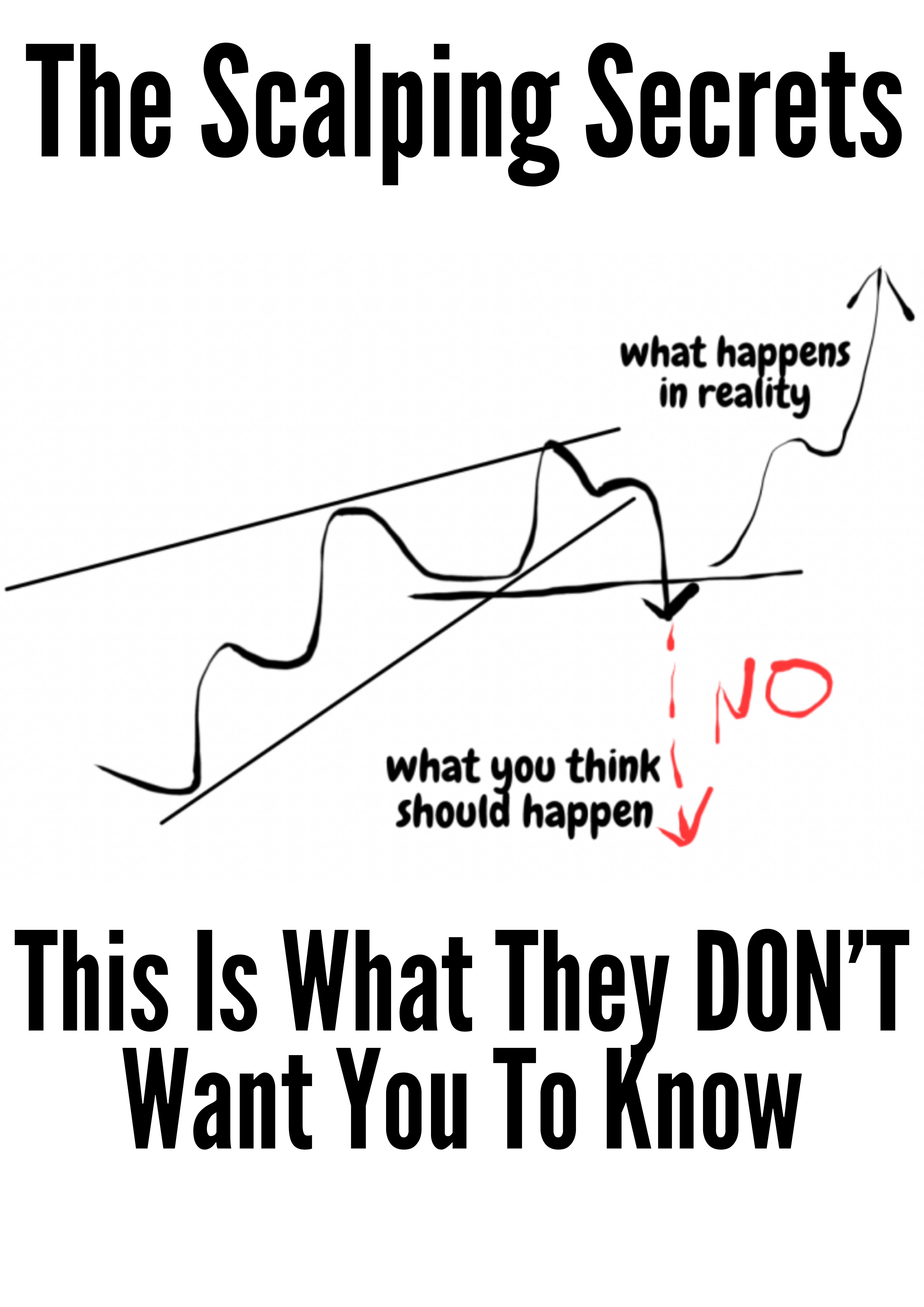
You enter on a clean breakout. Your stop goes where every textbook says it should go. Price pokes a little further, tags that stop with surgical precision, then snaps back and runs straight to the target you mapped from the start.
That sequence frustrates almost every trader because it feels personal. It isn't. In many cases, you're looking at a liquidity sweep. Once you understand that pattern through pure price action and supply and demand, the chart starts making a lot more sense. What looked random becomes readable. What felt like bad luck starts to look like order flow.
Liquidity sweep trading isn't about predicting every reversal. It's about recognizing where traders are trapped, where orders are clustered, and when price has likely done the job of collecting liquidity before moving the other way.
The Most Frustrating Moment in Trading
A trader buys a breakout above resistance. The level has held several times. The chart looks clean. Momentum is building. The stop goes just below the recent swing low because that seems logical.
Then price pushes up, stalls, and drops just far enough to stop the trade out.
A few candles later, it reverses and rallies without you.
That moment hurts more than a normal losing trade. A normal loss says your idea was wrong. This one says your idea was right, but your timing was off. Traders often respond by widening stops, chasing re-entries, or abandoning a setup that was valid. That usually makes the next trade worse.
Why this keeps happening
The market often moves into areas where orders are easy to find. Above obvious highs, breakout buyers place entries. Below obvious lows, existing traders place stops. Those clusters matter because larger participants need liquidity to get size filled.
If you've ever said, "It took my stop and then went," you were probably sitting in one of those obvious pockets.
Most traders don't lose on the idea. They lose on the entry location.
This is why liquidity sweep trading matters. It gives you a way to stop thinking like the trapped trader and start thinking like the trader waiting for the trap to spring first.
The shift that changes everything
Once you start reading sweeps, a failed breakout stops looking like noise. It becomes information. A wick through a level followed by rejection tells you who got caught on the wrong side and where supply or demand likely stepped in.
That doesn't mean every sweep reverses. Some continue. Some turn into real breakouts. But the recurring pattern is clear enough that price action traders build entire entry models around it.
The key is simple. Stop trying to buy the breakout at the top of a liquidity pool or sell the breakdown at the bottom of one. Let price run the obvious level first. Then read the rejection.
What Exactly Is a Liquidity Sweep
A liquidity sweep is generally described as a fast move through a price level that triggers clustered stop-loss or pending orders, then often reverses once that liquidity has been absorbed. Traders usually look for it around prior swing highs and lows, support and resistance, and round numbers because those are common places where orders accumulate, as described in this explanation of liquidity sweeps in trading.

Think of liquidity like water
The easiest way to understand this is to picture the chart as terrain and orders as water collecting in pools.
Above a well-defined high, buy stops and breakout orders pool up. Below a clean low, sell stops and breakdown orders do the same. The more obvious the level, the more water collects there.
Price doesn't move through the chart evenly. It tends to move toward those pools because that's where order flow is waiting.
A sweep is the moment price rushes into one of those pools, triggers the orders, and then leaves once that liquidity has been consumed.
Who creates the pool
Retail traders create a lot of the visible clustering:
- Breakout traders place buy stops above resistance or sell stops below support.
- Trend traders hide stops below swing lows in uptrends or above swing highs in downtrends.
- Range traders often place exits just outside a well-defined box.
- Newer traders bunch orders around round numbers because those levels feel obvious.
If you want a cleaner grasp of how those orders get executed, it helps to compare trading order types. The mechanics matter because sweep behavior is partly a story about where stop and entry orders are likely sitting.
Why larger participants care
Institutions, funds, and other large participants can't always enter size wherever they want. They need the other side of the trade. That often means price must travel to an area with enough resting orders to absorb that size.
Supply and demand thinking becomes useful. A sweep isn't magic. It's a transaction problem. Large sellers may need eager buyers above resistance. Large buyers may need panicked sellers below support.
That's why traders who focus on naked charts spend so much time studying market liquidity in practical terms. The chart isn't just drawing patterns. It's showing where business can get done.
Practical rule: The more obvious the high or low, the more seriously you should consider the possibility of a sweep instead of a clean breakout.
What a sweep is not
A sweep is not just any candle that trades above a level.
Sometimes price breaks resistance because buyers are strong and willing to keep bidding higher. Sometimes a market sells through support and keeps falling because supply is dominant. In those cases, there is no meaningful rejection. The move accepts beyond the level.
That distinction matters. In liquidity sweep trading, you're not trading every breach. You're trading the failed continuation after the breach.
How to Identify Liquidity Sweeps on Your Charts
A liquidity sweep is technically defined by a brief push beyond a well-defined swing high or swing low that triggers clustered stop-loss and pending orders, followed by a fast rejection back inside the prior range. Many traders treat the close back inside as the key confirmation that separates a sweep from a real breakout, as outlined in this guide to liquidity sweep reversals.

Start with obvious levels
You don't need indicators for this. You need clean structure.
Look for levels that almost every trader on the chart can see:
- Equal highs or equal lows
- Prior session highs or lows
- Clear swing points
- Support and resistance flips
- Round-number areas
These levels tend to attract clustered orders. If you already map supply and demand zones with price action, you'll notice that many sweeps happen right at the edge of those zones or just beyond them.
Read the candle correctly
The visual signature of a sweep is simple:
| Chart clue | What it suggests |
|---|---|
| Long wick through a level | Orders were triggered beyond the obvious high or low |
| Candle body closes back inside the prior range | Continuation failed |
| Fast rejection from the extreme | Supply or demand stepped in aggressively |
| Next candles support the rejection | The sweep may be turning into a usable setup |
The wick is the footprint. The close is the confirmation.
A lot of traders get trapped because they react to the wick alone. They see price trade through resistance and assume breakout. The better read is to wait and see where the candle finishes.
Sweep versus breakout
This distinction decides whether you survive.
A real breakout tends to show acceptance beyond the level. Price closes above resistance or below support and keeps building from there. The body matters more than the wick.
A sweep usually shows the opposite. Price pushes through, triggers orders, then closes back where it came from. The move beyond the level fails to hold.
If price can't stay beyond the level it just broke, treat that break with suspicion.
That single habit can save a lot of bad entries.
What to watch across timeframes
The pattern shows up on daily charts, intraday charts, and everything in between. But the way you use it should match the timeframe you're trading.
On higher timeframes, a sweep often marks a major turning point or at least a meaningful reaction inside a broader area of supply or demand. On lower timeframes, the same pattern can be noisier and more vulnerable to transaction costs and slippage. Public education on sweeps is mostly pattern-based, while the practical edge after costs is less clearly quantified, especially in fast lower-timeframe markets, as noted in this discussion of liquidity sweeps and execution trade-offs.
A clean chart-reading routine
Use this sequence when scanning:
- Mark the obvious high or low. If it doesn't stand out, skip it.
- Wait for price to trade through it. No breach, no sweep.
- Check the close. Did the candle finish back inside the prior range?
- Watch the reaction. Is price rejecting sharply, or is it drifting and accepting beyond the level?
- Check nearby structure. Is there room for price to move into the next opposing zone?
That last point matters. A sweep into fresh opposing supply or demand is usually more interesting than a sweep in the middle of nowhere.
A Simple Price Action Strategy for Trading Sweeps
Higher-probability sweep setups are typically identified around obvious liquidity pools such as equal highs and lows. The actionable edge comes from waiting for a sweep plus a structure shift or acceptance signal, such as a break back through the trigger level, because that sequence shows liquidity was consumed before directional intent appeared, as explained in this article on liquidity sweep setup confirmation.

The setup that actually works
The cleanest version of liquidity sweep trading is not "see wick, enter immediately."
The more repeatable version is this: identify the pool, wait for the sweep, then wait for price to prove it can move away from that level. That proof usually comes as a small market structure shift.
If price sweeps a high and then breaks a nearby short-term low, sellers are showing their hand. If price sweeps a low and then reclaims a nearby short-term high, buyers are doing the same.
That extra step filters out a lot of false reversals.
A bearish example
Suppose price is rising into a well-defined set of equal highs. Just above that level sits buy-side liquidity. The market pushes through the highs, prints a wick, and closes back below them.
You still don't short the wick blindly.
You wait for one more clue. Maybe the next candle breaks below the minor low that formed just before the sweep. Maybe price rejects from a small supply area created during the sweep. That is the market shifting from "run the stops" to "move lower."
For traders who combine this with institutional-style structure concepts, order block trading strategy ideas can help frame where the reversal may originate after the sweep.
Entry, stop, and target
A simple framework looks like this:
Entry idea
Enter after confirmation, not during the raid on liquidity. That confirmation can be a break of a minor structure point, a strong rejection candle, or a retest of the swept level from the other side.Stop placement
Put the stop where the trade idea is invalid. In a bearish sweep setup, that usually means above the sweep wick. In a bullish setup, below it. If price can run that extreme again and hold, the rejection likely wasn't real.Target selection
Aim for the next logical opposing pool or supply and demand area. In a short trade, that could be the nearest demand zone or prior low. In a long trade, the nearest supply zone or prior high.
This keeps the trade rooted in chart structure instead of hope.
Your stop should sit beyond the story you're trading, not inside it.
A practical checklist inside the strategy
Before you place the order, ask:
- Is the liquidity pool obvious enough? Equal highs are better than a messy cluster.
- Did the candle reject the level clearly? Weak closes create weak signals.
- Has structure shifted after the sweep? If not, the market may still be hunting.
- Is there enough room to the next target? Tight space often kills the trade.
- Does the setup align with the broader directional context? Reversals against heavy higher-timeframe pressure need stronger evidence.
A visual walkthrough helps if you learn best from charts:
What does not work well
Three habits usually spoil this setup.
First, entering the moment price pierces the level. That's anticipation, not confirmation. Second, using a stop so tight that normal retesting knocks you out. Third, taking every sweep you see without caring where it forms.
The best sweep trades happen where trapped traders are obvious and where supply or demand has a reason to respond. If the chart doesn't show both, pass.
The Top 3 Mistakes Traders Make with Sweeps
Most losses with sweeps don't come from missing the pattern. They come from trading it too early, too locally, or with no room for profit.
Trading the sweep, not the rejection
A wick through a level is not an entry signal by itself.
Traders get excited when they see price tag equal highs or dip under a prior low. They jump in before the candle closes or before structure confirms. Then price keeps running and turns the supposed sweep into a genuine breakout.
The disciplined alternative is dull, and that's why it works. Wait for rejection. Then wait for the market to show it can move away from the level.
Ignoring higher timeframe context
A beautiful lower-timeframe sweep can fail fast if it runs straight into a strong higher-timeframe trend.
If the daily chart is pressing lower from supply, a tiny bullish sweep on a lower chart might only produce a brief bounce. That can still be tradable for some traders, but it shouldn't be treated the same way as a sweep aligned with the broader move.
A lower-timeframe sweep against higher-timeframe pressure is often just a pause, not a turn.
The fix is simple. Start from the bigger map. Then drop down for the precise entry.
Taking weak reward relative to risk
Some sweep setups look good but offer poor trade location. Your stop needs to sit beyond the wick, but the next trouble area may be too close. If the chart gives you little room to the next opposing zone, you're forcing a trade for the sake of action.
That mistake usually comes from wanting to be involved.
A better habit is to ask one blunt question before every entry: if this works, where can price reasonably travel before it hits the next barrier? If the answer is "not far," skip it. Good liquidity sweep trading isn't just about finding reversals. It's about finding reversals with space.
Your Pre-Trade Liquidity Sweep Checklist
By the time a setup reaches your execution screen, the hard work should already be done. A checklist keeps emotion out of the final decision.

Identification and confirmation
Run through these questions before you even think about entering:
Is there an obvious liquidity pool?
The level should be clear. Equal highs, equal lows, prior session extremes, and clean support or resistance are the best candidates.Did price sweep the level?
There must be a clear push beyond the area. If price only touches it, the liquidity may still be sitting there.Did the candle close back inside?
This is one of the clearest visual tells that continuation failed.Did supply or demand reveal itself after the sweep?
Look for a sharp rejection, a reclaim of the trigger level, or a minor structure break in the new direction.
Execution and management
Once the setup passes the first group, move to the trade itself:
Is the entry based on confirmation rather than emotion?
If you're entering because you don't want to miss it, step back.Is the stop placed beyond the invalidation point?
The stop belongs outside the sweep extreme, where the chart would prove your read wrong.Is there a logical target on the chart?
Use prior highs and lows, supply and demand zones, or opposing structure. Don't invent targets after you enter.Is the trade worth taking at all?
A valid pattern still isn't a valid trade if location, context, or room to target is poor.
The simplest version to remember
If you want the short version, keep this in front of you:
| Check | Pass or fail question |
|---|---|
| Location | Is price sweeping a level everyone can see? |
| Rejection | Did price fail to hold beyond it? |
| Confirmation | Has structure shifted after the sweep? |
| Risk | Is the stop logical and acceptable? |
| Reward | Is there enough clean space to target? |
Traders don't need more patterns. They need cleaner filters and better patience. That's especially true with sweeps, because the whole setup is built around waiting for the trap to reveal itself before you commit.
If you want to build this skill with a structured price action approach, Colibri Trader offers training focused on reading supply and demand, market structure, and execution without relying on indicators.