Beginner Forex Trading Course: Your Path to Profit in 2026
You're probably here because the usual forex pitch already feels off. One video says trading is freedom. Another says all you need is one indicator. A third promises fast results if you copy a system and “trust the process.” Meanwhile, you still don't know what a legitimate beginner forex trading course should teach, how long learning should take, or what skills separate a hopeful beginner from someone who can survive a bad trading week.
That skepticism is healthy.
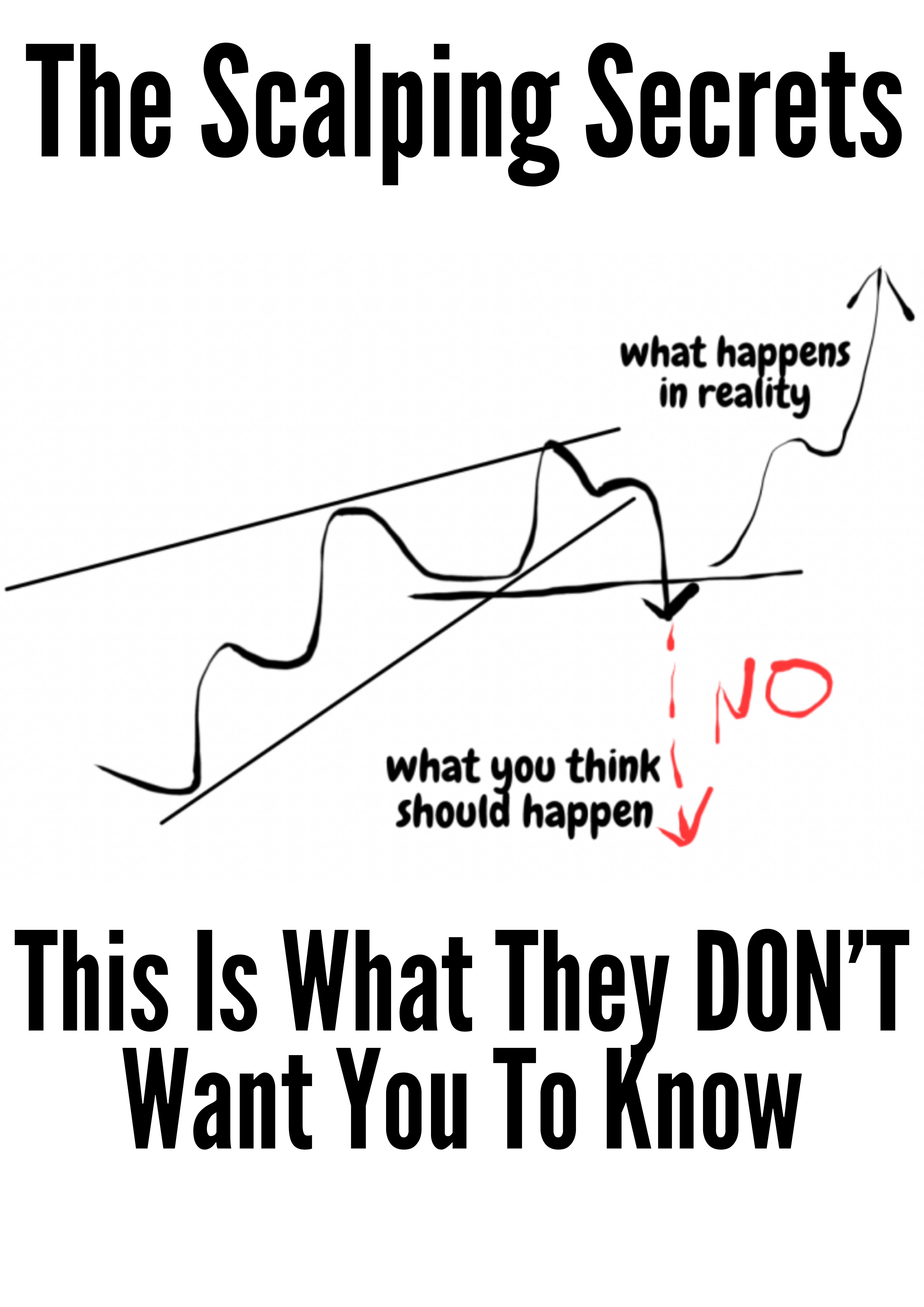
Most beginners don't fail because forex is impossible to learn. They fail because they start with the wrong target. They chase entries before they understand risk. They memorize patterns before they can read context. They fund live accounts before they've built habits. A real education doesn't sell speed. It builds judgment.
If you're comparing programs, free lessons, and communities, the right filter is simple. Don't ask whether a course looks exciting. Ask whether it teaches you to make decisions under uncertainty, manage downside, and review your own behavior. That's what turns information into competence. If you want a benchmark for what structured beginner training should look like, Colibri Trader's trading course for beginners is one example of a program built around practical trading development rather than entertainment.
Your Search for a Real Forex Education
A beginner usually starts the same way. They open YouTube, search “learn forex,” and get flooded with Lamborghinis, screenshots, indicator packs, and dramatic claims about quitting a job. Then they find a more serious teacher who talks about support and resistance. Then someone else says indicators are useless. Then another says price action alone is too subjective. After a week, they know more words, but they don't know what to do next.
That confusion comes from mixing marketing content with training content.
Marketing tells you trading is about finding a secret edge. Training shows you that trading is a craft made of routines. You study charts. You define setups. You accept losses. You track mistakes. You reduce risk when you're out of sync. None of that looks glamorous, but that's the work.
What serious education feels like
A real course doesn't try to impress you with complexity. It narrows your focus. It helps you answer basic but important questions:
- What market am I looking at
- What conditions fit my setup
- Where is my trade idea wrong
- How much can I lose if I'm wrong
- Should I trade this at all
If a course can't help you answer those questions, it isn't education. It's content.
Good forex training replaces excitement with clarity. That's usually less fun at first, and far more useful later.
A lot of beginners think they need more indicators, more market news, or more chart patterns. Most need fewer moving parts and a cleaner learning path. The best beginner forex trading course won't make you feel like an insider. It will make you more precise, more patient, and harder to fool.
What to ignore early
You can safely ignore a lot of noise in the beginning:
- Luxury branding doesn't prove trading skill.
- Constant trade alerts don't teach decision-making.
- Certificate-style completion means very little if you still can't manage risk.
- Complicated templates often hide weak understanding.
What you need is a framework you can repeat on your own screen, with your own analysis, under normal market conditions and stressful ones.
The Anatomy of a Great Forex Course
A strong course has three parts, similar to building a house. Its foundation is market knowledge. The framework is practical execution. The inspection is the feedback that catches weak habits before they become expensive.

If one part is missing, your development becomes lopsided. Plenty of beginners know terminology but freeze when they need to place a trade. Others take lots of trades but can't explain why they entered. Some know a setup but keep breaking their own rules because nobody reviews their process.
The three pillars
Foundational Knowledge
This is the layer many people rush through. It includes how the forex market works, how pairs move, how charts are read, and how trade risk is measured. You don't need academic depth, but you do need clean understanding.
Without this layer, you'll misread basic information and make avoidable mistakes.
Practical Application
Knowledge by itself doesn't create skill. A course needs to move you from “I understand the lesson” to “I can apply this on a blank chart.” That means demo work, trade planning, chart marking, journaling, and repeated execution under the same rules.
Most low-quality courses reveal their inadequacies here. They explain concepts once, then leave the student alone.
Psychological Discipline
A lot of people call this mindset and leave it vague. It's more concrete than that. Can you wait for your setup? Can you skip a marginal trade? Can you follow your stop placement rules after a recent loss? Discipline shows up in behavior, not slogans.
Practical rule: If a course teaches entries more clearly than restraint, it's incomplete.
Core Components of a High-Quality Beginner Course
| Component | What It Includes | Why It's Critical |
|---|---|---|
| Foundational Knowledge | Market mechanics, chart basics, terminology, pair behavior, trade math | Gives you the language and structure to understand what you're doing |
| Practical Application | Demo trading, setup recognition, chart review, journaling, plan execution | Turns theory into repeatable behavior |
| Psychological Discipline | Patience, rule adherence, emotional control, post-trade review | Prevents self-sabotage when real money and stress are involved |
How a course is delivered matters too. Many traders learn better when lessons are broken into short, focused modules rather than long lectures. If you're evaluating educational material from the creator side or the student side, ClipCreator.ai's training video guide is useful because it shows what effective instructional content should feel like when it's built for retention instead of performance.
Core Forex Concepts Every Beginner Must Master
If a beginner forex trading course skips the math of trading, skip the course. This isn't optional knowledge. It's the difference between knowing what a trade idea is and knowing what that idea can cost.
In major pairs such as EUR/USD, 1 standard lot equals 100,000 currency units, 1 mini lot equals 10,000, and 1 micro lot equals 1,000. At $10 per pip for a standard lot, even a 10-pip move can mean about $100 profit or loss, which is why lot size and pip value belong near the start of any serious training, as shown in this beginner lesson on forex lot size and pip value.
That one fact should change how you think about forex education. A small move on the chart can carry a very different consequence depending on the position size. Beginners often stare at chart patterns and forget the position is what converts a market move into real money.
The non-negotiable curriculum
A proper course should teach these concepts clearly and in plain language:
- Currency pairs: You need to understand what you're buying and selling, and how pairs are quoted.
- Pips and price movement: You have to know how movement is measured before you can judge trade risk.
- Lot sizes: Position size controls exposure. It is not a cosmetic setting.
- Spread and order basics: You should understand why entering and exiting isn't frictionless.
- Timeframes: A one-minute chart and a daily chart don't communicate the same information.
- Market structure: Higher highs, lower lows, ranges, breaks, and rejections form the skeleton of chart reading.
Why this matters in practice
A lot of new traders think “beginner” means simple. In reality, beginner training should be simple in presentation, not shallow in content. If you don't understand the mechanics, you won't know whether your trade is conservative or reckless.
For example, many students can point to an entry candle but can't answer three basic questions:
- What's the stop distance
- What lot size fits that stop
- What does that risk mean in account terms
If the course doesn't drill that thinking, it's preparing you to click buttons, not trade.
The first sign of maturity in a new trader is that they stop talking mostly about profit and start talking more about exposure.
What a clean syllabus looks like
Look for lessons that build from mechanics into interpretation. The right order usually feels like this:
- Start with chart language
- Move into trade measurement
- Add market structure
- Then discuss setups
That sequence matters. Beginners who start with setups often copy shapes. Beginners who start with measurement and structure learn to assess context.
Essential Trading Skills Beyond the Basics
Knowing terminology doesn't make you tradable. Skill begins when you can open a clean chart and organize what matters without needing someone else to point it out.

Technical analysis should be taught as decision support, not decoration. OANDA notes that traders use historical price charts and market statistics to identify supply and demand shifts, support and resistance zones, and high-probability entry and exit points. It also notes that traders typically use multiple timeframes and tools such as moving averages, momentum indicators, oscillators, and drawing tools, with the first step being to read what price is doing on higher timeframes in its introduction to technical analysis.
That higher-timeframe point matters. Beginners often zoom too far in and start trading noise. A good course teaches you to begin broad, then refine.
What real chart-reading skill looks like
A capable beginner can do more than label candles. They can answer practical questions from price alone:
- Is the market trending, ranging, or breaking structure
- Where did buyers or sellers clearly take control
- Is the level obvious, or am I forcing it
- Does this trade align with the broader picture
That's why price action and market structure training tends to age well. It teaches you how to think through a chart rather than lean on one tool.
If you're studying educational design itself, LearnStream's guide for course creators is useful because it focuses on transfer of learning. That's a key issue in trading education. Can the student apply the lesson alone when no instructor is present?
A trading process is more important than a setup
Many beginners ask, “What strategy should I use?” The sharper question is, “What process helps me execute one strategy consistently?”
A workable process often includes:
- Bias selection: Start from the higher timeframe and decide whether you even want to be involved.
- Level marking: Identify areas where price previously reacted with conviction.
- Entry criteria: Define what must happen before you enter.
- Invalidation: Decide what price action proves your idea wrong.
- Post-trade review: Record whether you followed your rules, not just whether you won.
For traders working on position sizing and preservation, Colibri Trader's guide to money management in trading is a useful companion because it keeps the focus on survival and repeatability rather than signal chasing.
A setup without a process creates random behavior. A simple setup inside a disciplined process can be traded for a long time.
Your Realistic Learning Path and Timetable
One of the biggest gaps in forex education is time. Courses explain concepts, but they rarely tell you what competence should look like from stage to stage. Neutral learning platforms list beginner forex education, but they don't provide a concrete competency timeline, which leaves new traders without a measurable path, as reflected in this forex course search overview on Coursera.
That gap matters because a beginner needs milestones, not motivation.

Phase one builds clarity
In the first phase, you're not trying to make money. You're trying to remove confusion. That means learning the language of charts, understanding what your setup is supposed to look like, and defining your rules in writing.
Your milestone for this phase isn't profit. It's consistency of interpretation. You should be able to look at the same chart on different days and analyze it the same way.
Phase two builds behavior
The second phase is where most of the actual development happens. This is demo territory, but not casual demo clicking. You want deliberate repetition.
A serious practice routine includes:
- Chart review: Go through charts when you are not in a trade and mark levels objectively.
- Trade journaling: Write down why you entered, where you were wrong, and whether you followed rules.
- Setup filtering: Learn to reject average trades, not just find possible ones.
- Routine review: Spot patterns in your own mistakes.
A lot of beginners want a timeline measured in days. Trading competence doesn't respect that. It develops through repeated observation, execution, and review.
If you can't follow your own rules on demo, live money won't fix the problem. It will magnify it.
Phase three tests restraint
Live trading should begin only when your process already feels normal. Not exciting. Normal. You know what you trade, what you skip, and how you respond when a trade fails.
Good signs you may be ready for this phase include:
- Your journal shows rule adherence, not random improvisation
- You can explain your edge in plain language
- You don't feel compelled to trade every session
- You review losing trades without changing your method impulsively
Most courses don't define these standards. They jump from theory to “go trade.” That's too big a leap. A better path is to treat trading skill like apprenticeship. Learn. Practice. Review. Then risk capital.
If you want a broader framework for structuring that development, Colibri Trader's article on the best way to learn trading aligns well with this milestone-based approach.
Red Flags in Forex Courses You Must Avoid
Some forex courses are weak. Others are dangerous. A dangerous one doesn't just waste your money. It teaches habits that can damage your account before you even know what went wrong.

The first red flag is obvious. If a course sells certainty, walk away. Forex trading is a risk business. Anyone who markets it like guaranteed income is either inexperienced or dishonest.
The second red flag is more subtle. Many bad courses overemphasize entries and underteach trade quality. Beginners start thinking every visible setup deserves a trade. It doesn't. The practical impact of spread, leverage, and execution quality is often ignored. Beginners focus on entry signals while underestimating how transaction costs and fast-moving markets can turn a valid setup into a poor trade. The more important lesson is often learning when not to trade, as discussed in this beginner-focused video on spread, leverage, and execution.
Warning signs that show up fast
Watch for these patterns:
- Secret-system language: If the core pitch is hidden knowledge, the method usually won't survive normal market conditions.
- No real risk training: If stop placement, position sizing, and trade filtering are barely mentioned, the course is incomplete.
- Pressure selling: Countdown timers and emotional urgency are common when the material can't stand on its own.
- Signal dependence: If students are trained to wait for alerts instead of developing analysis, they stay dependent.
A good beginner forex trading course should make you more independent over time. A bad one keeps you attached to the seller.
The part bad courses avoid
Low-quality educators rarely spend enough time on friction. They don't want to slow down the fantasy. But the trade you take during volatile conditions can behave very differently from the clean screenshot used in a lesson.
This short video is worth watching with a skeptical eye, because skepticism is part of trader education:
Ask harder questions before paying for any program:
- Does this course teach me to skip trades
- Does it address execution problems in fast markets
- Will I leave with rules, or just inspiration
- Can I trade without the instructor feeding me setups
The most expensive course is the one that teaches you confidence without caution.
How Colibri Trader Builds Profitable Traders
The strongest part of a practical trading education is alignment. The market model, the execution model, and the review model should fit together. When they don't, beginners end up with a pile of disconnected lessons.
That's why a price-action-first approach often works well for developing traders. It keeps attention on structure, context, and behavior instead of endless tool collecting. In practice, that means learning to read levels, recognize imbalance between buyers and sellers, define invalidation clearly, and manage money with discipline.
Colibri Trader fits that model by focusing on straightforward price action, market structure, money management, and mentorship-driven development rather than certificates or badge collecting. That matters because most beginners don't need more information. They need cleaner decision-making and a repeatable process.
The other useful distinction is that transformation in trading skill isn't the same as course completion. A student can finish every lesson and still be unprepared if they haven't built review habits, patience, and execution discipline. The right beginner forex trading course should leave you with a process you can repeat alone on a live chart, without needing constant prompts.
If that's the standard you use, your search gets much easier. Ignore the noise. Look for education that teaches chart reading, risk control, trade filtering, and accountability. Those are the skills that keep traders in the game long enough to become good.
If you want a structured, price-action-based way to build those skills, explore Colibri Trader. It offers beginner-friendly training, practical programs, and mentorship built around market structure, discipline, and money management rather than hype.