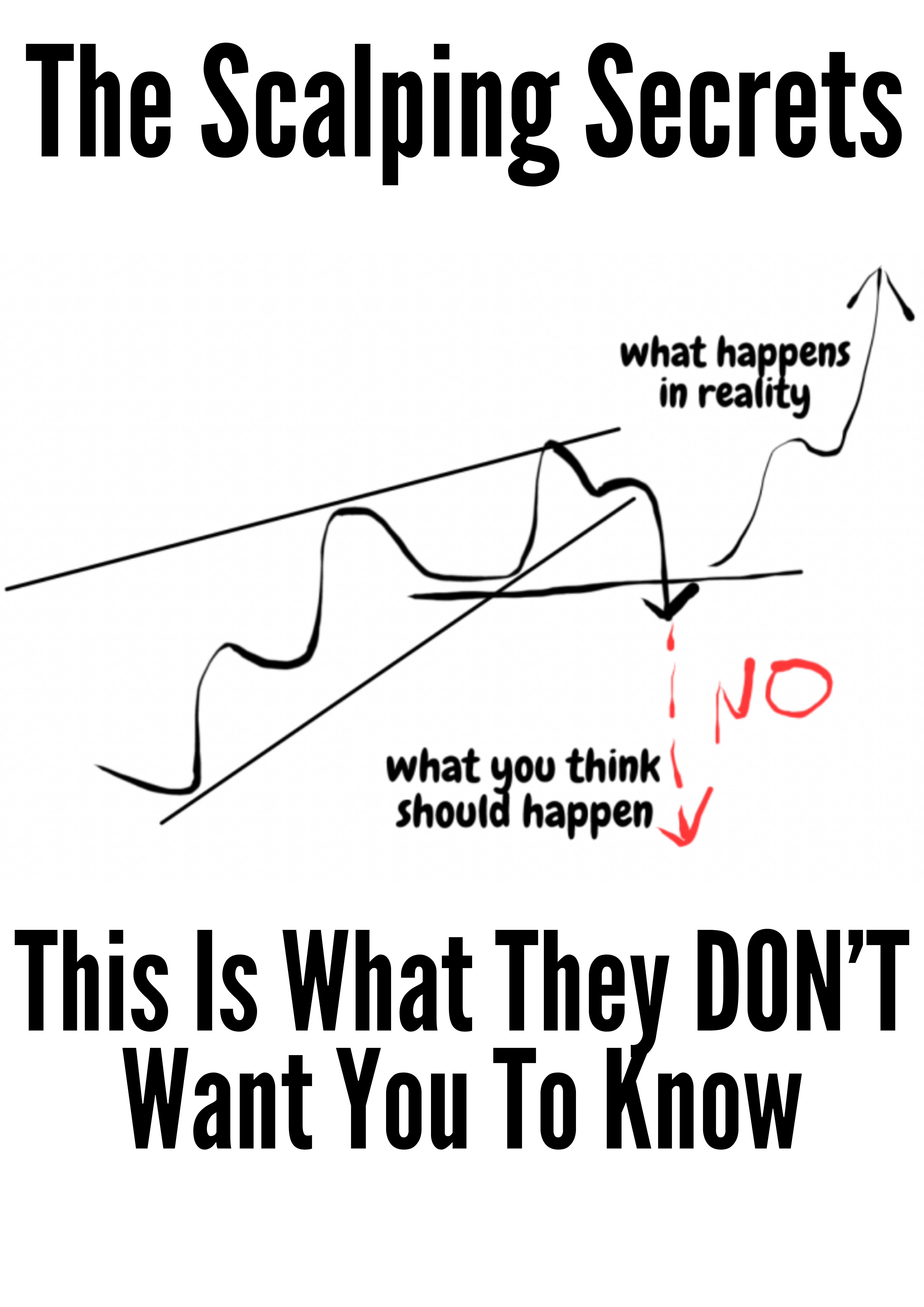
What Is Day Trading Stocks A Complete Beginner’s Guide
So, what exactly is day trading stocks? To put it simply, it's the art of buying and selling a stock within a single trading day. The goal is to cash in on small, fleeting price changes. All your trades are closed out before the market shuts down, which means you never hold a position overnight.
Decoding Day Trading For Beginners
I like to think of day trading as running a high-speed business. You spot an opportunity to buy your inventory (stocks) in the morning and work to sell everything for a small profit by the end of the day. It’s a world away from traditional investing, which is more like buying property and holding onto it for years, waiting for its value to grow.
As a day trader, you're not concerned with a company's long-term prospects or its dividend payouts. Your entire focus is on intraday volatility—the natural up-and-down rhythm a stock’s price follows during market hours. Success isn't about getting lucky; it's about consistently applying proven strategies to capture these small price movements, again and again.
The objective of a day trader is to profit from daily price movement and market volatility. By making multiple trades, they gather many small profits which can result in considerable amounts at the end of the day.
How Day Trading Compares to Other Styles
To really get a feel for what day trading entails, it’s helpful to see how it stacks up against other approaches. Every trading style operates on a different clock with entirely different goals. For any beginner trying to find their footing, understanding these distinctions is a critical first step.
For instance, a long-term investor might buy a stock and not touch it for years. A swing trader might hold it for a few days or weeks to catch a larger price "swing." The day trader's world is the most condensed of all, focusing only on the action between the opening and closing bells.
This table really helps break down the differences at a glance.
Day Trading Compared To Other Investing Styles
| Style | Typical Holding Period | Primary Goal | Frequency of Trades |
|---|---|---|---|
| Day Trading | Seconds to hours | Profit from small, intraday price moves | High (multiple trades per day) |
| Swing Trading | Several days to weeks | Capture larger price "swings" over time | Medium (several trades per month) |
| Long-Term Investing | Months to years | Benefit from company growth and dividends | Low (few trades per year) |
As you can see, the time commitment, goals, and pace are vastly different. Choosing a style that aligns with your personality, risk tolerance, and lifestyle is one of the most important decisions you'll make as a trader.
Understanding The Mechanics Of A Day Trade
To really get what day trading stocks is all about, you have to look past the theory and see how a trade actually plays out. It’s a lot more than just hitting 'buy' and 'sell'. It's a calculated process, and it starts with finding the right kind of stock.
Day traders are basically hunters of movement. That’s why we’re always drawn to two key ingredients: liquidity and volatility.
Liquidity simply means you can get in and out of a stock quickly without the price jumping around just because of your order. Think of it as a busy market—there are always buyers and sellers ready to make a deal. Volatility is how much a stock's price swings. A stock that barely budges all day is useless to us; we need enough movement to carve out a profit.
Executing The Trade With Order Types
Once you’ve found a stock that looks promising, you need to get into the market. This is done with different order types, which are just specific instructions you give to your broker.
The three most critical order types you'll use are:
- Market Order: This is the most direct command: "Get me into (or out of) this stock right now at whatever the current price is." It’s fast and guarantees you’ll get your trade filled, but you don't have control over the exact price.
- Limit Order: This is a much more precise instruction: "Only buy (or sell) this stock for me if it hits a specific price or better." You might, for example, place a buy limit order below the current market price, hoping to get in on a small dip.
- Stop-Loss Order: This is your most important risk management tool, period. It’s a pre-set order to automatically sell your position if the price drops to a certain level, capping your potential loss before it gets out of hand.
Think of it this way: a market order is like paying the sticker price at a store, a limit order is like making a specific offer, and a stop-loss is your insurance policy in case things go wrong.
Choosing Your Analytical Lens With Timeframes
Day traders live on price charts, but not all charts tell the same story. We use different timeframes to get a complete picture of what the market is doing. A timeframe just refers to the period that each “candle” or bar on your chart represents.
This simple flow shows the basic steps a trader takes within a single day.

As you can see, the core cycle is all about identifying an entry point, holding the position for a short time, and then getting out before the market closes.
Some of the most common timeframes for day traders are the 1-minute, 5-minute, and 15-minute charts. Looking at a 5-minute chart is like seeing a map of a neighborhood—it gives you a good sense of the recent price action. Switching to a 1-minute chart is like zooming in on a single street, showing you the nitty-gritty details of what’s happening right now.
By flipping between different timeframes, traders build a much richer perspective, which is essential for making better-informed decisions.
How To Read The Market With Price Action

While most new traders get completely lost in a sea of confusing indicators, many of us who have been doing this for a while prefer a much cleaner, more direct approach: price action.
This is really just the art of reading the “story” a stock chart tells you through its price movements alone. It means stripping away all the other distractions on the screen.
Instead of waiting on lagging signals from indicators, you learn to make decisions based on what the price is doing right now. This lets you focus on the raw behaviour of buyers and sellers. To get an even clearer picture, many of us rely on sophisticated trading analytics to back up what we see in the price action.
The Foundation: Support And Resistance
Two of the most important concepts in all of trading are support and resistance. I think of them as the floor and the ceiling that a stock's price often gets stuck between.
- Support: This is a price level where a falling price tends to pause or reverse. It’s an area with a lot of buying interest, acting as a "floor" that supports the price and stops it from dropping further.
- Resistance: This is the opposite—a price level where a rising price often stalls out. It’s an area with heavy selling interest, acting as a "ceiling" that provides resistance to the price moving any higher.
Imagine a rubber ball bouncing in a room. The floor is the support level, and the ceiling is the resistance. When the ball hits the floor, it bounces up; when it hits the ceiling, it falls back down. In trading, a stock’s price often behaves in a very similar way.
By learning to spot these zones on a chart, you can start to anticipate where the price is likely to struggle, bounce, or even break through. It gives you a clear framework for deciding when to get into or out of a trade.
Identifying And Following The Trend
Once you get a handle on support and resistance, the next skill is learning to see the market's direction. Trading with the trend is like swimming with the current instead of against it—it takes a lot less effort and your odds of success go way up.
A trend is simply the general direction the market is heading. You can spot it just by looking at the pattern of highs and lows on your chart.
- Uptrend: You’ll see a series of higher highs and higher lows. Each peak and each valley is higher than the ones before it.
- Downtrend: This is marked by a series of lower highs and lower lows. Each peak and valley is lower than the last.
If a stock is in a clear uptrend, a price action trader will be looking for chances to buy when the price pulls back to a support level. On the flip side, in a downtrend, we look for spots to sell short when the price temporarily rallies up to a resistance level.
By focusing on these core ideas, you start to see the market not as some random collection of price ticks, but as a structured story of supply and demand. If you want to dive deeper into this, you can learn more about how to read price action in our detailed guide.
Building Your Essential Day Trading Toolkit
To succeed in day trading, you need the right tools. But don't worry, this doesn't mean you need a Wall Street-sized budget. Think of it like setting up a race car—what matters is speed, reliability, and function, not a dashboard cluttered with useless, expensive gadgets.
Your entire trading business hinges on two non-negotiable pieces of hardware: a dependable computer and a high-speed internet connection. A lagging machine or a spotty connection can cause you to miss an entry or exit by a split second. In this game, that can be the difference between a winning trade and a losing one. This is the bedrock of your setup.
Once your hardware is solid, it's time to focus on the software that will actually bring your trades to life.
Software: The Engine Of Your Trades
At a minimum, you'll need two pieces of software: a direct-access broker and a clean charting platform. These are your steering wheel and dashboard, allowing you to navigate the market and make decisions on the fly.
- Direct-Access Broker: This is your direct line to the market. A good broker gives you lightning-fast, reliable trade execution. This ensures your orders get filled instantly at the price you want. Slow execution is a massive handicap that no professional trader can afford.
- Charting Platform: This is where you'll live, spending most of your time reading the market's story through price action. The best platform isn't the one with the most bells and whistles. It's the one that offers clarity and is simple to use.
A classic rookie mistake is to plaster charts with dozens of indicators. This creates a confusing mess that leads to "analysis paralysis." A professional's chart is often shockingly simple, focused only on price, volume, and key horizontal levels.
When you're looking at charting platforms, prioritise clean visuals and easy-to-use drawing tools for marking your support and resistance lines. Your job is to analyse price and execute trades—not get lost in a sea of digital noise. A simple, effective setup will always beat an expensive, complicated one.
For many traders, the tools offered by their broker are more than enough. Others, like myself, sometimes prefer dedicated software for charting. You can check out our guide on the best day trading platforms for beginners to see what might work for you. The goal is to find a combination that feels fast and lets you act on your trading plan without a moment's hesitation.
Risk Management The Skill That Keeps You Trading

If there’s one lesson that separates traders who make it from those who quickly wash out, it's this: risk management is everything. This isn’t some boring footnote to your strategy; it’s the single most critical skill you can develop as a professional. It’s what turns speculative guesses into a calculated business.
So many people learning about day trading get trapped by focusing only on making money. Professionals, on the other hand, obsess over protecting the money they already have. Your first job isn't to chase monster profits; it’s to protect your capital so you can show up and trade again tomorrow.
The Power Of Risk To Reward
At its core, every trade you consider must answer one simple question: "Is the potential reward worth the risk I'm taking?" This is the entire game behind the risk-to-reward ratio. A professional only enters trades where the potential upside is significantly bigger than the potential loss.
For example, are you risking $10 to potentially make $30 (a 1:3 ratio)? Or are you risking $30 just to try and make $10 (a 3:1 ratio)? A winning career is built on consistently taking those trades with favorable ratios. It means you don't even have to be right all the time to come out ahead.
The 1 Percent Rule A Lifeline
One of the most powerful and simple guidelines you can follow is the 1% Rule. It's incredibly straightforward: never risk more than 1% of your total trading capital on any single trade. If you have a $30,000 account, your maximum risk on one position should never exceed $300.
This rule is your shield against disaster. It ensures that an inevitable string of losses—and believe me, every single trader has them—won't wipe you out. It keeps you in the game long enough for your edge to play out.
Embracing this guideline is a massive step toward developing a professional mindset. Beyond the charts, a crucial part of your toolkit should be a solid grasp of financial planning and analysis to guide how you manage your capital.
The psychological side of risk is where most battles are truly won or lost. It means:
- Sticking to your plan without letting fear or greed take the wheel.
- Honoring your stop-loss without a second thought, even when it stings.
- Accepting small, controlled losses as nothing more than the cost of doing business.
This discipline is what truly separates the professional trader from the gambler. It’s not just about knowing the rules, but having the mental toughness to follow them day in and day out. If you're serious about this, our guide on risk management for traders is an invaluable place to start building these habits.
A Realistic Action Plan For Your First Month
Jumping straight into live day trading without a plan is a recipe for disaster. It's like trying to navigate a maze blindfolded—you're guaranteed to hit a wall, and in trading, those walls cost you real money.
So, here is a practical, step-by-step roadmap for your first 30 days. The goal is simple: build skill and confidence methodically before you ever risk a single dollar. We're going to focus on process over profits.
Think of this as your apprenticeship.
Week 1: Focus On Education
For the first week, your only job is to learn. That's it. Don't place a single trade, not even in a demo account. Just open up historical charts and start training your eyes to see the market's language.
Spend your time spotting the basic price action patterns we've talked about. Look for clear examples of:
- Support and Resistance Levels: Where did the price repeatedly stop falling or rising? Go ahead and mark these zones on your chart.
- Uptrends and Downtrends: Can you trace the series of higher highs and higher lows? Or the lower highs and lower lows?
- Key Candlestick Patterns: Pay attention to where the price reversed. Did a specific candle shape appear right before the turn?
This is all about building a visual library in your mind. You're learning to read the market's story without the pressure of having to make a decision.
Week 2: Practice In A Demo Account
Alright, now it’s time to step into the ring—but with simulated money. Open a demo account, which you might also see called a paper trading account. This lets you practice in the live market environment without any financial risk.
Your goal this week is purely mechanical. Get comfortable with your platform. Practice placing different order types (market, limit) and, most importantly, set a stop-loss on every single trade. No exceptions.
Get a feel for how fast prices can move and how your platform executes orders. Don't get hung up on winning or losing yet. Just focus on executing your actions flawlessly.
Week 3: Create Your Trading Plan
With a week of hands-on practice, you're ready to build your first trading plan. This is nothing more than a personal set of rules that will guide every trading decision you make. Its real purpose is to take raw emotion out of the equation.
Your trading plan is your business plan. It defines what you trade, when you trade, and how you will manage risk. Trading without one is just gambling.
Keep your initial plan simple. Define your exact rules for getting into and out of a trade. For instance: "I will only buy a stock in a clear uptrend when it pulls back to a confirmed support level, and I will place my stop-loss just below that level."
Week 4: Combine Practice And Journaling
In this final week, you’ll continue demo trading, but with one critical change: you must strictly follow the rules you just created in your trading plan.
After each trading day, you need to track your results in a trading journal. Write down why you entered a trade, how you managed it, and what the outcome was.
This process of review and reflection is what separates amateurs from professionals. It will quickly show you where the flaws are in your strategy and, more importantly, where your discipline is breaking down. This is how you build solid, professional habits from day one.
Common Questions About Day Trading Stocks
Even after you’ve decided to get serious about trading, a few questions always seem to pop up. These are the nagging doubts that can get in the way of real progress.
Let's tackle some of the most common ones I hear from new traders. Getting these cleared up is a huge step toward building the right mindset.
How Much Money Do I Need to Start?
In the US, you’ll see the number $25,000 thrown around. That’s the regulatory minimum balance to be flagged as a "pattern day trader." But honestly, that's the wrong question to be asking.
The real question is how much capital you need to manage risk properly. If you can't apply the 1% Rule without a string of losses knocking you out of the game entirely, you don't have enough. Your first step shouldn't be funding an account anyway—it should be opening a demo account and proving you have a profitable skill first.
Can I Day Trade With a Full-Time Job?
Yes, you can, but it’s not easy. It demands a level of discipline that most people struggle with and a very clear, structured plan.
Many traders I know started this way, dedicating their evenings and weekends to studying charts and paper trading. When they did go live, they focused their energy only on the most volatile times, like the market open or close. The key is putting in the hours on a simulator before a single dollar of your own money is on the line.
Professional trading is a business built on a tested strategy with a statistical edge, strict risk controls, and disciplined execution. Gamblers rely on luck; traders rely on a repeatable process.
Is Day Trading Just Gambling?
It absolutely is gambling… if you jump in without a plan, without rules, and without a deep respect for risk management. That’s a guaranteed way to burn through your account.
But when you approach it like a professional—with a proven edge, a trading plan, and unwavering discipline—it stops being a gamble. It becomes a business.
Ready to move beyond gambling and build a real, repeatable skill? At Colibri Trader, we teach a straightforward, price-action-based approach that works. Start your journey and transform your trading potential with us today.