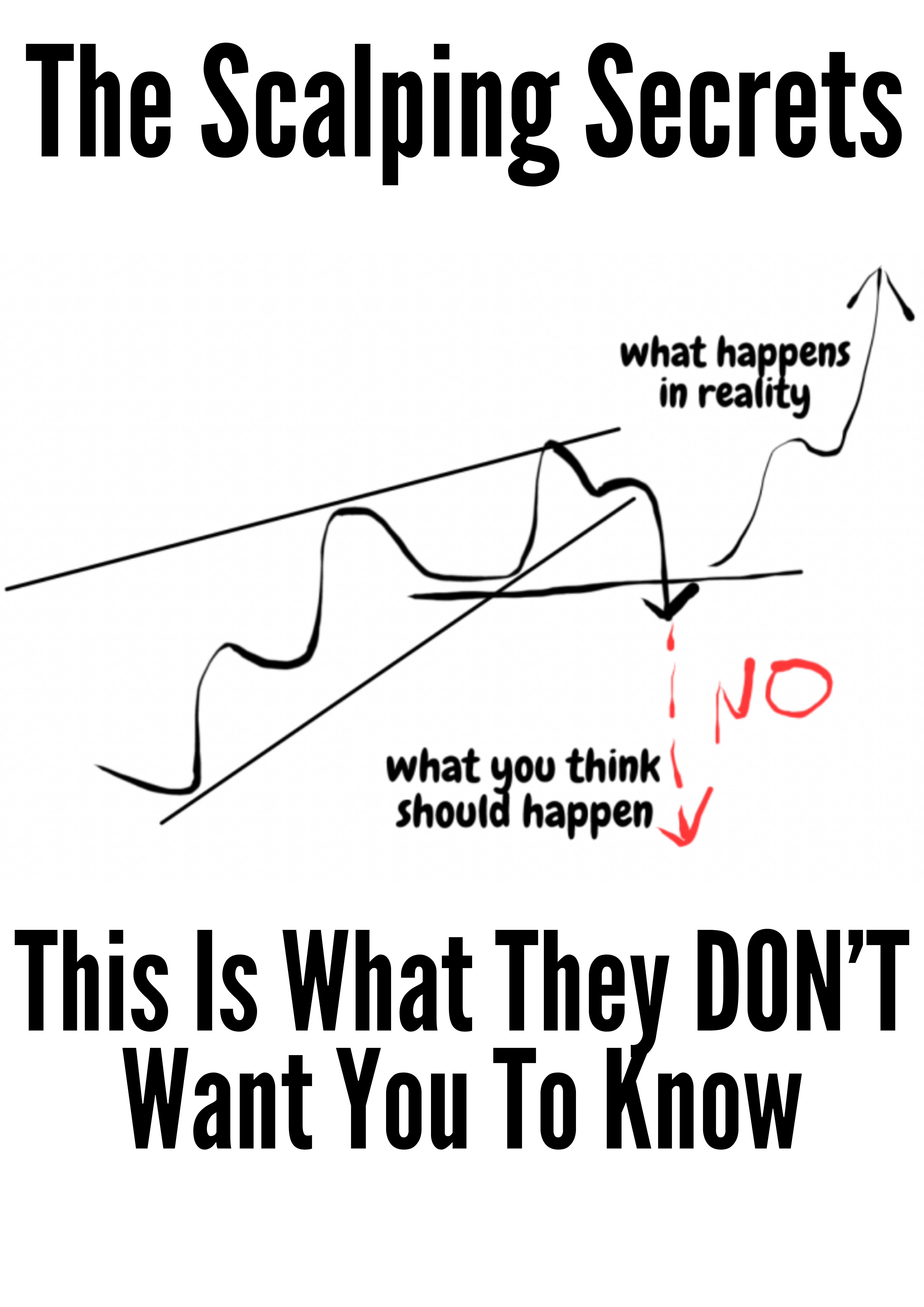
Forex Trading for Beginners a Practical Guide

The Unfiltered Truth About Forex Trading for Beginners
Before you even think about placing your first trade, we need to have a serious chat. The internet is overflowing with gurus in rented Lamborghinis who promise you can get rich overnight with forex. This guide isn't that. We're here to give you the unfiltered truth.

The foreign exchange (forex) market is the largest financial market in the world, with over $7.5 trillion changing hands every single day. That massive volume creates some incredible opportunities, but it's a double-edged sword. It also attracts hopeful gamblers looking for a quick score, not serious traders willing to build a skill.
The Stark Reality of Beginner Losses
Let’s be brutally honest about the numbers. Broker disclosures paint a very clear picture: the vast majority of retail traders lose money. In fact, most brokers report that somewhere between 72% and 84.60% of their clients are not profitable.
This isn't meant to scare you off. It's meant to ground you in reality.
Most beginners fail for the same predictable reasons: a total lack of real education, terrible risk management, and an emotional, undisciplined approach to trading. Understanding why they fail is your first real step toward actually succeeding.
The path to consistent trading isn't paved with complex indicators or secret signals. It's built on a solid foundation of understanding price behavior, managing risk, and maintaining strict discipline.
That's the path this guide will set you on. We'll focus on a straightforward, clean approach based on price action. This method cuts through the noise of confusing indicators and gets you to focus on what the market is actually telling you—reading the story of supply and demand right from the charts.
Beginner Trader Reality Check
The most important work a new trader can do is internal. It's about shifting your mindset from that of a gambler to a professional. To really drive this home, here's a look at the common mistakes beginners make versus the habits of seasoned pros.
| Common Beginner Mistake | Professional Trader Habit |
|---|---|
| Chasing "hot tips" and signals. | Following a tested trading plan. |
| Risking too much on one trade. | Applying strict risk rules to every position. |
| Trading out of boredom or greed. | Waiting patiently for high-quality setups. |
| Blaming the market for losses. | Reviewing trades to learn from mistakes. |
| Trying to win back lost money. | Accepting losses as part of the business. |
| Focusing only on making money. | Focusing on flawless execution and process. |
Your goal from day one should be to live on the right side of this table. By confronting these hard truths right now, you position yourself to avoid the traps that snare almost everyone else.
The Mindset Shift from Gambler to Trader
At its core, learning forex trading is about this mindset shift. A gambler crosses their fingers, hoping for a lucky break. A professional trader executes a well-defined plan with discipline, trade after trade.
This involves acknowledging the real risks and preparing for them. In some extreme cases, traders can even face serious financial challenges that require legal help, such as needing an NFA arbitration margin debit defense. Being aware of the entire landscape, good and bad, is part of a professional approach.
Here’s the difference in a nutshell:
- Gambler's Mindset: Chases fast profits, ignores risk, and makes emotional "gut" decisions based on hope or fear.
- Trader's Mindset: Focuses on a proven process, manages risk on every single trade, and works to maintain emotional control.
This guide is your foundation for building the habits of a professional. With the right perspective, you can start turning forex trading from a high-stakes gamble into a calculated and potentially rewarding skill.
Decoding the Forex Market Without the Jargon
Before we even look at a chart, let's strip forex trading down to its core. If you've ever travelled to another country, you've already done it. You walked up to a counter and exchanged your home currency for the local one. That simple swap is a forex transaction.
The forex market is just that—swapping one currency for another—but on a global, massive scale. It's a decentralized market where banks, big institutions, and individual traders like us speculate on where currency values are headed. You're not buying a physical thing; you're buying one currency with another, betting that the one you bought will get stronger against the one you sold.
Understanding Currency Pairs
In forex, currencies are always quoted in pairs. Think of these pairs as the "products" you can trade. When you place a trade, you are always buying one currency and selling the other at the same time. The most popular pair on the planet is the EUR/USD—the Euro versus the US Dollar.
Currency pairs fall into three main groups:
- The Majors: These are the big players. They always include the US Dollar (USD) and make up over 80% of all trading activity. Think EUR/USD, GBP/USD (British Pound/US Dollar), and USD/JPY (US Dollar/Japanese Yen). When you're starting out, I strongly suggest sticking to the Majors. They have the most buyers and sellers (high liquidity), which generally means smoother price moves.
- The Minors (or Cross-Pairs): These pairs trade major currencies against each other, but without the US Dollar. Examples are EUR/GBP or AUD/JPY (Australian Dollar/Japanese Yen).
- The Exotics: Here, you have a major currency paired with one from an emerging economy, like USD/MXN (US Dollar/Mexican Peso). These can be extremely volatile and have much less trading activity, making them a risky choice for new traders.
Measuring Price Movement with Pips
So, how do we track our profits and losses? In the forex world, the smallest tick in price is called a pip. It stands for "percentage in point." For most pairs, a pip is simply the fourth decimal place in the price.
For instance, if the EUR/USD price moves from 1.0750 to 1.0751, that’s a one-pip move. If you had bought at 1.0750 and the price climbed to 1.0800, you'd be sitting on a 50-pip profit. A single pip is a tiny amount, but with larger trade sizes, those pips can add up to significant gains or losses.
The Double-Edged Sword of Leverage
Leverage is a tool your broker offers that lets you control a large position with a small amount of your own capital. It’s what allows traders to potentially make meaningful profits from those tiny pip movements.
Think of leverage as a short-term loan from your broker. For every dollar you put down, the broker lets you control a much larger amount. With 100:1 leverage, your $100 can control a $10,000 position.
But here’s the critical part: leverage is a double-edged sword. It magnifies your winning trades, but it also magnifies your losing ones just as fast. A small market move against you can wipe out your entire account if you're not careful. Learning to respect leverage is one of the most important lessons for any new trader.
When Is the Best Time to Trade?
The forex market is unique because it's open 24 hours a day, five days a week. This is possible because trading follows the sun around the globe, moving through four major financial centers: Sydney, Tokyo, London, and New York.
The best time to trade is when the market is most active, which happens when two of these sessions overlap.
The most powerful overlap is between the London and New York sessions, which runs from 8:00 AM to 12:00 PM EST. In this four-hour window, volume and activity are at their peak, creating plenty of liquidity and clear price moves. For day traders, this is often the sweet spot to find high-probability setups and avoid getting stuck in slow, choppy markets.
The Power of Trading with Price Action
Have you ever looked at a trading chart covered in so many indicators it looks like a Christmas tree? Flashing lights, crossing lines, and a dozen conflicting signals. It's a recipe for confusion and what we call "analysis paralysis."
Now, imagine stripping all of that away. Picture a clean, simple chart that shows you only what is essential. That's the entire philosophy behind price action trading. It's about reading the market's story directly from the price chart itself, without all the distracting clutter.
Reading the Market's DNA
At its very heart, price action is about understanding the two forces that move every single market: Supply and Demand. These are the same universal principles that determine the price of your coffee in the morning and the value of currencies across the globe.
On a forex chart, these forces leave behind footprints. We see them as visible zones where the big players—banks, hedge funds—concentrate their buying and selling. This is where the smart money makes its moves.
- Demand Zones: Look for these where a sharp rally started. Think of them as wholesale price levels where institutional money is eager to buy. When price returns to a demand zone, we expect those buyers to show up again and push the price higher.
- Supply Zones: These are the opposite. They are price levels where a sharp drop began. These are like retail price areas where the big institutions are looking to offload their positions. When price revisits a supply zone, we anticipate sellers will step back in and drive the price down.
By learning to spot these zones, you stop trying to guess and start anticipating where the market is likely to turn. For a more in-depth guide, you can read more on what price action trading is right here on the blog.
Candlesticks: The Language of Price
If supply and demand zones are the major chapters in the market's story, then candlestick patterns are the individual words and sentences. Each candle gives you a snapshot of the battle between buyers (bulls) and sellers (bears) over a specific time.
A good price action trader doesn't need to memorize hundreds of fancy-named patterns. Instead, you focus on just a few powerful and reliable ones that signal a potential shift in control.
Price action isn't about predicting the future with 100% certainty. It's about identifying high-probability scenarios where historical price behavior stacks the odds in your favor.
Let me give you a concrete example. Seeing a bullish engulfing pattern form right at a strong demand zone is a very powerful signal. It tells you that buyers have just wrestled control from sellers, and they've done it at a location where we were already expecting buying interest. This simple combination gives you a clear, logical reason to think about taking a "long" (buy) trade.
The Benefits of a Clean Chart
For beginners, trading with pure price action offers a massive advantage. It forces you to focus on the only thing that truly matters: what the price is doing right now. It builds clarity and discipline from day one.
This approach comes with a few key benefits:
- Simplicity: It removes the noise and clutter, which leads to faster and more decisive analysis.
- Universality: The concepts of supply and demand work on any market and any timeframe, from the 5-minute chart to the daily.
- Leading Information: Indicators are lagging; they only tell you what has already happened. Price action is real-time information.
- Self-Reliance: You're not relying on some "black box" system. You're learning to read the market for yourself, building genuine skill and confidence.
When you strip away everything that isn't essential, you can build a trading strategy based on the market's own narrative. This method empowers you to make your trading decisions with conviction, which is the foundation for any long-term success.
Your Step-by-Step Plan to Making Your First Trade
Alright, enough with the theory. Let's talk about how you actually start trading. This is where the rubber meets the road, and it’s the most critical part of your journey. Knowing the concepts is one thing, but having a clear, structured plan to apply them is what separates the pros from the crowd.
I'm going to give you a simple, three-step roadmap. This isn't about complicated systems; it’s about building the right habits from day one. The whole process boils down to this: start with a clean chart, find your key zones, and then patiently wait for a clear pattern to show up.

This workflow is the essence of pure price action trading. By following these steps in order, you cut out the noise and the confusing signals. You learn to listen to what the market is actually telling you.
Step 1 Master the Demo Account
Your first step is an absolute must: open a demo account and trade with "paper money" for at least one to three months. A demo account is just a trading simulator. It looks and feels exactly like the real thing, but you’re not risking a single penny.
Think of it as your flight simulator. No pilot would ever dream of flying a real jet without logging hundreds of hours in a simulator first. Trading is no different. This is where you build your skills and your confidence before real money is on the line.
Most good brokers, like FOREX.com or OANDA, offer free demo accounts that are perfect for this. This risk-free sandbox is the only place you should be making your early mistakes.
Step 2 Create Your Trading Plan
Once you've gotten the hang of placing trades and navigating your platform, it's time to create your business blueprint: your trading plan. Let me be clear: trading without a plan isn't trading, it's gambling. A solid plan tells you exactly what to look for, how to enter, and most importantly, how to get out.
Your plan doesn’t need to be a 50-page document. In fact, simple is always better, especially when you're starting out.
A trading plan is your personal rulebook for the market. It pre-defines your actions so that you can operate with logic and discipline, not emotion and impulse.
Here’s a simple template you can use to build your own:
- Strategy: Define your edge. For example: "I will only buy (go long) from clear daily Demand zones on major pairs like EUR/USD and GBP/USD."
- Confirmation: What's your entry trigger? For instance: "I will wait for a clear bullish candlestick pattern, like a bullish engulfing candle, to form within the zone before I enter."
- Risk Management: This is the most crucial part. It defines your stop-loss and how much you'll risk. For beginners, the golden rule is to never risk more than 1-2% of your account on a single trade.
- Goals: Set process goals, not money goals. For example: "My goal is to follow my plan perfectly on my next 20 trades, win or lose."
One of the biggest traps for new traders is using too much leverage, which can wipe out an account in a heartbeat. If you need a refresher, check out our guide on what leverage in forex is and how to use it safely.
Step 3 Journal Every Single Trade
Finally, we come to what I believe is the single most powerful tool for your growth: a trading journal. You must log every single trade you take—whether it's a win, a loss, or a scratch. Your journal isn't just a logbook; it's your personal performance review.
By writing everything down, you can go back and analyze your decisions with a clear, objective mind. It's how you spot your bad habits and reinforce what's working.
What to Include in Your Trading Journal
- Date and Time: When did you enter the trade?
- Currency Pair: Which market were you trading?
- Entry and Exit Prices: Note the exact prices for your entry, stop-loss, and take-profit.
- Reason for the Trade: Why did you take this trade? Be specific and attach a screenshot of your chart. This forces you to justify your actions against your trading plan.
- Outcome: What was the result in pips and in your account currency?
- Review and Comments: This is the most important part. What did you do well? Where could you improve? Were you patient? Did you follow your rules to the letter?
This simple cycle of planning, executing, and reviewing is the bedrock of consistent trading. It will shift you from being a reactive, emotional trader to a proactive, strategic one. That mindset is everything.
Analyzing Price Action with Simple Trade Examples
Okay, you've got the plan. Now it's time to see it in action. Theory is great, but nothing builds confidence like watching these principles play out in a live market. This is where we connect the dots—from spotting a high-probability zone to waiting for that perfect confirmation signal and pulling the trigger with a solid risk plan.

Let's walk through two classic trade examples on a popular pair like the EUR/USD. The first will be a "long" (buy) trade from a Demand zone, and the second a "short" (sell) trade from a Supply zone. You'll see exactly how a price action trader thinks, waits, and acts.
Long Trade Example from a Demand Zone
Imagine you're looking at the EUR/USD chart and you spot a fresh, powerful Demand zone. This is an area where price previously rocketed upwards, which tells us that big institutions likely have a stack of buy orders waiting right there. Your plan is simple: wait patiently for the price to come back to that level.
When price finally pulls back into our Demand zone, we don't just jump in and buy. That would be gambling. Instead, we watch for confirmation. In this case, we see a massive bullish engulfing candle form right in the zone. This is our trigger. It’s the market telling us that buyers are stepping in with force, exactly where we expected them to.
A trade entry isn't just a guess; it's a calculated decision based on the confluence of location (the zone) and confirmation (the candlestick pattern). This two-step process filters out many low-quality setups.
Now, we execute the trade according to our plan:
- Entry: We place a buy order just above the high of that bullish engulfing candle.
- Stop-Loss: The stop-loss goes just below the low of the entire Demand zone. This defines our absolute maximum risk. If we're wrong, we're out with a small, manageable loss.
- Take-Profit: Our first target is the nearest opposing Supply zone, which gives us a great risk-to-reward ratio of at least 2:1.
Short Trade Example from a Supply Zone
Next up, let's hunt for a selling opportunity. Scanning that same EUR/USD chart, we pinpoint a clean Supply zone—a level where price previously took a nosedive. This signals a concentration of institutional sell orders. Again, our plan is to do nothing until the price rallies back up into our zone.
As price pushes into the Supply zone, we're on high alert for our confirmation signal. This time, we spot a bearish pin bar. This candle has a long upper wick, showing that buyers tried to push higher but were violently rejected by sellers. That's the green light we were waiting for.
With our confirmation in hand, we can execute the short trade with precision.
- Entry: We place a sell order just below the low of the bearish pin bar.
- Stop-Loss: Our stop-loss is placed just a few pips above the high of the Supply zone, protecting us from any surprise breakouts.
- Take-Profit: We set our target at the next major Demand zone below, making sure our potential profit is much bigger than our potential loss.
Before you take any trade, it’s a good practice to run through a quick mental checklist to ensure you aren't deviating from your rules.
| Trade Execution Checklist | |
|---|---|
| Checklist Item | Status (Yes/No) |
| Is the trade in a valid Supply or Demand zone? | |
| Is there a clear confirmation signal (e.g., engulfing, pin bar)? | |
| Does the trade align with the higher timeframe trend? | |
| Is the risk-to-reward ratio at least 2:1? | |
| Have I calculated my position size correctly? |
This simple checklist keeps you honest and reinforces the disciplined habits needed for long-term success.
These examples show that profitable trading isn't about some secret indicator or complex system. It’s about a repeatable, logical process built on solid risk management and high-probability setups. By combining a great location with clear confirmation, you start to stack the odds in your favour, trade after trade. Your journey begins by learning and consistently applying this powerful framework.
Common Beginner Mistakes and How to Avoid Them
If you want to get ahead in this game, the quickest way is to learn from the mistakes everyone else makes. Your demo account is the perfect sandpit for making your own blunders, but knowing the biggest traps ahead of time can save you a world of pain and a lot of cash.
These aren't just simple trading errors; they're emotional traps that almost every new trader falls into. Spotting them now is your first step toward building the discipline you need to win.
Let’s break down the three biggest account-killers.
The Trap of Revenge Trading
You just took a loss. It stings. The first thing you want to do is jump straight back in and "win back" what the market took. That right there is revenge trading. It’s an emotional tantrum, not a strategy.
Instead of patiently waiting for a real setup that fits your plan, you force a trade because you're angry or frustrated. This almost always ends in another loss—usually an even bigger one—and kicks off a nasty downward spiral.
The market doesn't know you. It doesn't care that you just lost money. Your last trade has zero effect on the next one.
The Solution: Look at every loss like a business expense. It's just the cost of doing business. When a trade hits your stop-loss, shut down your charts and walk away for at least 30 minutes. Give your head time to clear so your next trade is based on your plan, not your ego.
The Danger of Over-Leveraging
Leverage looks like a superpower. It lets you control huge positions with a tiny account. For a beginner, though, it’s more like playing with dynamite. Over-leveraging simply means you're risking way too much of your account on one trade, and it's the #1 reason new traders blow up.
Think about it: if you risk 20% of your account on a single trade, one loss carves out a massive hole that’s almost impossible to climb out of. A string of just five bad trades and your account is completely wiped out.
The Solution: This one is non-negotiable. You need an ironclad rule: never risk more than 1-2% of your account on any single trade. This simple math is what keeps you in the game. It ensures you can survive the losing streaks that every single trader—even the pros—has to go through.
The Endless Cycle of System Hopping
You try a strategy for a week. You get a few losses and decide it's broken. You spend all weekend on forums looking for the "holy grail," find a new system, and then do it all over again the next week. This is system hopping, and it's a guaranteed way to never, ever find consistency.
No strategy on earth wins 100% of the time. Every single valid trading plan will have losses. By jumping from one system to the next, you never stick around long enough to let the strategy's edge actually work.
The Solution: Pick one simple, logical strategy—like the price action approach we're talking about here—and commit to it for at least 50 trades. Log every single one in your journal. This is the only way to get real data on what's working, what isn't, and how you can get better.
To dig a bit deeper, check out our detailed article on the most common trading mistakes to avoid.
Answering Your Top Questions About Forex Trading
As you get ready to jump into the forex world, a few big questions always pop up. Let's tackle them head-on so you can move forward with confidence.
How Much Money Do I Need to Start?
You’ll see brokers advertising that you can open an account with just $100, and technically, that's true. But in reality, you should be looking at a starting capital of $500 to $1,000.
Why? Because that amount actually lets you apply proper risk management. You need enough cushion to stick to the crucial rule of risking only 1-2% of your account on a single trade.
If you start with too little, you're forced to take massive risks just to see any meaningful return. That’s a fast track to blowing up your account. The goal at the start isn't to get rich; it's to learn the process correctly.
Is Forex Trading a Legitimate Way to Make Money?
Absolutely. Forex is the largest, most liquid financial market on the planet. It’s completely legitimate.
The bad reputation comes from two places: shady, unregulated brokers and the "gurus" on social media promising guaranteed profits from their get-rich-quick schemes.
Treat trading like a business—one that demands real education, serious practice, and unwavering discipline. When you work with a reputable broker and follow a solid plan, it's as legitimate as any other skilled profession.
How Long Does It Take to Become Profitable?
There's no magic number here. Your timeline depends entirely on your dedication and discipline. Most traders I know agree it takes at least six months to a year of consistent effort just to feel comfortable and stop making basic mistakes.
To achieve real, consistent profitability? Many will tell you it took them 2-3 years. This is a marathon, not a sprint.
Forget about a date on the calendar. Your first and only goal should be to master your strategy and prove you can be profitable on a demo account. The real money comes after you’ve built the skill.
Ready to build a real, sustainable trading skill? At Colibri Trader, we teach a clear, no-nonsense price action approach that works. Stop guessing and start trading with a plan. Explore our proven trading programs today.