
Best Computer Monitors For Trading: Boost Your Performance
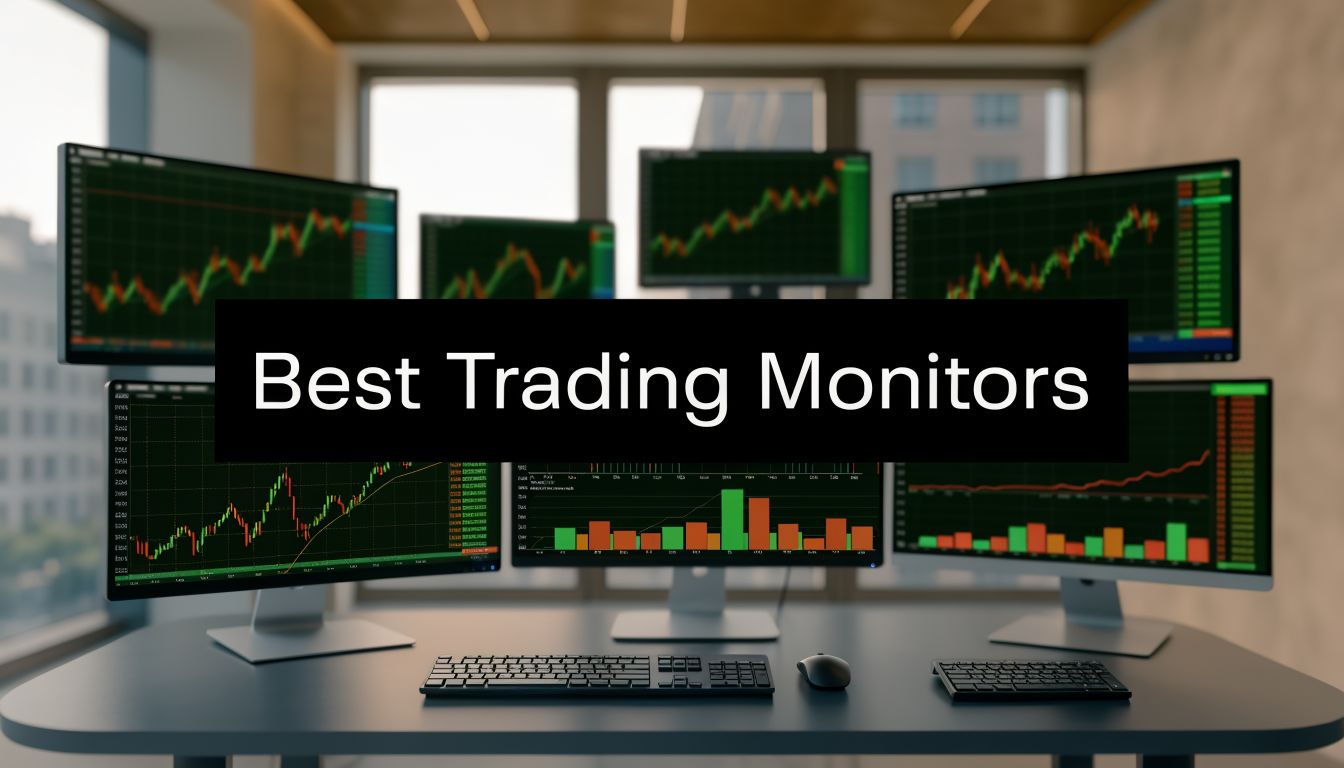
You’re probably reading this on the same screen you trade from. Maybe it’s a laptop. Maybe it’s a decent consumer monitor that looked fine when you bought it. Then the market opens, a level starts reacting, candles move fast, your order ticket covers half the chart, and your focus starts leaking away into tiny annoyances.
That’s where most traders misjudge computer monitors for trading. They think of the monitor as office gear. It isn’t. It’s the lens you use to read price.
For a price-action trader, screen quality affects more than comfort. It affects whether you can read structure cleanly, whether you can track multiple timeframes without clutter, and whether your concentration holds up deep into the session. Most guides don’t deal with the physiological and cognitive demands of long chart sessions, and they rarely answer whether newer panel technologies help you see support, resistance, and supply-demand zones more clearly for this style of trading, as noted in this discussion of trading monitor gaps.
Why Your Monitor Is Your Most Important Trading Tool
A lot of traders spend weeks refining entries and risk rules, then sabotage that work with a screen that makes charts harder to read.
That sounds dramatic until you’ve lived it. A mediocre display does three things at once. It blurs details you should notice, forces you to constantly rearrange windows, and drains your focus faster than you realize. The damage doesn’t show up as one obvious mistake. It shows up as hesitation, late execution, missed retests, and sloppy review sessions.
Price action depends on visual clarity
If your method relies on clean candles, structure, momentum shifts, and zones, then your monitor is part of the method. You’re not just “looking at charts.” You’re judging shape, spacing, context, and reaction.
A cluttered or dim display makes that harder. So does a screen that handles movement poorly, or one that forces you to compress charts so much that every swing looks the same. Traders often blame themselves for inconsistency when part of the issue is that their workspace keeps putting friction between them and the market.
You can’t trade cleanly from a screen setup that constantly asks your eyes and brain to compensate.
For anyone building a serious home setup, this matters just as much as platform choice or internet stability. Traders trying to create a durable routine from home need an environment that supports repetition and focus, not one that creates unnecessary fatigue. That’s especially true if you’re trying to become a day trader from home and turn your desk into a professional workspace instead of a temporary corner of the house.
Bad screens create mental noise
Price-action trading already asks a lot from your attention. You’re reading context, waiting for confirmation, managing open risk, and deciding whether a move is clean enough to act on.
A poor monitor adds another layer of decision fatigue:
- Tiny chart windows make it harder to judge whether a candle is rejecting a level or just looks that way because the scale is cramped.
- Weak brightness or poor contrast handling can make zones blend into the background, especially after hours of staring at charts.
- Slow-feeling displays make chart movement feel less precise, which increases friction when the market speeds up.
The real job of a trading monitor
A good trading monitor doesn’t predict markets. It does something simpler and more valuable. It removes friction.
That means:
- Clearer chart reading
- Less window switching
- More stable focus through long sessions
- A cleaner separation between analysis, execution, and review
That’s why I treat the monitor as a trading tool first and a tech purchase second. If your view of price is compromised, everything downstream gets worse.
Decoding Monitor Specs for Price Action Trading
A trader marks a supply zone before London open, then misses the clean rejection because the chart is cramped, the candles blur during the push, and the order window is covering half the structure. That is usually blamed on timing. Often, it is a screen problem.
Most monitor spec sheets bury the few things that affect chart reading. For price-action trading, the specs that change your day are resolution, refresh rate, response time, panel type, and brightness. Those choices determine how easily you can read swing points, judge rejection candles, and keep higher-timeframe context visible while you execute.

Resolution decides how much market structure you can see at once
Resolution affects two things immediately. How sharp your charts look, and how many windows you can keep open without crushing the active chart.
For price action, that matters more than raw spec bragging rights. If you trade supply and demand, you need enough room to keep the execution chart clean while still checking the higher-timeframe zone, watchlist, or order panel. RTINGS' monitor guidance explains the practical differences between common resolutions and screen sizes, especially for text clarity and workspace density on desktop setups.
Here is the practical breakdown:
| Spec | What it changes in trading | Best use |
|---|---|---|
| Full HD | Usable, but limited room once multiple panels are open | Secondary monitors, simple layouts |
| QHD | Sharper charts and better window space without tiny text | Best all-around choice for many traders |
| 4K | Maximum detail and more chart density on larger screens | Primary display for traders who keep several tools visible |
My view is simple. Full HD still works, but it runs out of space fast. QHD is the sweet spot for many chart-based traders. 4K is excellent on the right screen size, but only if scaling is handled well so your text and platform controls do not become annoyingly small.
Refresh rate affects how clean price movement feels
Refresh rate is not just a gaming spec. It changes how smooth chart movement looks during fast sessions, especially when you scroll, drag, or track live candles near a decision zone.
A standard 60Hz office monitor is usable. A 120Hz or 144Hz display usually feels better over a full session because movement looks cleaner and your eyes do less work following it. If you want a plain-language comparison before buying, Budget Loadout's refresh rate breakdown explains where higher refresh rates help and where they stop mattering much.
For trading, I treat 60Hz as the minimum. If the budget allows, 120Hz to 144Hz is a smart range. Above that, the benefit gets smaller for charting than it does for competitive gaming.
Response time controls blur and ghosting
Response time tells you how quickly pixels change from one state to another. In trading, that shows up as chart clarity during movement.
You do not need esports-level numbers. You do want a display that avoids obvious smearing when candles update quickly or when a watchlist is moving during active market hours. Lower response times help keep scrolling text, Level 2 windows, and candle transitions cleaner. That reduces the feeling that the platform is lagging, even when the issue itself is the panel.
Panel type matters more than flashy branding
For most price-action traders, IPS is the safest choice.
IPS panels usually give better viewing angles and more stable color than TN panels, which matters if you glance between screens or sit slightly off-center during long sessions. RTINGS' explanation of IPS vs. VA vs. TN panels is useful here because it lays out the trade-offs instead of treating one panel type as perfect.
Those trade-offs are straightforward:
- IPS gives the most balanced result for chart work, readability, and side-angle viewing.
- VA gives stronger contrast, which some traders like on dark chart themes, but motion handling can be less clean on cheaper models.
- TN can be fast, but the viewing angles and image quality are usually harder to live with on a trading desk.
- OLED looks excellent, but static chart layouts and toolbars make burn-in a real consideration for heavy daily use.
For Colibri Trader style price-action work, I would rather have stable chart readability than extreme contrast or marketing-heavy gaming features.
Brightness and screen finish affect daytime usability
This part gets ignored until the monitor is on the desk.
A bright room can wash out zones, trendlines, and labels on a weak display. If you trade near a window or under strong overhead light, monitor brightness and anti-glare coating matter. Dell's monitor buying guide gives a useful baseline for brightness, resolution, and panel selection in office-style use cases, which maps well to trading desks where charts stay open for hours.
The practical test is simple. Can you still read your levels clearly at midday without cranking the display so hard that it becomes tiring by noon? If not, the monitor is wrong for the room.
The shortlist I would actually use
If I were buying a monitor for price-action trading today, I would filter options in this order:
- IPS panel
- QHD or 4K, depending on screen size and scaling
- 120Hz to 144Hz refresh rate if budget allows
- Low enough response time to avoid visible blur
- Brightness that holds up in your actual room
That approach keeps the focus where it belongs. On charts you can read quickly, structure you can judge correctly, and a screen that helps you spot the clean rejection or base-break-retest setup before the opportunity is gone.
The Ultimate Showdown Ultrawide vs Multi-Monitor Setups
You are in a live market, price taps a supply zone you marked before the session, and the next few seconds decide whether you get a clean entry or chase a move that is already gone. In that moment, monitor layout matters more than raw screen size. You need to see structure, execution, and context without hunting across clutter.
For Colibri Trader style price-action trading, this choice is simple to frame. The best setup is the one that helps you recognize zones, rejection candles, and break-retest structure faster, with less visual noise. Expensive does not automatically mean better. Organized does.

Why many active traders still choose multiple screens
Multiple monitors work best when each screen has a job.
That is a significant advantage. One screen can hold higher timeframe structure. Another can hold the execution chart. A third can stay reserved for watchlists, alerts, order management, or a broker platform. That separation reduces overlap, and overlap is where traders miss things.
For price-action work, I like multi-monitor setups when the process involves several layers of confirmation. Daily and 4-hour zones on one screen. Entry timeframe on the center screen. Orders and trade management off to the side. The result is cleaner chart space and fewer platform windows covering candles right when price reaches a level.
A good multi-monitor layout also helps traders who scan several instruments during the same session. If you trade one or two markets with full concentration, extra screens can become decoration. If you track a basket and wait for one clean pattern to appear, dedicated screens save time.
Where ultrawides make more sense
An ultrawide gives you one continuous workspace with no bezel break in the middle. That feels better than a dual-monitor setup for traders who focus on one instrument and want more horizontal room for chart history.
A 34-inch ultrawide can be a strong fit if your method is built around reading one market thoroughly. You can keep the main chart large, place a secondary timeframe beside it, and still leave room for a watchlist or order panel. For traders who hate cables and want a cleaner desk, that simplicity matters.
The weakness is window discipline. An ultrawide gives you space, but not separation. If you are sloppy with layouts, one large display turns into one crowded display. That usually hurts price reading. Supply and demand zones are easier to judge when the active chart has room to breathe.
The trade-off that matters for execution
Here is the practical comparison:
| Setup | Best for | Weak point |
|---|---|---|
| Ultrawide | One main market, fewer windows, wide chart history | Easy to overcrowd with panels |
| Multi-monitor | Several timeframes, multiple tools, clearer task separation | More desk space, more cables, more setup work |
There is also a setup I recommend often. Use one strong primary monitor for chart analysis, then add one smaller secondary screen for execution and support windows. That gives you the clean view needed for pattern recognition without building a six-screen station that pulls your attention in six directions. You can see examples of that kind of balanced home trading setup for active traders.
A stable desk matters once you add extra screens. Weight, cable routing, and monitor positioning affect how practical the setup feels day to day. If you want the option to trade sitting or standing, the high rise standing desk from Sit Healthier is a sensible accessory to consider before stacking monitors on a shallow desk.
A quick visual example helps here:
What I’d choose for price action
I would not start with the biggest setup. I would start with the cleanest one.
For a trader focused on Colibri Trader price-action entries, one primary monitor or a primary-plus-secondary setup is often the sweet spot. It keeps the execution chart large enough to read candle behavior properly, while still leaving room for higher timeframe context and order handling.
I would choose multiple monitors if the routine includes scanning many instruments, tracking correlated markets, or managing trades across several timeframes at once. I would choose an ultrawide if the routine is built around one market, one clean workspace, and a strong preference for uninterrupted chart space.
More screen space only helps when it reduces friction in the decision process. If it pushes you to monitor too much, mark too many levels, or split your focus across weak setups, it hurts execution. The right monitor layout is the one that helps you spot the clean zone, wait for confirmation, and place the trade without hesitation.
Ergonomic Setups for All-Day Trading Endurance
A bad monitor position shows up first in your trading, not just in your neck.
After a few hours, charts start to feel crowded, your eyes work harder to track candles, and you begin leaning toward the screen to confirm what price already showed. That is a problem for price-action traders because supply and demand reads depend on clean visual recognition. If your posture pulls you out of a neutral position, you spend part of every session managing physical strain instead of reading structure, momentum, and rejection.

Position the screens for neutral posture
For trading, the monitor should meet your eyes. You should not have to meet the monitor.
The main screen belongs directly in front of you, because that is where your execution decisions happen. If your primary chart sits off to one side, your torso rotates, one shoulder drifts forward, and fatigue builds faster than you notice. Over a full session, that small twist affects concentration.
A practical baseline works well for most desks:
- Keep the primary monitor centered with your keyboard and chair, so your body stays square to the chart you trade from.
- Set the top of the screen at or slightly below eye level so your neck stays relaxed while you scan candles and marked zones.
- Place the display far enough away to read labels and price clearly without leaning in. If you keep reaching your head toward the chart, the monitor is too far, the text is too small, or the resolution scaling is wrong.
- Turn secondary screens inward so side charts stay visible with eye movement and a small head turn, not a full neck rotation.
Monitor arms help because they give you control over height, depth, and angle. That matters more than traders expect, especially with mixed screen sizes or a charting screen paired with a smaller order-entry display.
Your chair and desk set the limit
A strong monitor setup still underperforms if the desk is too high or the chair forces your elbows up.
I see this mistake often. Traders buy better panels, then place them on a fixed desk that keeps the shoulders tense all day. The result is subtle but costly. You rush chart review, skip clean re-tests, and lose patience waiting for confirmation because sitting there already feels tiring.
If you are upgrading the whole workspace, it helps to review modern ergonomic furniture solutions from Cubicle By Design so the chair height, desk height, and monitor placement support the same posture.
Good ergonomics protects decision quality. The less physical noise you carry into the session, the easier it is to hold focus on the only question that matters. Is price reacting at a level that fits your plan?
A monitor setup should disappear once the session starts. If you keep noticing your neck, shoulders, or eyes, something is off.
Small adjustments that help during long sessions
The best ergonomic changes are usually small.
Choose one command screen
Put your execution chart on the screen that requires the least movement. For Colibri-style price action, that is the display you watch for the actual trigger, not the one holding background context.Match chart scale to viewing distance
If candles, price labels, or marked zones feel cramped, fix scaling before adding another monitor. More screens do not solve a chart that is hard to read.Control glare before the open
Light from a side window or overhead fixture can wash out candle contrast and make wick behavior harder to judge.Keep keyboard and mouse in a natural position
If your input devices are pushed too far out by monitor stands, your shoulders and wrists absorb the cost.Leave writing space on the desk
A few inches for notes, a trade journal, or a tablet keeps your workflow practical instead of forcing everything onto the screen.
For examples of desk layout, cable management, and a workstation built around actual trading tasks, this guide to a home trading setup for active traders is useful because it treats the desk as part of execution, not just office furniture.
Optimizing Your Digital Workspace for Flawless Execution
Buying better hardware only solves half the problem. Once the screens are on your desk, you still need a digital layout that helps you think clearly under pressure.
Many traders waste the value of good monitors. They fill every screen with too much information, duplicate the same chart across windows, or bury their order tools under tabs. More space should reduce cognitive load. It shouldn’t create a bigger mess.

Give every screen a job
The cleanest trading desks follow a simple rule. Each display has a role.
A practical layout might look like this:
- Primary screen holds the main execution chart. On it, price gets the most space and the least clutter.
- Secondary screen shows higher timeframe structure so key zones stay visible while you execute.
- Third screen or side window handles watchlists, alerts, order entry, or platform controls.
That structure works because it separates context from action. You don’t want your trade entry panel covering the same chart you’re trying to read.
Don’t let platform features turn into distractions
Most trading platforms can do far more than most traders need. Floating modules, extra indicators, sidebars, scanners, heatmaps, and news panes all compete for attention.
That’s why I’d build a workspace around subtraction:
| Keep visible | Hide unless needed |
|---|---|
| Main chart | Extra indicator panels |
| Higher timeframe view | Unused watchlists |
| Order entry | Duplicate chart windows |
| Alerts and key levels | Secondary tools you rarely act on |
If you’re still choosing software, reviewing strong trading platforms for day traders helps because platform design affects how well any monitor setup functions.
Layout principles that improve execution
There isn’t one perfect arrangement, but there are patterns that work well:
Keep execution central
Your active chart and order panel should sit in your easiest field of view.Put slower information off to the side
Watchlists, journal notes, and broader market context can live on secondary screens.Match screen role to screen quality
The best panel should carry the chart where you make decisions. Lower-priority windows can sit on simpler displays.Use saved workspaces
Create one layout for live trading, another for review, and another for preparation. Don’t force one screen arrangement to do everything.
Clean workspace design isn’t cosmetic. It shortens the distance between recognition and action.
The best digital workspace feels predictable. You always know where to look for context, where to confirm a trigger, and where to execute. That predictability matters when price reaches a level you’ve been waiting on for hours and you only have a brief window to act.
Smart Investments Budget vs Professional Monitor Picks
Most traders don’t need the most expensive setup. They need the setup that gives them the clearest improvement for the money.
That distinction matters because monitor advice often jumps straight from “one screen is fine” to giant professional setups without answering the hard question. What delivers worthwhile ROI for a price-action trader? That gap shows up clearly in ViewSonic’s discussion of trading monitor decisions, which notes that many guides promote costly hardware without real cost-to-benefit analysis and leave traders wondering whether more screen real estate improves signal recognition or only creates analysis paralysis.
A better way to think about value
Your return on a monitor upgrade doesn’t come from flashy specs. It comes from three practical gains:
- You read charts more easily
- You make fewer avoidable workflow mistakes
- You stay mentally fresh longer
If a monitor upgrade doesn’t improve one of those, it’s probably not worth the money for your trading style.
Good, better, best
Here’s the framework I’d use.
Good for newer traders
A good starter setup is one quality monitor or a simple dual-screen arrangement.
Look for:
- IPS panel
- Solid resolution
- Enough size to keep charts readable
- A stand or mount that lets you place it properly
This works well if you trade one market, one core strategy, and you don’t need a separate screen for every supporting tool. For a lot of newer traders, simplicity is a performance advantage.
Better for traders who need separation
The next step isn’t automatically “buy more screens.” It’s usually “separate tasks.”
That might mean:
- One stronger primary monitor for analysis
- One secondary display for execution tools, watchlists, or higher timeframe reference
This level often gives the best balance. You gain clarity and organization without building a setup so large that it encourages over-monitoring.
Best for high-workload traders
A professional-grade layout makes sense when your process demands it. If you’re tracking many instruments, splitting timeframes constantly, or running a more active workflow, then multiple screens can be justified.
At that level, I’d care less about owning the most premium panel technology and more about consistency across the setup:
- matched display quality
- reliable brightness
- good ergonomics
- enough room to place screens correctly
- stable mounts and clean cable routing
What I wouldn’t overspend on
I wouldn’t chase “premium” just because it sounds advanced.
Be cautious with:
- Ultra-expensive panel tech you can’t clearly justify
- Oversized screens that force too much head movement
- Gaming extras that don’t improve chart readability
- Huge multi-monitor builds before your process is mature enough to use them well
A trader with one well-positioned IPS display and a disciplined layout can work more effectively than someone buried behind a wall of screens.
Buying checklist before you commit
Use this short filter before you buy any monitor:
- Will this make my charts easier to read for long sessions?
- Will this reduce window switching or desk friction?
- Does this fit the way I trade, not the way professionals on social media look?
- Can I position it ergonomically in my current workspace?
- Am I buying clarity, or am I buying complexity?
That last question matters most. In trading, complexity often feels productive while subtly making execution worse.
If you want to sharpen the way you read price, manage risk, and build a trading process that works in real market conditions, Colibri Trader offers practical education built around straightforward price action instead of clutter, indicators, and complicated theory.