The Best Books For Beginner Traders A Curated Bookshelf

The best books for beginner traders aren’t the ones with fancy, complicated strategies. They’re the ones that give you a rock-solid foundation in three core skills: reading price action, mastering your own psychology, and managing risk like a pro.
Forget the promises of quick profits. The right books are all about building the discipline and real-world knowledge you need to stick around and actually succeed.
Why Your First Book Is Your Most Important Trade

Long before you place your first trade, you have to make a much more important investment—the one you make in your education. The very first trading book you pick up isn't just a book. It’s a strategic move that can set the entire course of your trading journey.
Think of it as your "Trade Zero."
Get this trade right, and you'll build your skills on a solid, time-tested foundation. Get it wrong, and you risk picking up bad habits, falling for market myths, and chasing complex strategies that almost always lead to a blown account.
Building Your Foundation First
So many new traders rush out looking for a "secret" indicator or a high-tech piece of software, thinking that’s the key to making money. That's a huge mistake. True, sustainable trading skill is built on a simple, yet powerful, set of principles.
The market doesn't reward complexity; it rewards discipline and clarity. Your goal isn't to find a magic formula but to master the timeless principles of how markets actually behave.
This guide is built on the Colibri Trader philosophy of trading without indicators. Our entire approach comes down to the idea that success is built on three pillars. These should be the focus of your first books:
- Understanding Price Action: This is about learning to read the charts directly, without all the clutter of lagging indicators. It’s like learning the raw language of the market.
- Mastering Trading Psychology: Every single trader has to battle fear and greed. The right books teach you how to manage those emotions so they don't sabotage your decisions.
- Enforcing Strict Risk Management: This is what keeps you in the game long enough to actually become profitable. It’s all about protecting your capital, first and foremost.
An Accessible Path to Knowledge
The good news is that it’s never been easier or more affordable to get a great trading education. The market for trading books has exploded, making this foundational knowledge available to everyone.
You can now find fantastic titles like A Beginner's Guide to the Stock Market for under $15. That’s a massive change from the old days of expensive seminars. High-quality education is no longer locked behind a crazy paywall.
This guide will give you a clear roadmap for picking the best books for beginner traders, helping you build your career on solid ground from day one. And to get you started with zero cost, you can grab the first two chapters of my bestselling book on price action for free. It's an immediate way to dive into these core concepts.
The Three Pillars Of Trading Success

A lot of new traders are on a mission to find that one perfect strategy, that single "aha!" moment that will unlock consistent profits. But that's not how it works.
Real, lasting success in trading isn't built on a single idea. It stands on a foundation of three core skills. I like to think of them as the legs of a stool—if you neglect even one, the whole thing gets wobbly and, sooner or later, it's going to collapse.
So when you're looking for books for beginner traders, your real goal is to find resources that build you up, systematically, in these three areas. Getting these right isn't optional; it's the price of admission for long-term survival in the markets.
Pillar 1 Price Action Fundamentals
The first pillar is learning to read the market's own language: price action.
Price action is simply the study of price movement on a chart. Instead of cluttering your screen with lagging indicators like RSI or MACD—which are just mathematical derivatives of what price has already done—you learn to interpret what the candles are telling you in real-time.
Think about it this way: relying only on indicators is like trying to follow a conversation by reading a delayed transcript. You get the basic idea, but you miss all the tone, emotion, and context. Learning price action is like becoming fluent in the language itself. You understand the conversation as it's happening.
This means getting comfortable with the building blocks of a chart:
- Candlestick Patterns: What do individual candles and small groups of them tell you about the tug-of-war between buyers and sellers?
- Support and Resistance: Where are the key price zones—the floors and ceilings—where the market has turned around before?
- Trends: What's the bigger picture? Is the market pushing up, sliding down, or just chopping sideways?
Focusing on price action cuts through the noise. It grounds your decisions in the purest data available, and it's the foundation for any serious technical trading.
Pillar 2 Trading Psychology
The second pillar is the one that trips up almost everyone: trading psychology.
The market is an emotional arena. But here’s the secret: the battle isn't against other traders. It's against yourself. It's you versus the primal, hardwired emotions of fear and greed.
You could have the best strategy in the world, but if your mind isn't right, you'll find a way to lose money. A few losses in a row can trigger crippling fear, making you freeze up on the next perfect setup. On the flip side, a string of big wins can create a dangerous overconfidence, tricking you into taking stupid risks.
As one trader painfully shared after a gut-wrenching $47,000 loss, "I got too complacent…I thought, as a full-time day trader making six figures and my portfolio still growing, I was better than the market. But clearly, I let my pride get the best of me."
This emotional rollercoaster leads to the classic trading mistakes we all have to learn to conquer:
- Fear of Missing Out (FOMO): Chasing a trade that's already taken off because you can't stand the thought of missing out on the profits.
- Revenge Trading: Jumping right back into the market after a loss, desperate to "win your money back." This is pure emotion and a recipe for even bigger losses.
- Hesitation: Your strategy gives you a clear green light, but you're too scared to pull the trigger because of a past loss or a general feeling of uncertainty.
The best trading books don't just teach you how to read charts; they teach you how to read yourself. Mastering your psychology is about building the discipline to follow your plan, no matter how you're feeling.
Pillar 3 Risk Management
The final, and arguably most critical, pillar is risk management.
This is your rulebook for survival. It's what protects your capital and keeps you in the game long enough to actually become profitable. Without it, even a winning strategy will eventually blow up your account.
Beginners are obsessed with how much they can make. Professionals are obsessed with how much they can lose.
Think of a pro poker player. They don't go all-in every time they get good cards. They protect their chip stack. They make smart, calculated bets so they can afford to lose a few hands and still be at the table when the truly great opportunities come along. Your trading capital is your chip stack.
Good risk management isn't some vague concept; it's a set of hard, non-negotiable rules:
- The 1% Rule: Never, ever risk more than 1% of your entire account on one trade. On a $10,000 account, that's a maximum loss of $100. This rule is your armor. It guarantees that a string of losses—which will happen—doesn't take you out of the game.
- Proper Stop-Loss Placement: A stop-loss is your emergency exit. It's a pre-set order that gets you out of a losing trade automatically. The skill is learning to place it based on the market's structure (like just beyond a support level), not on some random dollar amount you hope not to lose.
- Position Sizing: This is how you make the 1% rule a reality. You calculate the exact number of shares or lots to trade so that if your stop-loss gets hit, you lose exactly 1% of your capital—no more, no less. It makes your risk consistent across every single trade.
These three pillars—Price Action, Psychology, and Risk Management—are your curriculum. The books we're about to cover were chosen specifically because they build your skills in these three essential areas, giving you the complete foundation you need for a real career in trading.
Your Essential Trading Bookshelf

Alright, you get the "why"—the three pillars that hold up a real trading career. Now it's time to build the "how" by assembling your foundational library.
A solid collection of books for beginner traders isn't about filling a shelf. It's about finding a few powerful resources that directly bolt onto each of those pillars.
Every book I’m about to show you was chosen for its no-nonsense advice and staying power. We’ll look at one essential text for each pillar—Price Action, Psychology, and Risk Management—and I’ll break down exactly why it's earned its spot. Think of this as your starting curriculum.
By the way, just reading isn't enough. Learning how to take notes on books is what turns passive page-flipping into active learning that actually sticks.
For The Price Action Pillar
To really get price action, you need a guide that cuts through the noise and teaches you to read the story unfolding on the chart. The goal isn't to memorize a hundred patterns. It's to understand the raw buying and selling pressure that creates them in the first place.
Our Recommendation: Technical Analysis of the Financial Markets by John J. Murphy
This one is called the "bible" of technical analysis, and it's not an exaggeration. It gives you a clear, methodical start to reading charts, spotting trends, and understanding the core ideas that make markets move. It’s the perfect place to start.
Don't let the size intimidate you; its value is in its completeness. Modern editions can run over 800 pages, and every single one is packed with charts and examples that make big ideas click.
- Who It's For: The absolute beginner who wants a comprehensive, step-by-step education in reading charts, starting from square one.
- Key Takeaway: The market speaks through price and volume. This book teaches you that language so you can listen in.
For The Trading Psychology Pillar
You can have the best strategy on the planet, but it's completely useless if your own brain works against you. Fear, greed, and a big ego are the silent account killers that no chart pattern can fix. This is why getting your head right is non-negotiable.
Our Recommendation: Trading in the Zone by Mark Douglas
If you only read a single book on trading psychology, this is it. Douglas brilliantly explains that consistent trading isn't about being right all the time. It's about developing a mindset built on probabilities. You have to truly accept that any one trade can lose while still having total confidence in your edge over the long run.
"The best traders aren't afraid. They're not afraid because they've developed attitudes that give them the greatest degree of mental flexibility to flow in and out of trades based on what the market is telling them about the possibilities from its perspective." – Mark Douglas
This book makes you face the mental traps that cause common blunders like revenge trading or freezing up when your setup appears. It reframes wins and losses as simple data points, not judgments on your intelligence.
- Who It's For: Every trader, period. It's a must-read for anyone who gets emotionally tangled in their trades or makes impulsive moves.
- Key Takeaway: You have to learn to think in probabilities, not certainties. This single mental shift frees you from the emotional rollercoaster and lets you execute your strategy with discipline. To dig deeper, you can check out our guide on other price action trading books that reinforce this mindset.
For The Risk Management Pillar
This final pillar is what keeps you in the game long enough to succeed. Without a rigid, mathematical plan to protect your capital, even a winning strategy will eventually lead to a blown account. Risk management isn't just defense; it’s the offensive play that guarantees you can show up tomorrow.
Our Recommendation: The New Trading for a Living by Dr. Alexander Elder
While this book hits on all three pillars, its chapters on risk and money management are pure gold for new traders. Dr. Elder, a former psychiatrist, connects the technical and psychological sides of trading beautifully, but his simple rules for survival are what make this book essential.
He lays out critical concepts that you can use immediately:
- The 2% Rule: A simple rule of thumb that says you should never risk more than 2% of your total account balance on any single trade. This is your shield against a devastating loss.
- The 6% Rule: This acts like a monthly circuit breaker. If your losses for the month hit 6% of your account equity, you stop trading. Full stop. It prevents a bad streak from turning into a disaster.
- Who It's For: Any beginner who needs a concrete, rules-based system for managing capital and making clear-headed decisions when the pressure is on.
- Key Takeaway: Your number one job as a trader isn't to make money—it's to protect what you have. This book gives you the practical framework to do exactly that.
Comparison of Top Books for Beginner Traders
To help you decide where to jump in, here’s a quick overview of our recommended books. This table provides a quick overview of our recommended books, helping you choose the best starting point based on your learning goals.
| Book Title | Author | Primary Focus | Key Takeaway for Beginners |
|---|---|---|---|
| Technical Analysis of the Financial Markets | John J. Murphy | Price Action | Learn the foundational language of charts to understand market structure and trends. |
| Trading in the Zone | Mark Douglas | Trading Psychology | Develop a probabilistic mindset to overcome fear and execute your strategy consistently. |
| The New Trading for a Living | Dr. Alexander Elder | Risk Management | Implement strict, mathematical rules to protect your capital and ensure long-term survival. |
This small collection gives you a complete, well-rounded education. By starting with these three, you’ll be building your trading career on a rock-solid foundation, not on shaky gimmicks.
Turning Knowledge Into Trading Skill
Reading the best books for beginner traders is a fantastic first step, but it's just that—a first step. Real knowledge is useless until you apply it. Simply finishing a book won’t magically make you profitable; the real work begins when you close the back cover.
Think of it like learning to cook from a recipe book. You can read about how to perfectly sear a steak, but you won't actually learn the skill until you get in the kitchen, feel the heat of the pan, and maybe even burn a few steaks along the way. Trading is no different. The next phase is about creating a structured process to turn what you've read into an applied, real-world skill.
This isn't about rushing to risk your hard-earned money. It’s about building a deliberate, low-stakes feedback loop that bridges the gap between theory and execution. This is how you transform passive knowledge into active trading ability.
Create Your Active Learning Framework
Passive reading leads to forgotten knowledge. To make the lessons from these books stick, you need to engage with the material actively. This means doing more than just highlighting a few sentences.
Your goal is to build a system that forces you to internalize the core concepts of price action, psychology, and risk management. Here is a simple, three-step process to get you started:
Read with Intention: As you read, take notes. Don't just copy things down—at the end of each chapter, write a short, one-paragraph summary in your own words. This simple act forces your brain to process and condense the information, which improves retention dramatically.
Practice on Historical Charts: Open up a charting platform and go back in time. Your mission is to find real-world examples of the concepts you just read about. If a chapter explained support and resistance, scroll back and mark up every clear example you can find. This is your "driving range"—a place to practice your swing without any pressure.
Start a Trading Journal: A journal is the single most powerful tool for improvement. For every "trade" you identify on a historical chart (a practice trade), you need to document it. This is non-negotiable.
The Power Of A Trading Journal
Your trading journal is your personal performance coach. It’s where you document your decisions, track your results, and—most importantly—analyze your mistakes. Without it, you're just guessing.
Your trading journal is not just a record of your trades; it’s a mirror reflecting your decision-making process and your emotional state. It shows you the patterns you can't see in the heat of the moment.
For each practice trade, your journal entries should capture a few key things:
- The Setup: Why did you decide this was a good trade? What price action signal did you see?
- Your Plan: Where is your entry point, your stop-loss, and your profit target?
- The Outcome: What actually happened? Did it work out?
- Your Emotions: How did you feel when you "entered" the trade? Anxious? Confident? This is critical for spotting your psychological patterns.
After you've logged 20-30 practice trades, it's time to review. Look for recurring patterns. Are you consistently making the same mistake? Do you tend to "trade" out of boredom? This is where the true learning happens. It’s how you spot your flaws and systematically correct them before a single dollar is at risk. For a deeper dive into structured learning, check out our guide on trading classes for beginners to see how this process is applied in a mentored environment.
Once you've devoured your essential reading, the next step is to translate that theoretical understanding into practical ability by exploring actionable crypto trading strategies for beginners. This study plan—read, practice, journal, review—is the engine that drives your growth. It’s the deliberate, focused work that turns an aspiring novice into a disciplined trader.
Common Myths That Derail New Traders
Even with the best trading books on your shelf, the path to consistency is loaded with traps. The market is buzzing with myths that sound great on paper but will absolutely demolish your trading account. Spotting these fallacies is just as important as learning to read a price chart.
One of the most dangerous ideas is the hunt for a "secret" or overly complex indicator. So many new traders waste time searching for that one magical tool that promises to predict every tick, plastering their charts with so many lagging signals they can barely see the price.
The truth is, as any indicator-free trader will tell you, a clean chart and a solid grasp of what price is actually doing offers far more clarity than any complicated overlay ever could.
The Myth Of More Is Better
Another classic trap is thinking that trading more often automatically leads to more profit. This "more is better" mindset is a direct path to overtrading—forcing low-quality setups simply out of boredom or a nagging feeling that you should be doing something.
A trader’s job is not to be constantly busy; it’s to wait patiently for high-probability opportunities and then execute flawlessly. Profitability comes from discipline and selectivity, not constant action.
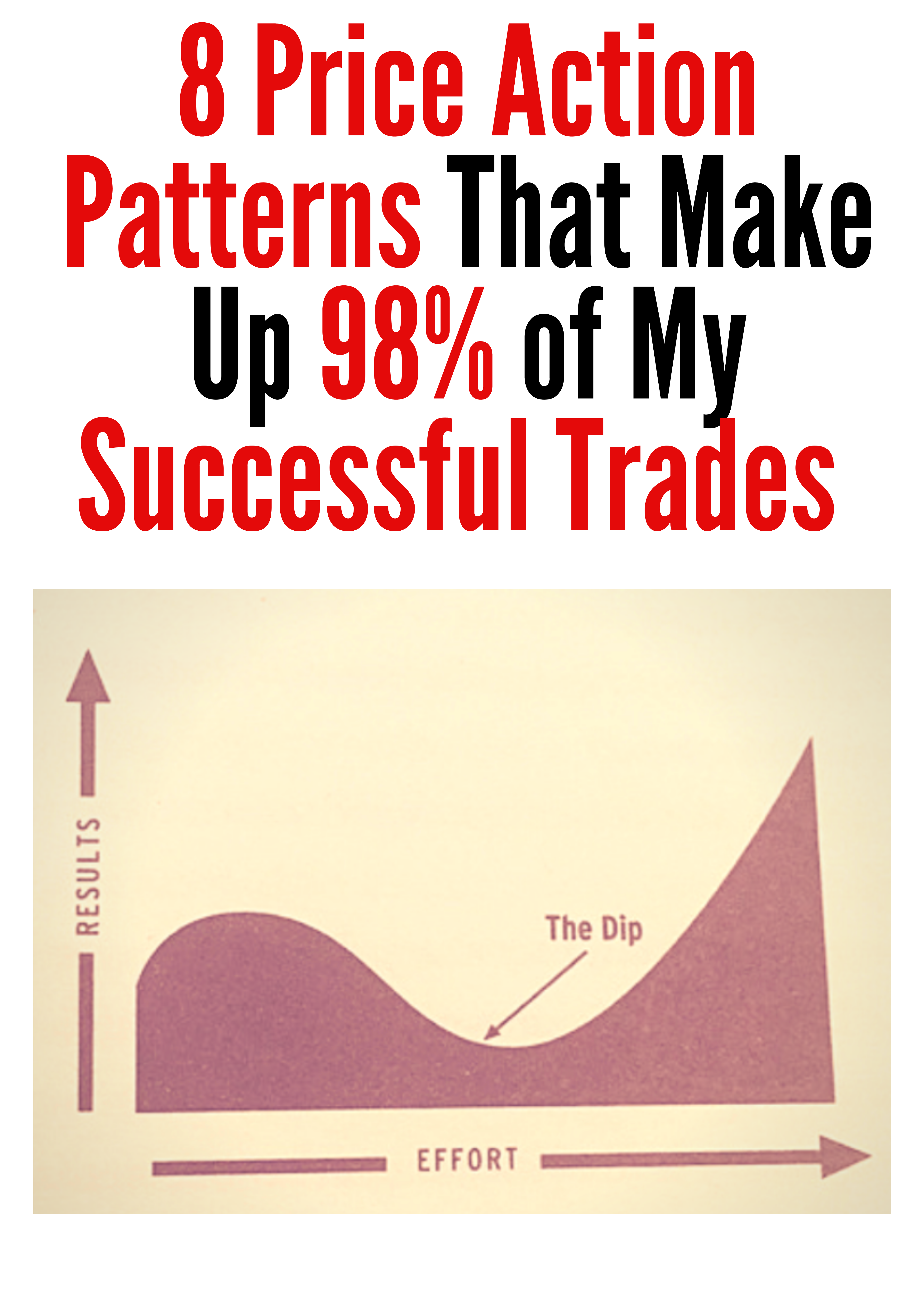
This really boils down to a simple, effective process: you gain the knowledge, then you build the skill through focused application.

This visual reinforces a key point: reading is just step one. The real skill is forged in the fires of deliberate practice and honest journaling.
The Underestimation Of Psychology
Finally, and this one is huge, most beginners completely underestimate the mental game. They think that if they can just find the "right" technical strategy, their emotions won't get in the way. This is a fatal mistake. Fear and greed will sabotage even the most perfect technical setup if your head isn't on straight.
The growth in trading education reflects this reality. You'll notice the market for day trading books now has extensive collections where publishers balance deep technical content with real-world readability. There's a strong emphasis on psychology and risk management because the industry gets it: technical skill is just one piece of the puzzle. You can find more insights on this in lists like the best day trading books on spartantrading.com.
The best books—and any solid trading philosophy—will hammer this home: your mindset isn't separate from your strategy. It’s the very foundation your strategy is built on.
From Books To Real-World Proficiency
Getting through those foundational books is a huge first step, but it’s just that—a first step. The real challenge, the one where most new traders stumble, is translating that book smarts into real-world action when your own money is on the line.
This is the make-or-break moment. It’s where sterile, static theory collides head-on with the messy, unpredictable reality of a live market.
A book gives you the map, but it can’t teach you how to drive in traffic. It can't offer you personalized feedback when you make a mistake or help you breathe when a trade goes against you. That's why your next step is so critical. You have to move from passively reading to actively doing.
Identifying Your Psychological Edge
The trading psychology books are fantastic at explaining universal human emotions like fear and greed. But how do those emotions show up in your trading?
Are you the kind of trader who jumps into a move too late out of FOMO? Or do you hesitate and watch perfect setups leave without you? The first step to managing your trading mind is figuring out your own unique psychological fingerprint.
You can start doing this right now. Our free Trading Potential Quiz is designed specifically for this. It helps you pinpoint the personal strengths and weaknesses the books describe, giving you a clear picture of the mental hurdles you need to clear. Think of it as a diagnostic tool to connect psychological theory to your own trading personality.
The Missing Ingredient: Mentorship
This brings us to the single most important element that books can never provide: a guided feedback loop.
It's like learning to play the guitar. You can read every music theory book and watch endless videos of guitar gods, but your progress will absolutely explode the second a real teacher sits with you, corrects your hand position, and shows you why you keep fumbling that one chord.
Trading proficiency is not built in isolation. It's forged through a cycle of action, feedback, and correction under the guidance of someone who has already walked the path you're on.
This is where a structured, mentored program becomes invaluable. It doesn't replace the essential reading you've done. Instead, it builds a layer of practical application on top of that foundation.
A mentor's job is to watch you apply the price action concepts you’ve learned and give you the real-time feedback needed to sharpen your execution. They help you take a theoretical understanding of things like paper trading and turn it into consistent, real-world performance.
A Structured Path Forward
Our courses here at Colibri Trader are designed to be that structured, mentored path. We take the price action and risk management principles from the classic books and put them into a systematic, actionable framework. The focus is on doing, not just reading.
You'll learn to apply concepts methodically, get direct feedback on your trades, and build the discipline required to see consistent results. This ecosystem provides the support and structure needed to transform you from someone who knows about trading into someone who can actually trade.
It’s the logical next step to turn your investment in books into a real return in the markets.
Frequently Asked Questions About Trading Books
When you're just starting out, a lot of practical questions pop up. It's only natural. This FAQ section is here to give you some straight-up answers and help you build a clear, confident plan for learning from trading books.
How Many Books Should I Read Before Trading?
This is a classic question, and the answer isn't a number. The goal is mastery, not quantity.
It's far better to deeply understand and actually apply the lessons from one great book on each of the core pillars—price action, trading psychology, and risk management. I've seen too many new traders rush through a dozen books only to absorb nothing. That's a huge, common mistake.
My advice? Don't even think about trading with real money until you can prove you're consistently profitable in a demo account using the strategies you've mastered from those core books.
Are Older Trading Books Still Relevant?
Absolutely. In fact, some of them are more relevant than ever.
While market technology and platforms change, the fundamentals of price movement and human psychology are timeless. The emotional triggers of fear and greed that drove markets 100 years ago are the exact same ones driving them today. This makes the classics on these topics incredibly durable.
The real gold in older texts isn't about specific indicators that might be outdated. It's about understanding the unchanging nature of the people moving the markets. These books provide the solid foundation that all modern strategies are built on.
Can I Learn Everything I Need From Books?
Books are absolutely essential, but they are only the first step. They give you the "what" and the "why," which is the critical knowledge base.
But real trading skill comes from application, from deliberate practice, and from getting targeted feedback—the "how."
This is exactly why a structured learning path is so important. Think of it this way: a book is the map. It shows you the terrain and the destination. But consistent practice and mentorship are what teach you how to actually drive the car, navigate the challenging roads in real-time, and turn that theoretical knowledge into a profitable skill.
Ready to bridge that gap between reading and doing? The programs at Colibri Trader are designed to give you the structured mentorship and feedback loop that a book just can't offer. Start transforming your knowledge into real-world skill today.