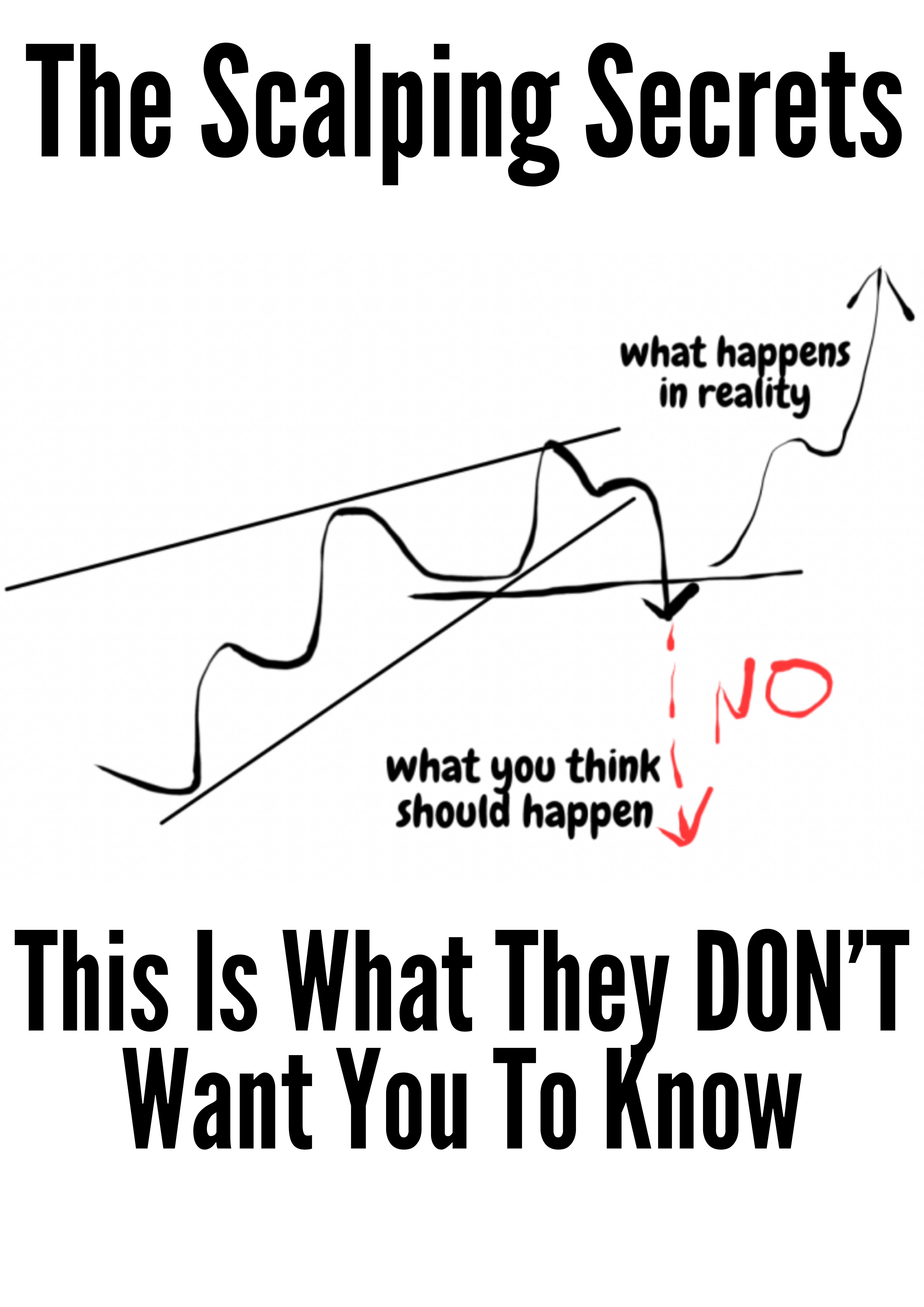
What Is Daily Trading A Guide to Price Action and Profit
Daily trading, or day trading as it's often called, is all about buying and selling financial assets within a single trading day. Forget long-term investing; think of it more like being a high-speed merchant in a massive digital marketplace. When the closing bell rings, you’ve closed up shop for the day.
Unpacking the Core Concept of Daily Trading

At its heart, daily trading is a discipline. It’s focused on capturing small but frequent profits from the price swings that happen throughout the day. Unlike an investor who might hold a stock for years, a daily trader's main goal is to end each day flat—meaning they have zero open positions.
This simple rule is powerful. It completely sidesteps the risks that come with holding trades overnight, like surprise economic news or political drama that can cause markets to gap wildly at the next open.
Now, this style isn't about gambling or chasing random market spikes. Far from it. Successful daily trading is built on a solid, structured approach. It’s a game of probabilities where traders analyse charts to spot predictable patterns and execute trades with precision.
The philosophy is straightforward: get in, grab a small profit, and get out. These small wins, repeated over and over, are what can compound into significant results over time. It takes immense focus, discipline, and a real understanding of how markets move.
The Power of Price Action
So many new traders get completely lost in a sea of confusing indicators and flashy software. There's a much more direct and, in my opinion, powerful way to trade: price action trading. This is all about making your decisions based purely on the price movements you see on a clean chart.
Think of it as learning the market's native language.
Instead of relying on lagging indicators to tell you what has happened, price action helps you read what is happening now—giving you a crucial edge in a fast-moving environment.
By studying candlestick patterns and spotting key support and resistance levels, you can actually see the battle between buyers and sellers as it unfolds. This helps you anticipate where the market is likely to turn, allowing you to enter trades with much greater confidence.
This is the "no-indicator, no-nonsense" approach that I use and teach. It's about finding clarity right there on the charts.
Why the Forex Market Is a Prime Arena
While you can day trade stocks or commodities, the foreign exchange (FX) market is an especially popular arena, and for good reason. Its incredible scale and liquidity create an almost perfect environment for this strategy.
For instance, daily trading in the global FX market surged to an average of $9.6 trillion per day in April 2025, a huge jump from previous years. You can see the full breakdown in a report from the Bank for International Settlements about FX market activity.
This massive volume means you can almost always enter and exit your trades instantly at a fair price, which is critical for a strategy that relies on speed and precision.
The Engine Room: How Price Action Trading Works

If you want to get good at daily trading, you first have to understand its engine: price action. Forget about cramming your charts with a dozen indicators that just add confusion. Price action trading is all about reading the market's story straight from a clean candlestick chart.
Think of it this way: the raw price is the only thing that's real-time. Every indicator, from moving averages to RSI, is just a mathematical formula based on what price has already done. They’re lagging. Price action, on the other hand, tells you what's happening right now.
Each candlestick shows the battle between buyers and sellers within a specific period. By learning how to read these raw price movements, you’re getting your information directly from the source. This is the core of Price Action Trading and the foundation of my own trading approach.
Reading the Market's Map
Instead of relying on indicators, a price action trader learns to identify key features on the chart where the market's mood is likely to change. The two most critical features you need to master are support and resistance.
-
Support: Think of this as a floor beneath the price. It's an area where you can see buyers have historically shown up in force, stopping a price drop and pushing it back up. When price returns to a support level, we watch for signs that those buyers are stepping in again.
-
Resistance: This is the ceiling. It's a price zone where sellers have consistently taken control, halting a rally in its tracks. As the price approaches resistance, traders look for clues that selling pressure is building, offering a potential opportunity to go short or take profit.
These aren't just arbitrary lines; they are powerful zones of market memory. They represent the collective psychology of all market participants—areas where a massive number of buy or sell orders are clustered, forming a natural barrier. If you want a deeper look at this crucial concept, you can check out our detailed guide on what price action trading is.
Executing Your Plan With Precision
Spotting a great setup is one thing, but how you enter and exit the trade is what separates the winners from the losers. This is where your order types come in. They are the tools you use to enforce discipline and manage your trades correctly.
The core of a solid trading plan isn't just knowing when to enter, but knowing—with absolute certainty—when to get out. Your order types automate this discipline.
Here are the three orders every daily trader absolutely must know:
-
Market Order: This is your "get me in now" button. It executes your trade immediately at whatever the current market price is. It’s useful when you need to get into a fast-moving market, but be aware that you might not get the exact price you saw a second ago.
-
Limit Order: This gives you complete control over your entry price. You set a specific price where you want to buy or sell, and the order only gets filled if the market actually reaches that level. This is perfect for preventing you from emotionally chasing a trade.
-
Stop-Loss Order: This is your seatbelt. It is the single most important tool for managing risk. You pre-set a price where your trade will automatically close for a small, defined loss. Without it, you’re just gambling. A stop-loss protects your capital so you can live to trade another day.
Choosing Your Arena: The Best Markets for Daily Trading
Just like a professional athlete needs the right field to play on, a daily trader has to pick the right market. It's a critical decision. Not all markets are built for the fast-paced world of intraday trading.
From my experience, there are two ingredients you absolutely cannot compromise on: high liquidity and consistent volatility.
Think of liquidity as the lifeblood of a market. It’s like a deep, fast-flowing river versus a shallow, stagnant pond. In a deep river, you can move around freely. In the shallow pond, you’re stuck in the mud.
For a trader, high liquidity means there are always plenty of buyers and sellers at the ready. This is crucial. It allows you to get in and out of your trades almost instantly at a price that’s fair. It also leads to tighter spreads—the cost of placing a trade—and massively reduces the risk of “slippage,” which is when your trade gets filled at a much worse price than you expected.
The Top Contenders for Daily Trading
For these reasons, a few markets really stand out as the perfect playgrounds for us price action traders.
-
Forex (Foreign Exchange): This is often my go-to. The FX market is the biggest and most liquid on the planet, running 24 hours a day, five days a week. All this continuous action creates a fantastic environment for spotting clean price action patterns, and you don't have to worry about the overnight gaps that can mess up stock charts.
-
Stock Indices: Major indices like the S&P 500 (through futures like ES) or the NASDAQ 100 (NQ) are also excellent. They give you a pulse on the entire stock market, are incredibly liquid, and tend to carve out structured, readable price movements during their main trading hours.
-
Commodities: I also find that assets like Gold (GC) and Oil (CL) are brilliant for daily trading. Their prices are moved by real-world supply and demand, which creates consistent volatility and clear trends that respond very well to pure price action analysis.
The key takeaway is simple: Trade where the action is. High-volume markets provide the cleanest price data, making them the most reliable canvas for a pure price action strategy.
Recent data from the derivatives world really drives this point home. In 2025, CME Group’s international average daily volume (ADV) shot up to a record 8.4 million contracts, which was an 8% increase from the year before. We saw Metals volume surge by 34% and Energy jump by 8%.
For a price action trader, these numbers are a green light. They tell us that big institutional money is flowing into these markets, creating the deep liquidity and predictable patterns we need to succeed. You can read more about these trends in trading volume. Choosing to operate in these active arenas is the first, and maybe most important, step in building a solid daily trading career.
The Two Pillars of Survival Risk and Money Management
It’s easy to get caught up in the excitement of chart patterns and perfect entries. But let me tell you, it's the defensive side of trading that truly determines if you’ll be around for the long haul. Risk and money management are the two pillars that hold up a professional trading career. Without them, even the best strategy will eventually crumble.
Think of it this way: a pilot doesn't just know how to take off. They are obsessed with pre-flight checks and emergency drills. For a trader, risk management is that same non-negotiable checklist. It’s what keeps you in the air when the unexpected happens.
The Non-Negotiable Rules of the Game
A solid risk management foundation is built on simple, unbreakable rules. These aren't just helpful tips; they are the laws that protect your trading capital—the absolute lifeblood of your business. Two rules, in my experience, stand above all others.
First up is the 1% Rule. This is a golden standard in my trading for a very good reason. It simply means you should never risk more than 1% of your total account balance on any single trade. If you have a $10,000 account, your maximum loss on one trade is just $100. No exceptions.
Following the 1% rule means you could take ten losing trades in a row and still have 90% of your capital. It mathematically protects you from a catastrophic loss and the emotional panic that always follows.
Second, you must establish a positive risk-to-reward ratio. This means you only enter trades where the potential profit is much larger than your potential loss. I personally look for a 2:1 ratio as a minimum, where you aim to make at least twice what you stand to lose.
Redefining Your Relationship with Losses
For a new trader, a trade hitting its stop-loss feels like a personal failure. This is a destructive mindset you have to unlearn. A professional trader sees a stop-loss not as a mistake, but as a planned business expense. It’s simply the cost of finding out an idea was wrong.
This disciplined approach is everything in the long run. Protecting your capital is what allows you to stay in the game long enough for your winning edge to play out over time. When you combine strict risk rules with a positive reward ratio, you create a powerful statistical advantage for yourself.
For a deeper dive, you can learn more about professional money management in trading and how I apply these concepts day-to-day.
Your First Day on the Job A Beginner's Trading Routine
Knowing the theory behind daily trading is one thing, but actually turning that knowledge into a disciplined, repeatable process is a completely different ballgame. A structured routine is the backbone of a professional trading career. It’s what turns abstract ideas into concrete actions.
Think of it as your daily playbook. It keeps you systematic and focused, which, in my experience, is the real secret to sticking around in this business for the long haul.
Let's break down what a beginner's trading day should really look like. This isn’t about some magic formula. It's about building professional habits from the very first day. Your routine should be broken into three key phases.
Phase 1: Pre-Market Preparation
This is your homework, and you must do it before the market even thinks about opening. Never, ever jump into a trading session blind. The goal here is to map out the current market landscape and spot potential trading zones before a single dollar of your capital is on the line.
- Review Yesterday's Action: First, look at the previous day's high, low, and closing prices. These are often huge psychological levels that the market will either respect or challenge.
- Identify Key Levels: Next, mark out the most obvious support and resistance zones on your chart. Where did the price turn around before? These are your battlegrounds for the day ahead.
- Formulate a Bias: Based on what you see, are you feeling more bullish or bearish? You're not trying to predict the future. You're creating simple "if-then" scenarios. For example, "If the price breaks above this resistance level, I'll start looking for a buy signal."
Phase 2: The Trading Session
This is where your discipline truly gets tested. Once the market opens, your only job is to execute the plan you already created. You're no longer an analyst; you're an operator. That means no impulsive decisions and absolutely no chasing after trades that don't perfectly match your pre-defined rules.
The professional trader acts, while the amateur reacts. Your pre-market prep ensures you are always acting according to your plan, not reacting emotionally to every little price wiggle.
If a setup appears that fits your rules, you take the trade. You execute it with the stop-loss and target you already decided on. And if no such setup shows up? You do nothing. Sometimes the most profitable move you can make is to just sit on your hands and protect your capital for a better day.
The flowchart below shows the fundamental risk rules that have to govern every single trade you consider.

These principles are the foundation of preserving your capital, which is everything. You can't trade if your account is empty.
Phase 3: Post-Market Review
Your work isn't done just because the market has closed. Now comes the part where you turn every experience—good or bad—into a valuable lesson.
Journal every trade you took. Note down why you got in, how you managed the position, and what the final outcome was. Be honest with yourself about what went right and what went wrong. This turns each day into a feedback loop that helps you get better over time.
This is also the perfect time to practice and refine your skills without any financial pressure by using a demo trading account.
Start Your Trading Transformation
We’ve covered a lot of ground in this guide, but if there's one thing to take away, it's this: daily trading isn't about some secret formula or magic indicator. It’s a professional skill.
That skill is built on three solid foundations: a deep understanding of clean price action, iron-clad discipline, and flawless risk management. The theory is done. Now, it's time to put that knowledge into action.
At Colibri Trader, we offer a clear path to get there. We strip away all the noise—the confusing indicators and lagging theories—to focus on what actually works in the live market. My entire philosophy is built on a "no-indicator, no-nonsense" approach that teaches you to read the market's story right from a clean price chart.
Your Path to Consistency
I've put together tangible resources designed to build your skills one step at a time. It all starts with our free Trading Potential Quiz, which gives you an honest look at where you stand right now. From there, you can dive into comprehensive courses that break down professional price action strategies into simple, repeatable steps.
The goal isn't just to learn a few patterns; it's to transform your habits. We focus on building the discipline that separates the consistently profitable trader from the one who is always struggling.
This journey is about leaving behind the complicated, ineffective strategies that promise everything but deliver nothing. It's about building a real, durable skill you can rely on, whether the market is bullish or bearish.
If you’re ready to stop chasing complexity and start building a trading approach that is both simple and profitable, this is your next step. Having a mentor and focusing on practical application is what closes the gap between knowing what to do and actually doing it, day in and day out. This is how you start building a future with more financial freedom and the flexibility to work from anywhere in the world.
Your transformation starts with that first step.
A Few Common Questions About Daily Trading
When you're new to the game, a lot of questions pop up. I've heard most of them over the years, so let's tackle a few of the most common ones head-on.
How Much Money Do I Need to Start?
There isn't a single magic number here. But the most important rule—and I can't stress this enough—is to only trade with money you can afford to lose. I always recommend traders start on a demo account first. Get your strategy right without risking a single penny.
When you're ready to go live, a few thousand dollars is a reasonable starting point. This gives you enough breathing room to apply the 1% risk rule without being so undercapitalized that every small loss feels like a catastrophe—a classic beginner's trap.
Can I Do Daily Trading with a Full-Time Job?
Yes, absolutely. This is a huge misconception. You don't have to be chained to your charts for eight hours straight. I know plenty of successful traders who manage it around their day jobs.
The trick is to be strategic. You can focus on a specific, high-action window like the London or New York open. These sessions are buzzing with activity for just a few hours. It’s all about building a disciplined routine that works for your schedule, not the other way around.
Is Daily Trading Just Gambling?
Not even close. While both involve putting money at risk, that’s where the similarity ends. Gambling is betting on pure chance, a random roll of the dice.
Professional daily trading is a business. It’s built on a solid strategy, understanding statistical odds, and, most importantly, ruthless risk management.
Successful traders don't make hopeful bets. They execute a tested plan, looking for high-probability setups over and over. It's a skill you develop through practice and discipline, not a game of luck.
Ready to stop guessing and start building a real trading skill? At Colibri Trader, we provide a clear, no-nonsense path to mastering price action. Start your journey with us today.