
Trader Personality Test: Discover Your Trading Style

You've studied the setup, marked the level, and watched the market move exactly as expected. Yet one trader takes the trade calmly while another hesitates, enters late, doubles the position after a loss, or closes a winner before the move develops. Both traders can use the same chart, strategy, and market context, but their results can look completely different.
That difference often comes from behavior under pressure, not from a lack of technical knowledge. A trader personality test can help identify tendencies around decision-making, time preference, risk, and emotional control. Its real value, however, appears when you use the result as a starting point for observing your behavior rather than treating a personality label as a trading verdict.
Why Two Traders Fail and Succeed Using the Same Strategy
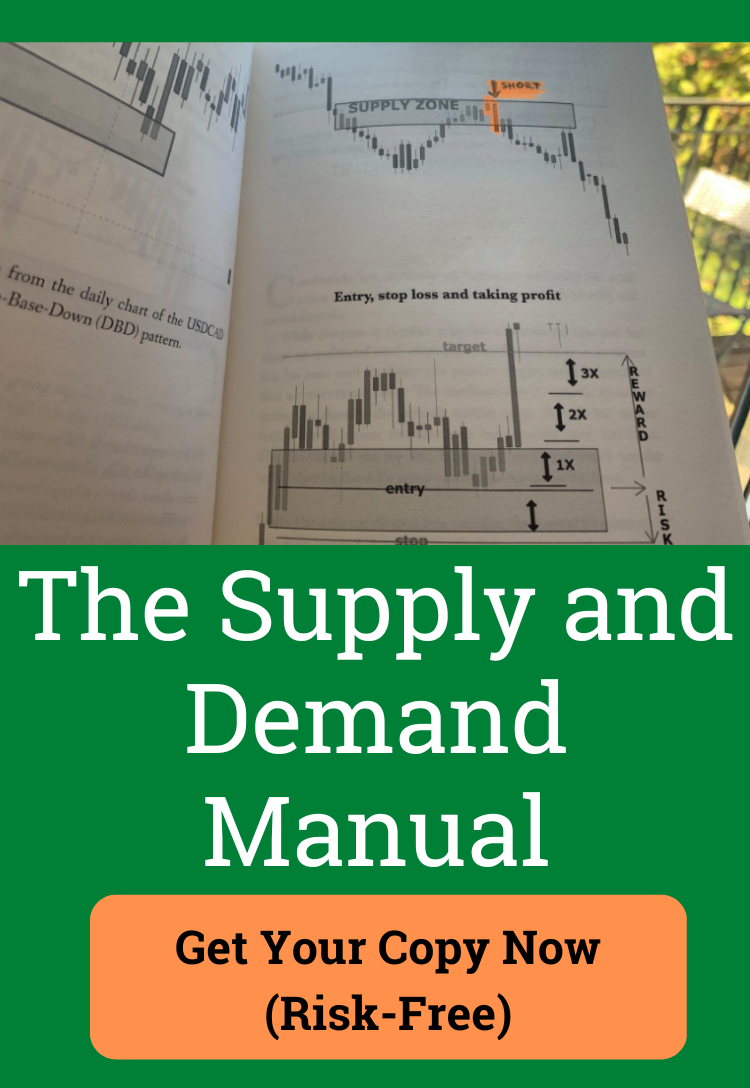
Two traders sit in front of the same chart. Supply has formed beneath a prior reaction high, price returns to the zone, and both have already defined the same entry, stop, and target. Trader A waits for confirmation, accepts the predefined risk, and takes the setup without trying to predict every tick. Trader B sees the same opportunity but worries that the stop is too close. After hesitating, B enters at a worse price, watches a small retracement, and exits in frustration.
The market didn't give them different information. Their internal responses shaped the outcome. Trader A can tolerate uncertainty long enough to follow a plan. Trader B needs more confirmation, then compensates for hesitation with impulsive action. Neither response makes someone permanently “good” or “bad” at trading, but each creates a different set of execution problems.

What the test can reveal
A personality assessment usually tries to describe how you approach decisions, not whether your next trade will win. It may identify whether you prefer rapid feedback or extended analysis, whether you naturally seek or avoid risk, and whether emotional pressure changes your decisions. Those tendencies can influence the markets, instruments, and timeframes that feel workable.
The important distinction is between a relatively stable preference and a temporary state. You may usually be patient, yet become reactive after a losing trade. You may consider yourself disciplined, yet abandon your rules when a position moves quickly in your favor. A useful assessment creates hypotheses that you can test against your journal.
Practical rule: Treat a test result as a question to investigate, not an identity to defend.
Price action gives you a useful laboratory for that investigation. Record what happened before each deviation from your plan. Did you enter because a valid zone formed, or because you feared missing the move? Did you move the stop because the market invalidated the idea, or because you couldn't accept the loss? Did you close early because structure changed, or because open profit made you uncomfortable?
Those observations matter more than an attractive archetype. A trader personality test can point toward your likely pressure points, but your executed trades show how those tendencies behave in real conditions. That distinction turns self-awareness into something practical.
The Origins of Trading Psychology Assessment
Trading psychology assessment grew from a straightforward observation. Market knowledge alone doesn't guarantee consistent execution. A trader can understand entries, exits, and risk management in theory while still allowing fear, hope, impatience, or overconfidence to change decisions at the moment of risk.
Van Tharp is one of the best-known historical figures associated with formal trader personality testing. He began researching trader psychology in 1982, after concluding that his own poor trading results were driven more by psychology than by market knowledge, according to the history presented by 16 Traders' account of trader psychology testing. That realization led to the 176-question Investment Psychology Inventory Profile, an instrument developed over more than three decades and tested with tens of thousands of traders worldwide.
The importance of that work isn't that one questionnaire can explain every trader. Its contribution was to formalize an idea many practitioners discover through painful experience: a strategy operates through a person, and the person can alter the strategy through execution. The same entry rule can produce different outcomes when one trader sizes consistently and another changes risk after a sequence of wins.
From labels to structured profiles
Modern assessments generally move beyond a single personality score. They use multiple dimensions to describe how a trader processes decisions, time, risk, and emotion. That evolution makes sense because trading behavior is conditional. A trader might be decisive with a tested setup but hesitant when market structure is unfamiliar. Another might tolerate a long holding period but struggle with the speed of short-term price changes.
Self-assessment also benefits from broader personality concepts, including the relationship between daily energy patterns and decision quality. If your trading schedule constantly conflicts with when you can concentrate, an assessment such as CEO sleep energy with The Sleep Consultant may offer useful context for planning demanding work. That doesn't determine your trading style, but it can help separate a genuine behavioral preference from fatigue.
For a complementary view of trait-based frameworks, the Big Five test for traders and innovators provides a way to think about broad characteristics without reducing a trader to a single label. The practical lesson is simple. Testing became more useful as it began describing interacting tendencies rather than claiming that one answer explains performance.
Trading psychology is not a substitute for a method. It tells you how you are likely to use, distort, or abandon that method.
Understanding Key Dimensions and Common Archetypes
A trader can describe the same method as clear and manageable, then abandon it as soon as price moves quickly. A useful assessment examines the behavior behind that difference rather than assigning a permanent identity. It separates relatively stable preferences from adaptive traits, the habits that change with stress, uncertainty, fatigue, and recent results.
One example, the 110-question Trader Personality Indicator, evaluates Decision Mode, Time Preference, Risk Attitude, and Emotion Control. Those dimensions combine into 16 unique trader personality types. A related assessment uses a 75-question validated framework, showing that contemporary tools can range from 75 to 110 questions and use 16 archetypes or other profile systems, as described by the Van Tharp Institute trader test.
| Dimension | What It Measures | Impact on Trading |
|---|---|---|
| Decision Mode | Whether you prefer rapid commitment or extended analysis | Shapes entry timing, confirmation requirements, and response to ambiguity |
| Time Preference | Whether you focus on short or longer holding periods | Influences chart selection, trade frequency, and patience with open positions |
| Risk Attitude | Your comfort with uncertainty and potential loss | Affects position sizing, stop placement, and trade selection |
| Emotion Control | How strongly feelings influence decisions | Helps identify vulnerability to panic exits, chasing, or revenge trading |
How common styles differ
A scalper needs rapid recognition, quick execution, and firm limits on attention fatigue. Immediate feedback may suit this style, but speed can also expose an impulsive trader to repeated entries without enough selectivity. The relevant question is whether fast decisions remain rule-based after several losing trades.
A swing trader gives a setup more time to develop. Deliberate analysis can fit this approach, while wider stops and longer uncertainty can test anyone who checks an open position compulsively. Price action must be judged against the planned structure, not every short-term fluctuation.
A position trader works from broader market structure and accepts that individual sessions may not affect the original thesis. That patience can support longer-term decisions, but the trader must tolerate short-term movement that contradicts the larger view.
A systematic operator prefers explicit rules and repeatable conditions. Rules reduce improvisation, yet they do not control the person using them. After an uncomfortable result, a trader may override an entry, move a stop, alter parameters, or stop following the process.
For an overview of how different styles operate, see this guide to different types of traders. For broader context, this personality theory guide for clinicians explains why traits are better treated as recurring patterns than rigid boxes.
Use the profile to build testable questions:
- Decision Mode: Do you need a checklist that slows premature entries or limits endless analysis?
- Time Preference: Can you hold through normal price movement without abandoning the setup?
- Risk Attitude: Does position size stay stable when confidence rises?
- Emotion Control: Under stress, what changes first, your entry, stop, size, or exit?
A patient swing trader and an aggressive scalper are not ranked by the label. Their methods place different demands on attention, capital protection, and emotional control. Treat the profile as a starting hypothesis. Price-action records, execution notes, and repeated behavior under pressure show which adjustments are required.
The Reality Check – Personality Versus Performance
A personality label can feel reassuring because it makes trading seem easier to understand. “I'm a decisive trader,” or “I'm a cautious swing trader,” sounds like a useful conclusion. It becomes dangerous when the label turns into permission to ignore evidence. Calling yourself aggressive doesn't justify oversized positions, and calling yourself analytical doesn't make hesitation harmless.
Independent research challenges the belief that one fixed personality profile predicts trading success. A study of 80 day-traders found no specific trader personality type in standardized inventories, while emotional intensity around gains and losses was a stronger predictor of worse performance, according to this study of personality and day-trading behavior.

That finding changes the question. Instead of asking whether you're the “right type” to trade, ask what happens when a position moves against you, when a winner retraces, or when you miss a setup. Emotional reaction is observable. It leaves traces in your entries, exits, position size, and journal, while a type label may remain abstract.
What responsible performance requires
Recent academic work connects responsible trading performance less to a fixed type and more to a combination of conscientiousness, cognitive ability, and an appropriate appetite for financial risk that remains controlled. The discussion in this academic analysis of responsible trading performance also highlights an important limitation. Personality tests can support reflection, but they don't tell you how often you overtrade, chase losses, or violate rules in live markets.
Use your result to design a behavioral audit. For a period of trading, review:
- Loss response: Do you accept the planned loss, delay the exit, or increase exposure?
- Profit response: Do you follow the target, close from discomfort, or move the target impulsively?
- Uncertainty response: Do you wait for valid confirmation, or manufacture a setup because you want activity?
- Rule response: Do you follow the process when tired, frustrated, or excited?
The strongest result from a trader personality test isn't a flattering description. It's a specific adjustment you can make. If emotional intensity drives poor decisions, reduce the conditions that amplify it through smaller predefined risk, fewer discretionary decisions, and a written response to common scenarios. You aren't trying to become a different person. You're building a process that keeps temporary emotion from controlling permanent decisions.
Aligning Your Psychology with Price Action Strategies
Self-knowledge becomes useful when it changes the way you read and execute a setup. Price action provides a clear framework because it keeps attention on observable factors such as structure, supply and demand, reaction, invalidation, and location. You can then adapt the execution rules to your behavioral tendencies without turning the method into an excuse for inconsistency.

An impulsive trader often needs fewer decisions, not more information. A written sequence can require a meaningful zone, a defined reaction, a valid entry condition, a fixed invalidation point, and a position size calculated before the order. This structure prevents a fast-moving market from turning excitement into a reason to abandon preparation.
A hesitant trader has the opposite problem. Adding endless confirmation can make the decision feel safer while worsening the entry. For that trader, replaying clean price-action examples and defining what evidence is sufficient can build confidence without demanding certainty. The goal isn't to eliminate doubt. It is to make doubt compatible with a controlled risk.
Match the method to the pressure point
| Behavioral tendency | Common execution problem | Useful price-action adjustment |
|---|---|---|
| Impulsive decision-making | Entering before location and confirmation align | Use a pre-trade checklist and an order-entry pause |
| Excessive caution | Missing valid setups after prolonged analysis | Define minimum evidence before the session begins |
| Low tolerance for open risk | Closing trades at ordinary retracements | Mark invalidation separately from emotional discomfort |
| Strong reaction to wins | Increasing size or moving targets | Keep risk and exit rules independent of recent outcomes |
| Need for constant activity | Taking marginal setups | Set a quality requirement, not a trade quota |
A trader who prefers short feedback may still use a higher timeframe for context and a lower timeframe for execution. A trader who prefers broader analysis may still need a firm decision deadline. Your personality doesn't dictate every technical choice. It tells you where a reasonable strategy is most likely to break under pressure.
The right strategy is not merely the one you understand. It is the one you can execute when the result is uncertain.
Money management connects the profile to survival. Risk should be defined before entry, and the stop should represent invalidation rather than the amount you hope to lose. If your journal shows that a particular setup repeatedly triggers panic, don't immediately discard the setup. First examine whether the size, timeframe, or entry structure exceeds your current capacity to manage uncertainty.
Practical price-action education can help here. An approach centered on supply and demand, market structure, and repeatable patterns gives you concrete events to review. The method won't remove your tendencies, but it can make them visible and give you rules that address them directly.
Taking the Next Step in Your Trading Journey
Take the assessment when you can give a truthful answer, not when you're trying to produce a desirable result. Read each question in relation to your actual trading behavior. If you answer based on the trader you hope to become, the profile may describe an ambition rather than a working habit.
Use this process:
- Complete the assessment without editing your identity. Choose the answer that reflects what you usually do under pressure, including behavior you don't like.
- Write down the main tendencies. Note your likely decision speed, preferred holding period, risk comfort, and emotional pressure points.
- Compare the result with your journal. Look for evidence in late entries, premature exits, stop changes, revenge trades, or missed setups.
- Choose one behavioral experiment. For example, require a written setup before entry, use a fixed review time, or stop trading after a rule violation.
- Review the experiment objectively. Assess whether the process reduced avoidable decisions, not whether the next trade won.
The free trader-style quiz for scalpers, day traders, swing traders, and position traders can provide a starting point for thinking about fit between your preferences and a trading style. Treat any result as a working hypothesis. Your journal, replay practice, and live execution under controlled risk should confirm or challenge it.
Build education around the gap
Choose learning material based on the problem you can demonstrate. A beginner may need a clear foundation in market structure, supply and demand, entries, exits, and risk control. An intermediate trader may benefit more from reviewing execution errors than collecting another strategy. An experienced trader may need focused work on timing, trade management, or consistency across changing conditions.
Don't select a program because its description matches your preferred personality. Select it because the lessons give you a way to practice the exact behavior you need to improve. A trader who overtrades needs constraints and review. A trader who hesitates needs a defined decision process. A trader who reacts emotionally needs smaller exposure and deliberate repetition.
Personality is a starting map. Performance comes from the repeated choices you make after the map exposes a weakness. Keep testing those choices against price action, record what happened, and adjust the process instead of searching for a more comfortable label.
Colibri Trader offers price-action-based trading education, a free Trading Potential Quiz, and programs covering foundational and specialized areas such as supply and demand and day trading. Visit Colibri Trader to connect your personality insights with practical market-structure training, disciplined execution, and money-management habits.